Beth Alvarez - Author of Epic Fantasy
  • Gale’s Gift: Chapter Two

    Gale’s Gift: Chapter Two

    Gale's Gift chapter 2

    “He won’t help me.” Eona sounded heartbroken, defeated. She didn’t even lift her head to look at him.

    Morghram hesitated, unsure what to do. He felt he should comfort her, but before he could say a word she hugged herself and leaned away, staring at the floor. He shouldn’t have let her speak to the count alone. He hadn’t wanted to, for that matter, but the capital city was twenty-two miles from the coast; they’d done well to make the trip in a single day, and he’d had to deliver the furniture loaded into the back of the wagon before it grew too late. In truth, she’d been fortunate that she had a chance to speak to the count at all. Morghram had expected she wouldn’t be seen until the next morning. He cleared his throat, putting his tankard down without drinking. “What did he say?”

    She hadn’t been impressed by his suggestion that they meet in the Worn Prayer, but the shabby inn was all he could afford. Though she’d sold her silk gown to a seamstress who could salvage it, the coin she received had barely covered the cost of the simple blue woolen dress she wore now, leaving her with nothing to contribute. Glancing at his ale, she sniffed disdainfully before speaking. “You were right about their record keeping. He was able to tell me that the ship docked in Lore, but he wouldn’t say who disembarked. I told him what happened, but he said Roberian has no reason to be involved, since I am not a citizen of the triad and Dolbin didn’t commit his crime here. He said I am free to pursue him on my own and take him back to Raeldan, and he suggested I hire mercenaries to help, but how am I to afford them? I’ve nothing left.”

    Frowning, Morghram turned his eyes to his plate. There was little he could do. The work he’d sold had brought a fair price, but even that wouldn’t buy a sellsword. Even if it could, he had to think of feeding himself before he could offer coin to someone who was all but a stranger. It was generous enough that he’d taken her into his home for two days of rain, then carted her to the city in a neighbor’s wagon.

    “I’m sorry,” he said at last, picking up his fork and motioning for her to do the same. “I suppose we might have expected that.”

    Eona took her fork, but didn’t seem interested in the slices of ham she pushed around on her plate.

    “Will you stay in the city?” he asked. It was a meager effort to keep conversation going, but the silence was uncomfortable.

    “I don’t know. There’s nothing for me here, but little more in Raeldan. Though I suppose I could return to my aunt.” She shrugged, sighing. “I will think on it, though I’m loath to leave without retrieving what’s mine from my good-for-nothing husband first.”

    Morghram nodded, finishing his meal before he spoke again. “Think on it, then. I’ll leave once I find someone with goods to send to the coast. No sense in transporting an empty wagon, always an extra coin to be made ferrying cargo. I’ll be in the room next to yours if you need me.”

    “Good night,” Eona murmured without looking at him again. She hadn’t eaten a bite.

    Though he was grateful to have a decent bed after a long trip, Morghram didn’t rest easy. He didn’t want to leave her alone in the city, especially when she had no other traveling companions. But that brought to mind the storm and the wild waves he’d pulled her from, and he didn’t want to think of what became of the rest of the ship’s passengers.

    Why had only she made it so near to shore? What manner of fortune led to him standing atop the cliff at just the right moment to see her before she could drown? And why him, instead of any number of younger, more capable men in the village? The thoughts robbed him of sleep.

    Instead he turned his mind to what she’d said of her meeting with the count. Permission to hunt down a criminal was a good start, but if she couldn’t afford to hire mercenaries to provide the muscle for the job, how was she to do it? She’d promised him a reward for his assistance; without the means to regain her fortune, it wouldn’t come. But that thought stirred unpleasant feelings too. Was it wrong to want what had been promised? He would have helped her regardless of her ability to pay—he hadn’t known she was a noble when he rowed out to save her from the waves—but he wouldn’t refuse a handful of gold, either. Though he managed well, there was no denying he was past his prime, his hair more gray than black and thinning at the temples besides. Had he the means, he could buy a horse and wagon of his own, maybe even a team of horses, and not have to borrow from old Jod anymore. And independence as he aged was a good thing.

    Nodding to himself as if the decision were made, he rolled over to sleep as much as he could before morning came.

    When Morghram opened his door in the morning, Eona was just stepping into the hall. She offered a smile, though her eyes were lowered.

    “I thought I might see you at breakfast, but this is just as good.” She smoothed her skirts with both hands, hesitating. “I appreciate all you’ve done for me. But I have to see this through.”

    So she still meant to chase her husband. Good. “I understand.” He’d gone over what he would say a dozen times while he’d washed and dressed. That she was planning to continue on her own just saved him the trouble of trying to convince her. “And that’s why I’d ask you to return to the coast with me, my lady.”

    Eona blinked in surprise.

    “I can’t afford to pay for another night in the inn,” Morghram explained. “Nor can I afford to hire sellswords for you. But I’ve a sword and armor in the chest back home, and I was a fair hand with a blade when I was in service to the king. If you’ll ride with me, then we’ll gather provisions and set out after this thief of yours.”

    “Oh.” She lifted a hand, wiping her eyes as a warmer smile wreathed itself upon her lips. “Yes. Yes, I think that’s just what we ought to do.”

    There was little to see in the rolling fields of southern Roberian, save a few farms and small villages that dotted the way. But the weather was fair and the road clear, and they rolled into the coastal town Morghram called home in early evening.

    He let Eona off at his house before delivering the wagon and his cargo to Jod, sharing directions for where the boxes were to be sent in the morning. They’d split the payment for the goods later; they always did. Then he walked back to his house, working over a list of supplies in his head. Late summer was a good time for such a trip. They wouldn’t need to carry much food with the fields and forests ripe with good foraging. As long as the weather stayed favorable, the travel would be the easiest part.

    Eona was already filling a linen-lined basket with bread, cheese and vegetables from the bins beside the cold hearth. She smiled at him as he opened the door wide and braced it with a piece of wood, letting in the cool evening breeze. Were they not leaving again, he would have opened the windows. But there was no sense in removing their cover for one night, so he left the windows boarded and lit a lantern on the mantel to drive out the dark.

    “No sense in walking in the middle of the night,” he said as he put his flint away. “We’ll pack and rest tonight and set out in the morning.”

    “Do you have any idea where we should start?” she asked.

    Morghram shrugged. “If we start at the docks, we might find something. A lot of ships pass between here and Lore because it’s the fastest way for average folk to travel.”

    Her mouth twitched. “Average folk?”

    “Folk like us.” He carried the lantern with him to the chest at the foot of his bed. “Those with magic have their own ways.”

    “Oh.” She folded the linen over the top of the food, dusting her hands together. “Mages aren’t common in Raeldan.”

    “They aren’t common here, either. There’s the college in Lore, but their numbers dwindle a bit more each year. It’s still an institution, though, so they come and go as they will.” Setting the lantern on the floor, he opened the chest and moved aside the extra blankets and clothing. His armor and sword were hidden in the bottom, wrapped in stained linen. He still oiled it every year to keep it from rusting, usually on cold winter nights when lantern light was too weak to let him work. The sword gleamed bright when he unwrapped it and inspected its edge.

    It was good steel, if simple; the king didn’t give his men anything extravagant, just sturdy and useful, though the hilt was stamped with the king’s mark and enameled in the colors of the triad. He laid it aside, sitting on his heels and unwrapping his armor next. His gauntlets and greaves were just as he remembered, if the leather looked a little worn. His helm was bright, if dented. Despite the regular oiling, his lamellar bore hints of rust around the edges of many of the scale-like plates. Nothing severe enough to hinder its performance, he didn’t think. The real question was whether or not it would still fit. Instead of trying it on, he put it all aside. That was a worry for the morning.

    Eona watched him, not quite frowning, but the corners of her mouth were turned down. “Do most men here keep armor?”

    “Not many. It’s expensive, beyond what most can afford. But I was allowed to keep mine after I retired.” He closed the chest, stacking his armor atop it and propping his sword against the wall. The edge was still good, but he still rose to look for his whetstone amid the tools on the table. If all went well, the edge would stay that way. He just had too much experience soldiering to expect it would go well.

    “I see,” she murmured. “I’ve never heard of a man who stayed a soldier long enough to retire. Things here are very different from Raeldan.”

    “I would imagine. But with fortune, we’ll have you on a ship headed home within a fortnight.” He tried to sound reassuring, turning his whetstone over in hand once he found it. As an afterthought, he picked up a few carving knives and a small handsaw. They’d do little good as weapons, but one never knew when tools would come in handy. “Hand me that bag from the peg by the fireplace, would you?”

    She retrieved the canvas sack, running her fingers over its worn seams as she carried it to him. “Thank you, by the way. For sacrificing your time to do this.”

    Morghram grunted, filling the sack with tools and trinkets, odds and ends he thought might be useful for the journey. “Don’t thank me yet. Not until we see if I’m muscle enough to set this man of yours straight.”

    “Oh, you will be,” she said. “Dolbin is a coward. You look mean enough, I’m sure you shaking a sword at him will be plenty.”

    He raised one thick brow. His face was scarred and craggy, but he’d never thought himself as looking mean. “If you say so.”

    Eona only smiled. She said nothing else of the matter, helping him pack what they’d need and cleaning the small house from top to bottom to prevent pests from moving in while he was gone. Between the two of them, the work went quickly, and so did the night.

     ❦

     “We’re headed north,” Morghram announced as he climbed the hill from the docks, rejoining Eona in the shade of an old ash tree overlooking the coast. His bad leg protested the climb, but he made it anyway; it was faster than taking the winding path of stairs that bustled with sailors and merchants, and he’d need to get used to walking anyway. “Your ship did dock in Lore. The same ship was hired to transport grain from here to the south end of the world. From what I gather, Dolbin rode with them to save himself time, since everyone in Lore told him he’d have to pass through Roberian anyway. Seems the deck hands weren’t fond of your gentleman, they chatted with the porters quite a bit.”

    Eona rose from the grass and dusted off her skirts. She still wrinkled her nose when she touched the coarse wool, but he was glad for the change, even if she winkled her nose. Traveling with her wearing a corset and layers would have been miserable for both of them. “He’s no gentleman. I’m surprised you were able to find anyone who was willing to talk, though. Aren’t men usually more quiet about their business?”

    “They are, but I’ve lived on the coast a long time. I’ve made friends. And carved the figureheads for almost every ship in the harbor, besides.” He scooped the canvas bag of supplies from the foot of the tree, slinging it over his shoulder. She had insisted on carrying the basket of food and he wasn’t going to object. It gave her something to do, but also made her look like she was headed to market instead of making a long voyage. Robbers were less likely to bother those who looked like they were carrying nothing of value. “From what I gather, he wanted to escape the triad. Probably figured someone would be looking for him. Most of the border is guarded where it would be easy to get through. Nobody took him for a fellow who would risk traveling the wilds, which makes his best option taking the mountain pass. Lots of narrow roads there from the ways to the old mines, lots of places they don’t bother keeping guard stations. He was last seen in the inn, asking for passage through Roberian’s mountains.”

    She gave him a doubtful look, trailing along behind him as he cut a path toward the road. “And you don’t suspect anyone will betray us to him, now that you’ve been asking?”

    He shook his head. “No reason to. I don’t know much about where you’re from, my lady, but here, seamen aren’t too likely to go running inland after someone who might toss them an extra coin. Most are honest, besides. If they weren’t, they’d have turned pirate or been thrown overboard a long time ago.”

    “Eona,” she said.

    Morghram paused. “What?”

    She ran a few steps to catch up with him, swinging the food basket. “I appreciate your manners, but you are doing me a great favor and you have been nothing but kind. You may call me Eona.”

    He blinked, taken aback. He couldn’t help but think it improper to call her by name, if only because she was of noble blood. Had she been a neighbor, he wouldn’t have given it a second thought. But he didn’t want to offend her, especially not so early in their travels. Instead he cleared his throat, turning northward and adopting a comfortable pace. “Very well,” was all he said.

    For some reason, she giggled.

    As if marking the road ahead, the wind blew north.
  • Gale’s Gift: Chapter One

    Gale’s Gift: Chapter One

    Gale's Gift chapter one


    Clouds with undersides like gray silk cloaked the sky, the cool ocean breeze carrying the scent of rain. Rainstorms were nothing to be concerned about, but there were more clouds farther behind, riding low on the wind and piling on top of themselves until they turned black.

    It was storms like those Morghram hated.

    Lightning crawled along the bellies of the thunderheads, though they were yet too far off for thunder to be heard. The winds were still easy, but the pre-storm stillness would come soon enough, and who knew what sort of gale would follow? He couldn’t see any rotation in the clouds from where he stood atop the cliff, but he’d heard tales from sailors about hurricanes with an eye as wide as the harbor. But a grown man didn’t fear something so simple as the weather; he disliked it, instead.

    Shaking his head, he turned back to his window and lifted another plank of pine. He’d lived on the cliff-top above the beach since retiring from the Royal Army, and if he didn’t like storms, he’d at least grown used to them. The front of his house faced the sea and he’d added bars beside the windows long ago. Sliding boards behind them wedged the planks between the bars and the shutters, deterring damage. The windows were not fine glass, the panes filled with ripples and bubbles, but they were glass; a commodity he was fortunate to have. So he barricaded both windows with care, dusting his hands together before looking back to the storm.

    Foam capped the waves in the distance and small fishing boats hastened back to the long piers that lined the shore. But there was something else amid the waves, something small and pale. At first he thought it a pelican or some other sea bird, but it wasn’t graceful; it floundered in the water, slipping beneath the surface and then clawing its way back up, slower and weaker each time. A person, he realized. And all the fishing vessels had already moored.

    Morghram was not young any longer, a few years past his prime and looking more weathered than that, but he was spry, and the carved stairs that led from the cliff-top village to the sandy shore beneath were not far from his home. He took them by twos, watching the bobbing figure in the sea all the while, his breath catching every time it sank beneath the waves.

    He had only a small boat—one he’d built with his neighbor that they shared between them—but it was better than none. He cast off forcefully, leaping into the boat and sparing only a grimace for the stabbing pain of landing on his bad leg.

    Thunder growled in the skies overhead, the air growing still though the waves before him raged. Grinding his teeth, he tried to ignore the building storm and focus on each sweep of the oars.

    Stroke.

    One to carry him up a swell, another to descend.

    Stroke.

    One to make up the distance he’d lost, one to climb again.

    Heat burned in his back and his shoulders, the sound of the waves and his own breath drowning out the crackling lightning overhead. The waves pushed against him and rowing through them took every ounce of power he had, though as he grew closer to the figure stranded in the water, his determination grew.

    It was a woman, fair-haired and clad in pale blue silk, clinging to a piece of wreckage. Hope and desperation lit her eyes when she saw him, but it was all she could do to hold on; the waves threatened to tear her raft from beneath her, the weight of her gown trying to drag her to the bottom.

    He drew the small boat as close as he could manage. Diving in to lift her was out of the question, the angry sea eager to sweep him away from his vessel. Instead he clung to the edge and reached across, straining toward her until he was sure he would fall.

    She caught him by the fingertips and let go of the splintered wood. He hauled her closer, wrapping both hands around her wrist and gritting his teeth, pulling until he could loop an arm around her and heave her into the boat. She landed with a slosh, her heavy gown bringing up what seemed half the sea with her.

    “Hold tight,” Morghram roared above the growing sound of the storm, taking the oars again. He ached with fatigue but the waves were with him this time, letting them glide to shore. With the woman still in it, he pulled the boat as near the cliff as he could manage before offering his arm.

    Her lips were pale and they quivered with the chattering of her teeth, but she took his arm and staggered to her feet. Wrapping an arm around her waist, he helped her walk, the two of them climbing the stairway together as the first stinging droplets of rain fell.

    They reached the porch of his house just as the clouds opened, lightning drawing patterns of lace across the sky, nothing but their glow visible through the curtain of rain.

    “Come inside,” he murmured, half carrying her to the door. “We’ll get a fire going. You’ll be all right.”

    She followed without a word, standing as still as a statue when he let her go and turned to close the door against the storm. Holding her arms against chill, she looked around as if confused about where he’d brought her. Given what luxury her dress must have been before a dip in the sea, he supposed she couldn’t relate to the space he called home.

    The house was not large, but it was comfortable, made finer by his trade as woodworker. A table and two chairs sat beneath the windows and a chest sat at the foot of the wide bed, but otherwise the single-room dwelling was filled with half-finished furniture pieces and tools. Most pieces were beautifully worked, with detailed carving and lacquers that complemented the natural color of the wood, making his own furnishings appear plain by comparison.

    Clearing his throat, he strode to the chest at the end of the bed. “You’ll want to be out of that dress before you catch cold. Give me a moment and I’ll find something else for you to wear. Then we’ll get the fire stoked and get you warmed up.” He opened the chest and paused. “You do speak the trade tongue?”

    “Yes,” she replied, watching as he shook wrinkles out of a plain tunic and breeches.

    “Good, good. Though I suppose most people do, these days. Just wasn’t certain where you might have been sailing from.” He drew a belt from the chest and then carried what he’d gathered the table. His clothing would make her look like a child, but it was better that than nothing. “There, those are dry. Do you need help with your buttons?”

    She shook her head, sniffing as she crept to the table. She fingered the rough wool clothing before turning her attention to the half-finished toys beneath it, solstice-gifts he’d started for his neighbors.

    Morghram frowned, but made himself turn away. “Very well.” He slipped past her to kneel against the edge of the stone hearth, prodding the fire back to life, scraping ashes into a pail before adding another log to the fireplace. In cooler weather the soup pot stayed above the fire, but it was still summer, so he hung the empty pot and filled it from the wooden bucket beside the hearth. At least the rains would refill the barrel beside his door, sparing him a trip to the well. A basket on the floor held vegetables and he selected a few, slicing them into the pot with his belt knife.

    “You may look now,” the woman said.

    He turned his head to look at her as she smoothed the dark tunic with both hands. Her dripping clothing hung over the back of a chair and he was surprised to see how many layers she’d worn. How had she stayed afloat at all, wearing all of that? Grunting, he cleaned his knife and tucked it away, wiping his hands on his already dirty breeches as he stood. “Bring your things, we’ll hang them to dry.” He took a pole from where it leaned against the mantel, mounting it on ledges in the corner. “I’m afraid you’ll have to see a laundress to get the sea out of your silk, though.”

    She sighed. “With fortune, I’ll replace it.” But she did bring her things, passing them to him one at a time to be hung over the pole she couldn’t reach. “Thank you, sir. For seeing to me. And for pulling me from the water.”

    “Well, I couldn’t leave you there. I mean no ill, but you don’t look as if you can swim.” He glanced at her, but tried not to gaze for longer than a moment. She was a lady, after all, and in the house of a strange man; he didn’t want to make her uncomfortable. A lovely thing, she was narrow-framed and delicate, with ashen hair and silver-blue eyes that reminded him of the pale sky after rain.

    “I can, a little. Just not when wearing that.” She looked at the dress almost wistfully, then tore her eyes away. He tried not to look at her, but she studied him intently, as if memorizing every line in his scarred and weathered face. “Still, I shall see that you are rewarded when the storm abates. My name is Eona. May I ask your name? And where I am?”

    “Morghram,” he replied. “And you’ve landed on the coast of Roberian. Where were you sailing to? Or from, I suppose.”

    Eona hesitated. “I’ve not heard of Roberian. We were sailing to a country called Lore, from my home in the Chains of Raeldan.”

    “The Chains,” he repeated, surprised. The islands of Raeldan were on the other side of the world, hardly the sort of sea voyage he expected an obvious noblewoman to make. “Well, you’re not far from Lore. It’s just west of here. I assume the storm sent you off course?”

    “And sank my ship,” Eona said with a sigh.

    “Well, that’s the way of the sea. Never was fond of it, or its weather.” The door rattled in the wind as if to punctuate his sentence and he turned to make sure it was latched properly. “So you’ve family in Lore, I take it?”

    “I hope so.” She inched to the table, studying the unfinished toys again. “That sounds strange, I know. I’m looking for someone who left without saying where they were going. I set out for Lore because I’d heard it held the largest harbor in the north. If nothing else, it seemed it was my best chance for finding news.”

    She was right; it did sound strange. Morghram pulled out one of the chairs, motioning for her to seat herself before he settled in the other, taking a toy and a carving knife from the tabletop. “Must be someone important for you to follow them all the way from Raeldan on nothing more than a guess.”

    Eona sat gingerly, resting her hands against her knees. “My husband.”

    He raised a brow.

    “We’ve not been wed long,” she continued. “Just a few weeks. Just long enough for him to sink his claws into my family’s fortune and run off. He waited until I went to visit my aunt. When I came home, everything had been sold—even the manor itself—and he’d fled with every coin. I was able to track him to the harbor and get the name of the ship he’d boarded, but whether that ship sailed north or south, no one knew. Or else he’d paid them off. Still, I must be only a few days behind him.”

    “Well.” He cleared his throat, unsure what to say. It was an unusual plight, to say the least. “I’m afraid I can’t aid you much. You’re right in that Lore is likely the best place to look. Nearly all ships coming into the north come through Lore’s harbor. I can set you on your way once the storm passes, but it’ll take you at least a few days to get there.”

    Her face fell. “I don’t know if I have days to spare. Are there any dignitaries closer who might be able to help? Perhaps someone who would have records of ships that have passed through the harbor recently?”

    Morghram shrugged. “The count might. Roberian and Lore are ruled by the same king, you see. The countries in the triad share records, since Vicamros doesn’t like for the regions to hide information from one another.”

    “And where can I find the count?”

    “In the capital city. A day’s ride, in good weather.”

    Her face fell.

    “It’s nearer than the week it would take to reach the harbor in Lore, though,” he added. “I’ve a handful of things to deliver to the capital once the storm passes, as matter of fact. You’re welcome to ride along if you wish. If you don’t mind waiting for the storm to pass.”

    Eona laughed, a sweet sound despite her rueful expression. “As if I have any choices there. All right, I’ll wait. My dress might even be dry by then.”

    He chuckled, turning the half-carved horse in his hand to inspect both sides. “Perhaps. But for now, just rest and make yourself comfortable. The storm might keep us here a while.”

  • Persimmon Tree Tea’s Mint Chocolate Chip Rooibos tea

    Persimmon Tree Tea’s Mint Chocolate Chip Rooibos tea

    I am all about mint chocolate. Any time we go to Olive Garden, my favorite part is the Andes mints at the end of the meal. Peppermint bark is one of my favorite parts of Christmas. I also love to drop a soft peppermint stick in my hot chocolate or my chocolate milk, and mint chip ice cream is the best in the world. So when perusing Persimmon Tree Tea’s site, mint chocolate chip rooibos tea sounded like an absolute win!

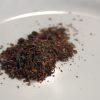
    Mint chocolate rooibos tea

    Strangely enough, despite my love for mint chocolate, I’m not really a big fan of mint on its own–though those pastel colored dinner mints are pretty tasty. My husband is always encouraging me to add a sprig of peppermint from the garden to my iced tea, but I don’t really like mint when it’s just mint! Which is part of the reason I was a little let down by this tea. Despite the chunks of chocolate in the mix, the chocolate flavor gets totally lost. The mint flavor is more subtle than that of regular mint tea, though, which is a point in its favor, especially since I find most mint teas to be too strong.

    While I hadn’t noticed any bitterness in the other types of rooibos I’ve sampled, this one had a definite bite and was much improved with the addition of rock sugar. It was much better sweetened, making it a bit more like mint candy. I also found the sweetened tea to be much more refreshing than it was when it was unsweetened, so I was still happy to finish the cup.

    It could also be that my sample packet was from the bottom of the barrel, but I noticed a great deal of my tea was ground so fine it was a reddish dust. This wasn’t very pleasant in the first cup I had, since I’m not a fan of sediment swirling around in my drink or leaving a gritty feeling on my tongue. By the time I got to the bottom of the sample packet, I was straining my tea through a coffee filter because so much of the mix escaped the super fine mesh of my tea pot’s infuser. But as I said, this could just be luck of the draw, since all my other rooibos flavors seem to be a more normal size, staying comfortably inside the infuser where they belong.

    Overall, it’s a good replacement for normal mint tea on my shelf, but not enough to satisfy that chocoholic craving.

  • Categories of female writers

    A couple years ago, we attended a company dinner/Christmas party held by my husband’s then employer. It was my first time meeting most of his coworkers, and the place they picked to host the party was at a restaurant that was well outside the range of what we could normally afford. The food was great but I was a little out of my element, surrounded by strangers in a restaurant I was a little under-dressed for. And then, of course, there was the small talk.

    “So what do you do?” was the first question directed toward me, posed casually across the table by one of the executives whose name I’d be doomed to never remember. But I’d been expecting the question and had recently finished one book and had already started outlining the next, so I gleefully announced that I was a writer.

    “Oh,” he said, smiling and nodding. “What kind of romances do you write?”

    Awkward.

    Such is the plight of the female writer.

    It’s strange to be pigeonholed by people assuming that if I write, I must be writing for Harlequin. I could be wrong, but I don’t think they’d be interested in my epic fantasies. Sure, there are tales of love threaded through them, but that doesn’t make them romances. Love and romance appear in any number of books without categorizing them as romances.

    And yet since the romance genre is the only female-dominated genre in literature, obviously that means women only write romance. The rest of the publishing world is ruled by men–to the point that only around one third of professionally reviewed authors are female.

    You get occasional breakouts, but even then they can suffer for being female. J.K. Rowling was famously advised to publish Harry Potter under her initials instead of her name, because the writing would sell better if people didn’t know she was a woman.

    And just in case women getting the short end of the publishing stick isn’t enough, consider that V.C. Andrews, one of the most prolific female authors of all time, has been ghostwritten by a man for years.

    So what does it take to be successful as a female writer? Probably the same thing it takes to be a successful writer at all: writing well and writing often. Having a good book is obviously the first step. If there are other secrets, though, even VIDA doesn’t seem to know. One thing that should be simple to understand, though, is that there are no categories for female writers.

    You are a writer, or you’re not. And if you write mystery, science fiction, fantasy, or non-fiction, then you are a mystery, science fiction, fantasy, or non-fiction author, regardless of your gender. Should be easy to remember, right?

    As for the awkward moment at the business dinner, it passed. The guy looked sheepish but quickly lost interest in speaking to me, while the women flanking him shifted uncomfortably, understanding exactly what had transpired in the past twenty seconds. It wasn’t the first time I’d been categorized that way and certainly not the last. I’m sure I have just as many more assumptions like it waiting ahead for me.

  • 4 fantasy animals that are totally real

    With a wealth of fantasy fiction at our fingertips, it’s easy to see how the lines can blur between fiction and reality. After all, a poll in the UK a few years back revealed that twenty percent of British people believed Sherlock Holmes was a real person. But sometimes, the pendulum swings the other direction.

    It’s amazing what people think might be made up–I had a great conversation with a friend who had always thought four-leaf clovers were fiction, while another friend of mine shared a conversation in which someone asked if mountain lions were real. Having seen both of those things in the wild, I can verify that yes, they do exist. But what about some other creatures that might be more real than you thought? Here’s a few that really exist.

    Sea serpents

    We’ve seen them on just about every fantasy map, and a few real maps as well. But those long, sinewy bodies with ragged dorsal fins depicted arcing over the waves aren’t as far-fetched as you’d think.  The giant oarfish is a real-life sea monster, with specimens confirmed at sizes of up to 36 feet in length. While sightings can’t be confirmed, they’ve been reported in sizes longer than 50 feet. And why not? They’re primarily deep sea creatures, and heaven only knows what’s down there. But seeing a video of even a small oarfish swimming in the shallows, it’s no wonder they obtained such a mythical status.

    Dragons

    While depictions of these creatures have been historically fanciful, in early tales of knights and dragons, the fire-breathing beasts often lacked wings. In many countries, such as most of Asia, they never acquired them at all. It stands to reason that early dragons were most likely just large reptiles that weren’t commonly seen. Alligators and crocodiles present one possibility, and giant monitors like komodo dragons quite another. But what if the idea of flying lizards wasn’t so crazy? Turns out they do exist. 42 recognized species, in fact, all part of the genus Draco. Yes, they’re even named dragon! Although they’re small, some species–such as draco volans–are brightly colored, fierce-looking little beasts. They traverse the air using membranes that extend from the ribs and allow them to glide. Gliding might not sound impressive, but after watching one catch an updraft and sail 200 feet before stopping in another tree, you might change your mind.

    Dire wolves

    Although popularized because of series like Dungeons & Dragons and Game of Thrones, there’s nothing fictitious about these beasts–but you won’t be seeing them any time soon. Native to North America, dire wolves are long extinct, but well-documented as having existed. Thousands of complete skeletons have been retrieved from the La Brea tar pits in Los Angeles. Although related to modern-day gray wolves and thought to look similar, dire wolves were around 25% larger than the biggest modern-day wolves, making them around 5 feet long and weighing up to 200 pounds. You can rest easy, though: dire rats are made up for D&D, so you won’t run into any R.O.U.S. any sooner than you’ll cross paths with a dire wolf.

    Narwhals

    Narwhals are popular on the internet, and why not? They’re pretty fantastic. But despite their popularity, a stunning number of people think the remarkable unicorn of the sea is as made-up as any other unicorn. Both real and near threatened, narwhals can be found in the icy Arctic ocean. The horn they sport is actually a tusk that grows through the upper lip, usually grown by males, though females occasionally bear small tusks as well. While most narwhals have only one tusk, around one in 500 have two, and some have none at all.

    Have you ever encountered an animal someone thought was fake?

  • Eiri and the Dragon

    Eiri and the Dragon

    Too long she waited, bowstring drawn taut beside her ear. Fingers cramped and muscles burned, but she waited. Too close to move without being heard, too far for a killing shot unless the angle was just right. But she waited, breath held, body still, arrow ready and eyes on the target that stirred below.

    The stag’s head turned and the creature let out a bellow and whine, collapsing to the earth with an arrow in its eye.

    Snarling, Eiri let her bowstring go lax. “Kolfhe!”

    Her shout was answered by laughter from elsewhere in the trees.autumn2

    Sliding her arrow back into its quiver, she slid from her perch, landing in the soft bed of decaying leaves. The pleasant scent of moist earth rose to greet her as she strode toward the stag. She took her time, though Kolfhe sprinted, the two of them reaching the beast at the same time.

    “Head too far in the clouds to take a shot again, eh?” he teased, kneeling to inspect his work.

    It was a good shot, she had to admit; she just wouldn’t out loud. Instead she rubbed her nose to discourage the tickling smell of the forest, unfastening her bowstring. “There’s a difference between daydreaming and caution.”

    “And both slow you down. We’ve discussed this before, Eiri. There’s a time for thinking, and it’s not when your weapons are drawn.” Gentle teasing became stern admonition, though she saw the way his brow puckered with concern. “This time it was a deer, nothing to fear. But next time, it might be raiders. Or worse.”

    Eiri slipped her bow into its sling on her back. “And when it is something to fear, my draw will never be too slow.”

    Kolfhe shrugged and said nothing more, scooping the stag onto his shoulders and grunting as he stood. Had he been kinder, she might have offered to help. Instead, she led the way back to the village.

    New thatch stood bright against the weathered wood of cabins, a handful of men still working on the roof of the mead hall in the center of the village. Children clustered around the stairs to listen to the stories shared by grandmothers while the men and women of the village worked, hunting and foraging in the comfortable cool that whispered of winter to come.

    Most homes already had game strung up from the eaves, though Kolfhe carried this catch toward the mead hall. A wild boar and a brace of rabbits already decorated his cabin, enough to feed him for the winter. Had he still shared his home with his mother it would have been different, but fever had claimed her in the spring. Not a sorrowful thing, he insisted; his mother had lived long and lived well. With that in mind Eiri felt little sadness for the kind woman’s departure, but winter was coming, and she hated to think of Kolfhe whiling away the bitter nights on his own.

    “A good meal for tonight, I’d say,” he remarked as he tied the stag’s hind feet. “And good for the stew pot tomorrow.”

    Eiri laughed, helping him raise the animal to hang from the corner of the roof. “And what would you know about stew pots? Yours has been empty all summer. You’ve eaten every meal in the mead hall.”

    “And I’ve every right to, when I’m the one catching all the food!” He waved her away with a smirk, drawing his belt knife and sizing the deer up for cleaning.

    She gave him his space, sitting on the steps with the grandmothers and children, though she watched him work.

    Kolfhe was pleasant to watch; the spirit of hard work was a good trait in a man. He wore furs and leather hunted by his own hand, well cut and finely finished. He took pride in his skills, and he had many. But he was pleasant to look at in other ways, too, with his lively earth-brown eyes and his wind braids the color of new straw.

    Had she the nerve, she’d have offered to tend his stew pot for him.

    Sighing, she pulled herself away and strode into the mead hall to assist with preparation of the evening’s feast.

    Sixteen houses ringed the longhouse, all of them full, most with more than one generation under its roof. Some preferred the privacy of their own homes, but often the entire village met for meals within the mead hall. Long stone-walled fire pits divided the single room lengthwise and barrels of wine, mead and ale reached to the rafters at the far end. Tables sat in orderly rows, some lining the walls beneath the rich tapestries that told the history of the village. An elder or two could almost always be found there crafting another, and now was no exception. The two women greeted her pleasantly and Eiri responded in kind, though she didn’t let herself become distracted by the image they worked into cloth. Everyone in the village dreamed of their exploits being woven into the tapestries, but dreaming was for another time.

    Banking the fire beneath the spit, she aided the elders in peeling vegetables and grinding herbs for seasoning as she always did. Her own father was often there for preparation, but his joints pained him more as winter approached and his absence likely meant the ache in his knees would keep him by his own hearth tonight.

    Her mother managed most business around the house and she and her brothers saw to the hunting and foraging. All of them agreed it was past time for him to retire and work as part of the elder council, though Eiri expected he would resist until he was no longer able to walk. By that time, she thought her brothers would be married, some in their own cabins. And she… well, who could say? She watched as men carried the cleaned deer in and mounted it on the spit, laughing amongst themselves.

    “Let Kolfhe steal your game again, eh?” one of the men teased.

    Another laughed. “Maybe she should ask him for hunting lessons.”

    “Or pay attention while they’re out there, she might learn something just from looking. She brought home what this week, one pheasant?”

    “Three,” Kolfhe corrected as he cleaned his hands, giving the other two a glance and frown. “And one was given to Elder Narral, since his boy can’t hunt with that broken arm.”

    “I can hunt fine on my own,” Eiri said.

    The first man laughed again. “The problem is you just don’t hunt alone!”

    She did not reply to that, leaving them to laugh amongst themselves while village folk filtered into the longhouse and settled for the evening meal.

    Her plate was just emptied when Kolfhe sought her again, seating himself across from her without invitation while the rest of the diners laughed and sang as they always did after night fell.

    “They don’t mean harm.” He rested his arms on the table, leaning forward to catch her eye. “You don’t have to eat alone.”

    Eiri raised a brow, draining the last of her mead and thunking her wooden cup back to the table. “And what makes you think I’m alone because of what anyone says?”

    He nodded. “Of course. You’re alone because it lets you keep thinking, eh?”

    She sneered. “I eat alone so I don’t have to worry about some sorry, drunken huntsman spilling his ale in my lap.”

    “Well,” he laughed, “I’m not drunk. But I am sorry, just the same.”

    Reaching for her cup again as she gathered her tin cutlery onto her plate, Eiri considered getting more mead instead of putting her things away. If the two of them were going to talk, conversation over a drink might be pleasant. “For what this time?”

    “For stealing your kill. Again.” He smiled sheepishly, scratching the golden stubble on his chin with a thumbnail. “The boys like to tease, but we all know you’re a fine hunter. And I know you could fill my stew pot as well as I do myself.”

    “Why, Kolfhe,” she murmured. “I could do that and more. Your pot is missing an ingredient, you know.”

    Kolfhe’s eyes sparkled with a joke and he opened his mouth to share it, but all that could be heard was a roar that shook the dishes on the tables and rattled the lamps hung from the rafters overhead.

    Screams of livestock mingled with the cries of children, the men and women of the village flying to their feet, many already stringing bows. Eiri shoved herself from the table, scrambling through the push of people to retrieve her bow and arrows from where she left them leaning against the mead barrels by the wall.

    The village streets were already filled with people calming animals and aiming weapons by the time she ran down the stairs, though following the point of their arrows to the sky showed her only open air. Eiri turned, scanning the forest and the horizon, squinting against the dusky shadow of deepening night.

    Wing beats and another roar drove the animals to renewed frenzy, and as a shadow sailed overhead, Eiri gasped.

    The night-dragon’s claws raked through thatch as it flew above the village, its eyes gleaming gold in the night. A flurry of straw spun on currents raised by its wings, obscuring vision, though dozens of bows still swiveled to follow the beast’s path. Bows that were useless in such tight quarters, where no one could be sure of what—or who—could be struck by a stray arrow.

    “Lure it out!” Kolfhe shouted, waving an arm to rally attention. “Take it beyond the village, away from the trees!”

    A lone arrow flew, striking the great shadow that wheeled overhead, making it shriek in rage.

    Eiri knew the bands of color painted on the shaft without looking. Only one other archer in the village was skilled enough to strike a moving target in the dark like that. But the last night-dragon to have attacked had been fought by her grandfather; the last night-dragon was why he no longer sat with the elder council.

    “Kolfhe!” she shouted. Arrows beckoned the beast toward the western sky and she followed.

    Too late, she reached the grazing field as the dragon plunged from the sky, falling on him with claws as daggers and teeth as knives.

    Stifling a cry, she threw her bow and quiver aside, darting forward.

    But the night-dragon didn’t kill him, instead pivoting with its paw on Kolfhe’s chest, its golden eyes shining as it dropped its head to her level. Twice as tall as any horse, it hunched uncomfortably, a forked tongue flicking from its mouth.

    “Foolish girl!” the creature called, its voice rasping and deep. “You come to face me without any weapon?”

    Eiri froze in place, her mouth falling open. “You can speak?”

    The dragon’s head jerked back. “Of course I speak! Do I look a fool? Night-dragons are an ancient wisdom, rivaled by none!”

    Curling her hands to fists at her sides, she strode forward. “If you’re so wise, then you can be bargained with! What must I offer to make you go away and leave Kolfhe unharmed?”

    Kolfhe coughed against the pressure on his chest, tearing at the earth in effort to pull himself free. “Now is no time for cleverness, Eiri. Leave your thinking and let the others fight, they won’t take aim with you on the field!”

    The dragon shifted, its claws pricking at his throat, and he grew still. “Cleverness, the little man says. Do you think yourself clever, girl?” Again the dragon’s tongue flicked before its nose, the sight sending a chill down her spine.

    “I am as clever as I must be,” she said.

    Throwing its head back, the dark-scaled beast cackled. It was a cold, grating sound, interrupted by wheezing breath. “A human, a human! A human thinks she’s clever! And all the faith your friend has in you, hmm?” It leered down at Kolfhe and laughed again.

    Gritting her teeth, she steeled her resolve, striding closer still. “Will you bargain or not, dragon?”

    “I will, clever girl. If only for a laugh. Since you doubt the wisdom of a dragon. You will have one chance to outwit me, and only one. Should you succeed, you may have your man.” The dragon’s lips curled back in a mockery of a smile. “And when you fail, you will have the pleasure of watching me feast on his innards before I have yours.”

    Eiri’s heart skipped a beat. She was clever enough as far as humans went, but night-dragons were ageless; there was no way of knowing how much knowledge one creature held. How was she to outsmart a mystery?

    “You will ask me one question,” the dragon continued, lifting a forepaw and raising a single claw. Kolfhe grunted as the beast shifted more weight onto him. “And then you will see how wise night-dragons are.”

    Swallowing hard, she stared at the creature, studying it from head to barbed tail-tip. It was a frightful thing, its scales dusky blue-black to blend in with the sky, its head horned and ridged and its wide golden eyes glittering in the feeble light that came from villagers’ torches. A night creature, through and through. Blinking, she straightened. “If I am to ask one question, you may only have one guess as to the answer.”

    The dragon’s eyes narrowed. “What trickery do you have up your sleeve, girl?”

    “No trickery, only fairness. If you want more guesses, then I shall have more questions.”

    The beast scoffed. “Fine! One answer it is. I won’t need any more.”

    “Very well, then.” Eiri cleared her throat. “It always rains on the day of your birth, but all are eager to celebrate outdoors if only for a glimpse of you. What must you be?”

    Startled, the dragon twisted its neck and peered at her with its head upside down. “What must I be? What must I be… Something only seen in the rain, of course…”

    She smirked. “What’s the matter, night-dragon? I thought you knew the answer?”

    “Silence!” The dragon’s tongue flickered as it hissed. “Such knowledge as mine takes time to sort through. It always rains… What’s in the rain? Snails, geese…”

    “Is that your answer?”

    “No!” Grumbling beneath its breath, the creature bowed its head. “And all celebrate outside for a glimpse… a glimpse of… ah!” Cackling, the beast thumped its tail against the earth. “You must be lightning!”

    Kolfhe burst into laughter.

    Releasing her held breath, Eiri grinned. “Wrong, dragon. Humans fear lightning.”

    The dragon screeched in anger, rearing onto its hind legs and clawing at its horns in distress. “What? What?! I cannot be wrong! What else could it be? There is nothing! Nothing!”

    Leaping to his feet, Kolfhe bolted away from the beast. “Now!” he roared, throwing his arms around Eiri and dragging her to the ground. Dozens of bowstrings twanged behind them, arrows lit with burning oil streaking through the night sky.

    Cries of distress became a bellow of anger as arrows struck home. The dragon flailed, tearing burning arrows from its flesh, reeling backwards. Eiri staggered back to her feet as the villagers advanced, retrieving her bow as they lit new arrows and fired again.

    “Strike true,” she whispered to herself as she took aim, leveling her arms, tracking the wild movements of the angry dragon’s head.

    The villagers loosed arrows and Eiri’s flew straight, striking the beast just below its eye.

    Shrieking in agony of pain and defeat, the dragon launched itself into the air, wings beating frantically to carry it away.

    Kolfhe was not the first to raise a cheer, though he found her before anyone else, sweeping her into his arms. “Eiri, my clever girl!” he crowed, squeezing her to his breast. “How in the world did you know what to ask?”

    Eiri flushed but met his eyes readily. “Because it was a night-dragon, of course. If they only come out after dark, how could they have ever seen a rainbow?”

    Laughing, he kissed her hair.

    “Now,” she said with a smirk, laying a hand on his cheek. “Where were we?”

  • Why I gave up television

    Moving to the city was a shock in a lot of ways. I’ve gotten used to being here and have to admit some of the perks are nice. On the other hand, there are annoyances you have to deal with in the city that you never get in the country. Things like door-to-door salesmen, for example.

    Back in early spring I was ambushed on my way to the mailbox by a guy trying to sell DirecTV subscriptions and despite me repeating “No thanks” and trying to keep the baby on my hip happy, he kept talking, kept pushing, and followed me up the driveway to the house trying to sell me on it. Finally, since “no thanks” wasn’t getting the message across, I said those words that seem to confuse so many people: We don’t have television.

    This is where I always have to clarify, because people can’t seem to wrap their minds around the concept, which seems simple enough to me. We have A television. We have a really nice 42 inch television, in fact, which is just the right size for our living room and suits our needs perfectly. But that television doesn’t have any channels. We don’t have an antenna. No receiver box. No satellite dish and no cable. No Smart TV internet connection. The television is hooked to our video game consoles and that’s it.

    The salesman asked why not. I said I had better things to do. Because he hadn’t dug himself a deep enough hole with me yet, he crossed his arms and said “Like what?”

    Yikes.

    Needless to say, my responses suddenly weren’t so polite any more. There are a lot of reasons to cut TV out of your life, though, and they shouldn’t be difficult to grasp. Here are a few that come to mind right away.

    Too much negativity

    More bad news greets you every time you turn on the TV. And because bad happenings in the real world aren’t enough, networks bombard us with dark and heavy subjects in entertainment media, too. Some people love that, but as someone who frequently struggles with anxiety and depression, I can’t handle it. Cutting TV let me reduce my daily intake of discouragement and drama, which helps my mood incredibly. In turn, improving my mood improves my health and gives me the energy to pursue the things I want to accomplish in life.

    Too many ads

    When I still had my day job, my coworkers would sometimes start conversations with things like “Have you seen that commercial where…” and inevitably would look at me like I had two heads when I said we don’t do television in my household.

    I get that some advertisements can be funny, but that’s kind of the point. Their entire goal is to make an ad that resonates and sticks with you, so that their brand name stays rooted in your mind. My mind is full enough without making room for advertisements, which compose up to one quarter of a show’s air time.

    Expenses

    I don’t know many people who are content with standard network television, but the next step up is money out of the monthly budget. And even then, are you really winning anything? You might have access to more of the shows you’re interested in with cable or dish TV, but the choices become overwhelming fast and it’s easy to lose time browsing the TV guides or just channel surfing to see what’s on. Which brings me to the most important point…

    Time to spare

    Trying to find time is constant battle for everyone I know. Everyone faces a time crunch and no one ever has the time to do everything they want or need to do. But as soon as people start talking about all the shows they follow, I start losing sympathy for the ones who find themselves perpetually short on time. Mind you, I’m not criticizing fandoms or interest in programming, since I’ve had plenty of shows I loved in the past. But I abhor the idea of being a slave to airing dates, especially when streaming services like Netflix and HBOGo give you access to programs you like while allowing you to work it into your schedule. You can watch from the passenger seat during a trip or watch five minutes here and there as you have time to sit and take it easy. But people who find themselves rearranging their lives to fit network airing schedules are rearranging to fit the wrong things. They can shuffle everything around to make sure they have an hour to spare for commercial-laden viewing, but they can’t seem to make room for 15 minutes of dream chasing anywhere else in the day.

    On top of that, television is a huge time sink. Watching a movie is one thing. That’s something you can fit in on a weekend and have the whole viewing experience done in two hours on average. Two hours on a weekend here and there is nothing when you consider as many as thirty hours you might invest during the course of just one viewing season. I can do a lot with that much time, and cutting television programs out of my life has left me with time to do things much more important to me, like writing books, improving my artwork, and spending more time with my loved ones. And when I look back at the time I’ve been without TV, I realize I’ve done a lot of those things!

    So there you go, TV sales guy. “Like what”, he says…

  • Devil Breaker

    Devil Breaker

    Years ago, before I got married, I had a necklace I loved. At the time I bought it, I didn’t know my future husband had the same necklace, or that he would end up with a tattoo of the emblem before we wound up together. I wore it a lot then and I wore it all the time after we became a couple, as it was one more link between us, something valuable when we were on opposite sides of the globe.

    Generally speaking, nobody noticed me wearing it. Occasionally I received comments from people who recognized it. And then there was one evening at work where an elderly gentleman took notice of it while I was ringing up his purchases. He didn’t comment, though, just staring until I found myself so unnerved that I stopped what I was doing. That was when he finally looked me in the eye and said “Where did you get that?”

    “This?” I asked, trying to be polite, though I knew what he was looking at.

    “Yes,” he said. “Your devil breaker. Where did you get it?”

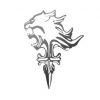
    Sleeping LionheartI told him I found it online and bought it there. He looked at me oddly and asked if I knew what it was. I laughed nervously, telling him I was under the impression it was a cool necklace from a video game.

    “It’s a devil breaker,” he said. “See? It’s just like mine.” He reached into his pocket and pulled out a green stone. I don’t know what sort of stone it was. It looked too dark to be jade, though the color was smooth and uniform, so I’m not sure what else it could have been.

    It was badly chipped and scratched, missing a piece from the tip, and most of the carving’s details had been worn away from years of being touched. But it was there, and he was right. Whatever it was made of, it was carved into the shape of a lion’s head on a cross.

    I was surprised, and also confused. I’d never seen the symbol anywhere but this game, nor heard it called by any names but those that related to the game it was from. So I asked him what it meant and he smiled, telling me the story.

    He had served in the military when he was younger and, near the end of the war, it was given to him by a Vietnamese refugee. He said the refugee had carved it while the war was going on. He claimed it had been his protector, and now he wanted to pass it on as a gift, because he knew the soldier in front of him would have many demons and hardships to face–both during the end of the war and long after it. The lion would be his protector, the refugee said. He called it a “devil breaker.”

    The gentleman told me he was skeptical at first, but as the war drew to an end and he went through a lot of close calls that should have taken his life, he always felt like he was safe. And after the war, when he was struggling with post-traumatic stress disorder, it helped more than anything else. Every time he’d have a flashback or nightmare, he’d touch it and his panic and fear would be gone in an instant. And so he never left home without it, keeping it with him since it was gifted to him by its creator. A treasure kept always in his pocket, and laid at his bedside when he sleeps. He said he was happy that I have my own and told me I should always keep it close.

    When I got home, I spent a great deal of time trying to find information on the symbol and the name the gentleman had used for it. But I turned up nothing, no matter how I phrased the search. But the story spoke to me, and made me stop and think about why I was wearing the necklace in the first place.

    Out of all the symbolism in the world, it was a lion on a cross. An emblem that just happened to be tattooed on my fiancé’s arm.

    Something strong and reassuring, something to protect me and help me feel safe. Something to encourage me and help me find peace in troubled times.

    My love, my guardian given flesh.

    My devil breaker stands beside me every day.

  • Keepers

    Sunday was an exciting day for me, since it marked completion of the first draft of Born of the Moon–the sequel to my first novel, Death of the Sun. It’s sort of funny, since Death of the Sun’s first draft was also completed on a Sunday. I don’t recall what day of the week I completed my two fantasy novels, but since they’re floating in limbo until I either have success with querying or decide to give them another overhaul, Born of the Moon has had my full focus for the past two and a half months.

    When working through the first draft, there was originally another character: Thaddeus. But he wasn’t introduced until late in the story, and as I worked through writing the book, I eventually decided to go a different direction with the last few chapters, rendering his role useless. With that in mind, I cut him from the book completely.

    Sometimes removing characters makes me sad because just like the characters that make the final cut, these are fictional people who have grown with the story and grown on me, as well. Sometimes, like with Thaddeus, they’re still present in the story in my head, just not in the final product. And sometimes, like with Thaddeus, I like the character well enough to consider putting them in future works.

    Alas, for Thaddeus, it probably isn’t meant to be. I don’t intend for there to be another book that takes place after Born of the Moon (but there probably will be one set before Death of the Sun) so he doesn’t get that kind of option. Instead, we’ll talk about him here–particularly, talk about his job.

    Thaddeus is a Keeper. A vampire who turned in the early 1800s, and the only vampire the others have ever encountered who is physically old. His job is vital and, while distinguished, it’s not a profession pursued by many of the undead. The name “Keeper” is a simplification of their many jobs, but mostly refers to the organization’s fondness for paperwork and bookkeeping.

    Being a vampire comes with its own set of hurdles, you see. Things we take for granted as being part of the everyday–credit cards, driver’s licenses, leases or purchasing property–are suddenly made difficult by living forever. This is one area where Keepers come in. From managing money to organizing relocation, they exist for the sole purpose of making vampire lives (or unlives, I guess you could say) easier.

    Keepers are not bound by the rules of the various clans, but as they are expected to remain a fully neutral party, they are forbidden from mingling with vampires outside their organization. The largest reason for this is that they are also responsible for minding the best interests of vampires as a whole, which sometimes leads to the most weighty part of their duties: extermination.

    From time to time, you might encounter a vampire hunter who takes their work too seriously. As Keepers are the only vampires allowed to kill humans for reasons other than feeding, they are the ones expected to deal with threats such as these. Conversely, in the event a vampire takes to their new undead life with too much vigor, Keepers are allowed to slay their own kind–as long as it serves the purpose of preserving secrecy or sheltering a clan from further harm.  Although there are frequent feuds between various clans, no clans allow vampires to kill or feed off one another, meaning Keepers are the sole defenders of order among their own kind.

    Although their services are considered necessary by the other undead, Keepers do not work for free. Monetary compensation is both accepted and encouraged, but Keepers are also well known for using a barter method, trading favors for favors, which often helps them complete their work somewhere farther down the road.

    For now, this is it. Just another idea that didn’t make the final cut. But it was there for a while, and who knows–Born of the Moon won’t be getting a sequel, but with ideas like this floating in the tank, I suppose there’s always room for a spinoff.

  • Persimmon Tree Tea’s Genmaicha green tea

    Persimmon Tree Tea’s Genmaicha green tea

    Genmaicha was one of those teas that sounded interesting based on the description. The name means “Brown rice tea” and, true to its name, it’s a mix of green tea and toasted grains of rice.

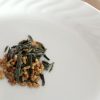
    GenmaichaI wasn’t sure what to expect from this tea, though I knew it would have plain green tea as its base. I didn’t know what to expect from the toasted rice. I expected something kind of like Rice Krispies, for whatever reason, and couldn’t have been farther off the mark!

    There’s just as much rice as there is green tea in this drink, so the tea flavor was very mild and the drink brewed very pale. Most of the flavor I noticed was that of the rice, which was warm and almost nutty in flavor. It also tasted definitely “toasted” in that I noticed a hint of burnt flavor, probably from a piece or two of overcooked rice. That aside, it wasn’t unpleasant.

    I meant to add a little sugar, just to see what would happen, but my toddler took such a liking to this cup that it was all gone before I even had a chance.

    Not bad, definitely unique, and has the 2-year-old stamp of approval.