Beth Alvarez - Author of Epic Fantasy
  • Q&A, volume 3

    It’s been a while since I did one of these! The funny thing about questions is that everyone tends to ask the same questions over and over again, meaning it isn’t very often that I get something new to answer.  But here’s a small collection of things I’ve been asked in the past few months that I thought I’d take the time to answer here. In case you missed them or want a refresher, you can read volume 1 and volume 2 elsewhere on the blog.

    Q: How many times do you edit a manuscript before considering it done?
    A: It depends on the piece. Different stories have different needs. Most short stories I’ve done only needed one pass. My current project is in its sixth revision and out for review, with at least one more editing pass to go before it’s ready for querying.

    Q: What’s your favorite snack for when you’re writing?
    A: Tomato Pretz! I try to limit myself to one packet while I’m working, because I get them so rarely. I could easily eat the whole box. Other favorites are Cheez-its or Goldfish crackers, but I rarely eat while I’m writing. If I’m lucky, I can have a drink treat I don’t consume on a regular basis – Either a Pepsi Throwback or a Starbucks cafe vanilla frappuccino.

    Q: Why do you write fantasy as opposed to, say, sci-fi, or western themed stories?
    A: While I primarily write fantasy, I do dabble in other genres as well! Fantasy is what feels most like home to me, it’s what I’m able to write most easily. But while I’ve often read statements from authors saying you should never jump between genres, that just doesn’t make sense to me. I could write fantasy forever, but it will never help me grow as a writer. Experimenting in other genres has actually done wonders for my understanding of how to write and how to write well, but that’s something we’ll probably explore in a longer post at a later date.

    Q: How did you come up with the ideas for your characters?
    A: I really don’t like to take credit for them. Most of my characters are born through a very organic process, where I have a vague idea of what their purpose is to be. Everything from their appearances to their personalities comes without me really planning or inventing it.

    Q: What is a pet peeve of yours when reading someone else’s work?
    A: Predictability. I realize that a lot of this might come from reading a lot within a narrow selection of genres, but I very frequently find myself able to predict the outcome of a book from the first three chapters. I like a lot of intrigue and plot twists, and sometimes attempts at foreshadowing come across more like a mallet to the face. Never a good thing.

    Q: What do you look for in a good book?
    A: I like big books. Short ones can be okay, but when I read, I want to be transported somewhere far away and immersed in a very rich world. World-building is really important to me in things I read, but it’s always second to the actual story being told. I like a fairly clear direction, and a crazy, bumpy road to the destination.

    Have a question for me? Leave it in the comments to be included in the next volume!

  • Here for the chicken

    A lot of people ask me where I get my ideas for books. While some are the sort that come to me as I sit and stew and try to think of a story, my favorites all come from dreams.

    There’s something weird about the unconscious mind, those completely unfettered thoughts and notions that can have such an impact they even change our lives. My husband and I have often discussed our dreams, and while I have dreams where I’m another person (A character in a story or some such) all the time, he never does. A lot of times, dreaming a story means I take the role of one of the characters, or else I serve as some kind of omniscient spectator

    And then there’s ones like Rune’s dream.
    I couldn’t tell you what brought it on or how it translated into the story that came from it, but my dreams were where he was created.

    It started off as a dream mimicking reality, me sitting in my room at my old DOS-based Packard Bell computer. I had been trying to come up with a story for weeks in waking life, and I guess that frustration carried over, because that’s what I was doing in the dream – Sitting at the computer, staring at the blinking cursor, trying to think of what I could write.

    Then I smelled something delicious. I was a teenager then, living with my family in an old farmhouse. In absence of actual ductwork, most of the rooms upstairs had vents to the floor below. The room I shared with my sister was over the kitchen, so we were often treated to the tantalizing smells of dinner long before it was done. It smelled great, but I didn’t know what she was cooking, so I got up from my chair and went downstairs to see.

    That’s when I saw him.

    Standing right next to the stove, watching my mother fry chicken like it was nothing out of the ordinary. Like he was nothing out of the ordinary.
    If you’re not familiar with Rune by now, let me offer an old drawing from several years ago that I never finished:

    Well.
    Needless to say, I was confused, so I posed the only logical question: “Who are you?”
    He looked at me, looked around, and said, “I’m just here for the chicken.”

    Right.
    As much as I’d like to talk about how then he took dream-me off into grand adventures in the fantasy world that would end up consuming the rest of my life as a writer, that’s where the dream ended. Right there, nothing else.
    Just here for the chicken.

    So how did that turn into the inspiration for a 180,000-word fantasy epic and two subsequent, equally-long novels that aren’t finished yet?
    Beats me. I have no idea. But when I woke up, the whole story was already fully-formed in my head.

    So that’s become a bit of a joke between me and a lot of friends.
    Sometimes characters and stories evolve as you seek them, and sometimes, they’re just there for the chicken.

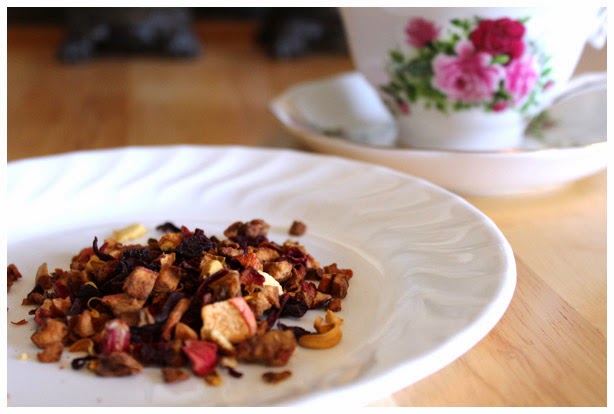
  • Persimmon Tree Tea’s Vintage Black tea

    Did you know that over ninety percent of teas purchased in the western part of the world are black teas?
    Green tea has seen a bit of a rise in the past decade or so, as people become more aware of its excellent health benefits. But black tea remains the traditional staple tea found in most households.

    One of the primary reasons is that because of how it’s prepared, green teas can slowly lose their flavor over the course of about a year. Black teas retain their flavor for several years, meaning they’re easier to transport and trade. Since tea was so vital to trade that it was once used as currency, it’s no wonder that black tea took root as the most consumed outside the regions that produce it!

    But that’s a little beside the point, though today’s tea is definitely a traditional black tea.

    One of the teas I ordered with my budgeted “fun money” was this variety, Vintage Black from Persimmon Tree Tea. I always drank unremarkable black tea while growing up, so I thought this would be similar to what I could get in tea bags from the grocery store. Not quite!

    While the flavor of Vintage Black is similar to typical grocery store black tea, it’s much, much stronger. It’s so much stronger that I had to stop and double-check to make sure I hadn’t used the wrong amount of tea. In fact, I’d used less than the recommended amount!  It has a very rich and full-bodied flavor, though because of how strong it is, it’s easy for it to turn bitter while brewing. I’d recommend cutting the amount of tea used just a little, and using a slightly cooler-than-suggested water temperature for best results.

    It was a little too strong for me to enjoy it without adding sugar and milk, but a half teaspoon of rock sugar was plenty, and just a splash of milk mellowed the flavor out quite pleasantly. Definitely a good wake-me-up morning tea, even though it has less caffeine content than typical black teas, but I prefer something a little more mild for my afternoon cup.

  • Book review: The Last Light of the Sun

    Now and then, as I find new books to read, I encounter books that frustrate me. This can happen for a lot of reasons, but there’s nothing that frustrates me quite like a good story that suffers from poor execution. These result in books that, while featuring interesting plots and intriguing concepts, are a disappointment.

    This is where I stand with The Last Light of the Sun by Guy Gavriel Kay.

    The book was given to me by my mother, who knows my taste in reading material pretty well. She was introduced to the author by my sister-in-law, who I sadly have only spoken to about twice, because she’s one of those people who is so intelligent and well-spoken that they accidentally make you feel too dumb to converse with them. I was excited by the idea of reading the book so I could finally have something to discuss with her. However, I don’t think this book is the ideal conversational gateway.

    Before I say more, let me clarify that I liked the story itself. It was interesting to see how the different plots came together at the end, how the characters’ lives became entangled. I enjoyed that part, but the execution of the writing itself left me exasperated enough that I don’t see myself picking up another book of Kay’s unless I find myself especially short on reading material.

    The book begins in a third-person limited perspective, which is pretty much a staple of fiction. It’s easy to understand because you are given one character at a time to follow, hearing their thoughts and seeing revelations through their eyes. Unfortunately, the author is incapable of staying consistently in-character. There’s a great deal of “head hopping” going on throughout the book, abruptly changing from one character’s perspective to another and back again within the span of a few paragraphs, oftentimes for no obvious reason. It’s jarring, difficult to follow, and disruptive to the story being told.

    The author also has an incredible talent for sapping all suspense and anxiety out of scenes and situations by either cutting to absolutely irrelevant characters or interrupting action scenes with a pointless out-of-character narrative that talks of philosophy and understanding of various situations. Narratives such as those are not a bad thing, when used at the right time. The worst possible place for such monologues to go is right smack in the middle of a high-tension action scene, and that is precisely where you always find them in this book.

    And when I say “irrelevant characters” I don’t mean cutting to established characters who are doing something unrelated to the scene at hand, I mean absolutely irrelevant, even in the author’s own words. Nothing drains excitement like going straight from a sequence of battle and killing to a scene describing how an unimportant farm girl’s life is not at all affected by the battle and killing happening nearby, and then following said girl until the end of her life.

    Repeatedly switching to these useless characters caused me a great deal of grief, as returning to the major characters inevitably meant picking up after all the clash and fanfare was over, leaving me reading about the mundane aftermath of events. It strikes me as a terrible shame, because I wanted to like what I was reading. And while I did like the story and its characters, as well as the unusual representation of fairies and the amusing fascination the vikings–vikings!–had with them, the problems with the storytelling made it difficult for me to enjoy the story itself in the way it should have been.

  • Lasting impressions

    There’s a scene in the book I have out for beta reading where the main characters have an exchange in a garden. It doesn’t sound like much when I talk about it, but it’s an image still vivid in my mind’s eye. The two of them sitting on the grass under the catalpa trees, white flowers falling on the wind.

    It’s an image burned into my memory from seeing it before, a single, fleeting moment of time you remember forever because it felt like magic. Something breathtakingly beautiful in the way the leaves rustle, the flowers glowing in the sun. Naturally, you can imagine my delight when one of my readers sent me a message about that scene. Not just a message, though, but a picture to go with it. A snapshot of her precious daughter wearing a catalpa flower in her hair. And for me as an author, that moment was magic, too.

    Photo by Michelle Lachman

    This case was extra special, too, since this particular reader went out of her way to take pictures of her beautiful tree for me when I asked to see it.

    There’s something incredible about knowing the words you put to paper represent things people can connect to real life. When everyday moments can remind someone of something they’ve read, an image they recall from a book. It’s absolutely touching, and it’s the sort of thing that makes all the effort that goes into writing a book completely worthwhile.

    I’m blessed to receive these gifts from those who read my work. Sometimes from friends, sometimes from complete strangers who send me a message from out of the blue, sharing thoughts or experiences they relate to my stories. And for me, it definitely makes me feel like my time writing was well spent. These are moments to treasure. I only hope there will be many, many more.

    Photos by Michelle Lachman

  • Old, new, tried and true

    It’s a strange thing, revisiting characters from a previously-written book.
    Unlike the fantasy series I’m working on now, I never planned to make this one into a series. It was one book, one idea, stand-alone and done. Until it wasn’t.

    The idea came to me as we were in the car, at a stoplight, doing nothing of importance. I keep a notebook in my purse for just such occasions, and I was glad to have it, jotting down several pages worth of notes while my husband drove.

    That’s how a lot of books come to me, really. Out of the blue, fully-formed ideas. Still needing a little brainstorming and a lot of polish, of course, but substantial enough to start with. Then they fall into the order I have planned for book writing, stewing in the recesses of memory while I work on other projects. This one’s been simmering for close to two years, now we get to see if it’s ready.

    In case you’re wondering, I’m talking about Born of the Moon. The book takes place several years after the end of Death of the Sun, when it turns out there’s still quite a bit of interesting story to tell. I started writing last night and I hope to have the first 20,000 words of the book knocked out by the end of the month. I’d like to have the whole thing finished and ready for early readers by the end of summer, but I don’t think that’s a very reasonable goal. It’ll probably be about the same length as Death of the Sun, which means if I’m able to keep a steady pace, I might have the writing done by the end of August.

    It’s strange in a lot of ways to pull these characters back into mind, stir them to life again and see how they’ve changed. My writing has changed a lot, too, but writing a couple hundred thousand words between book one and book two can do that to you! A lot of my old standbys and methods no longer work, because of how I’ve grown in my craft. It’s a good thing, but it can make it hard to get into the groove, especially since it’s been several months since I sat down and just wrote. Editing isn’t quite the same, just reworking and reshaping words that are already there on the page.

    Instead I’m facing empty pages, planning to fill them with 75,000 words of adventure I haven’t got entirely planned yet. I don’t usually work as a seat-of-the-pants writer, but it seems right this time, so we’ll see where that path takes us!

  • Days in a changing life

    Here we are, creeping up to the last days of the month of May. June puts us at the end of the first half of the year, and it’s strange to look back at the past few months and see everything that’s happened.
    Sometimes it feels like not much has changed, other times it feels like the change is monumental. So far this year I’ve written a quarter of a novel (but finishing it is put on hold), edited the massive fantasy novel I finished last year (twice!) and sent it off to people to be read. Feedback is starting to trickle in, and it gives me a lot of food for thought for my future as a writer.

    I’ve ended some hobbies and started new ones, though I’m trying to be more mindful of not biting off more than I can chew with my various projects. There’s a lot of things still up in the air and in the pipeline, sometimes it feels like they never really move.

    Some of the big changes have nothing to do with work or career, but are still big changes pushing us toward the next chapter in our changing lives. They might not sound like much, little things like a $50 total makeover for the laundry room, or finally finishing the landscaping out front. They may seem trivial to other people, but they’re huge to us.

    Bit by bit, we’ve started putting together improvements in our little house, preparing for a time in a year, or two, or maybe three, when we need to move on. I’ve enjoyed our starter home here, but have never had any illusions about that being what it is. A stepping stone, the place where chapter two in our life and relationship happens.

    Now chapter three has begun.
    The transition so smooth you don’t even notice it.
    It’s strange to look back on the phases of life and see how rapidly everything becomes different, isn’t it?

  • Teavana wild orange blossom herbal tea

    I wasn’t planning to write about tea today, but I’ve done a terrible thing and let my post queue run dry. I normally have at least several posts written and ready to go, but the past few weeks have been so busy. In the past week, I finished editing the big novel and sent it off to beta readers, saw a dear friend publish her first book, wrote most of an outline for my next writing project, photographed and listed a lot of things for my odd Crafts to Riches project, finished putting in the front garden, and spent the weekend with my parents while they visited from out of state. Phew! I think a little break for tea is well deserved, we’ll explore everything else I did another time… when I’m not so exhausted.

    The wild orange blossom tea I decided to kick back with isn’t technically a tea, it’s an herbal infusion. Like the last tea I looked at, it’s from Teavana, since their location 4 miles from my house makes it super-convenient to grab something new to try. In all honesty, I find Teavana to be pretty price-prohibitive. This is a particularly heavy mix, with large pieces of fruit in it, which means you don’t get a lot for the weight. It’s one of their cheaper options at $6.98 per two ounces, but good luck getting that close to the two ounce mark. I had the sweet lady re-weigh it four times before it was close enough to suit me, and even then, if I hadn’t had “fun” money left over from my trip to ASTL, I wouldn’t have been able to get it at all.

    That said, I’m glad I was able to bring it home, because it’s absolutely delightful! While it’s not bad straight, it does have a little bit of a sharp citrus bite. Since I’m a fan of sweets, I added a bit of sugar, which made it taste deliciously like candied oranges.  It’s a great mix of the mellow floral taste of petals and fruity kick, and while it’s good warm, I found it tasted even better cold.

    My favorite part of this herbal infusion is how well it mixes with other flavors. It’s a great addition to iced tea, in particular, giving it a smooth and refreshing taste that makes for an excellent afternoon treat this summer.

    Next week I’ll probably blog about the gardening work we’ve done. Of course, I’d also love to review a tea each week, especially since I received some great varieties as a Mother’s Day gift and can’t wait to talk about them all.
    That’s it for this week, though!

  • Character roles

    My husband and I are avid gamers. Many modern games allow for the creation of your own custom characters, which means we spend a lot of time bringing our own ideas to life. For me, that means a number of characters from my books end up running around in these other fictional worlds. They fit better in some games than others (Saints Row was kind of a bust) but it’s still fun to see a visual, usable representation of the characters I encounter in my line of work.

    While I’ve made the same characters over and over again, there’s always one game I go back to as what I feel makes the best representation of most of them. That game is Ragnarok Online, of course. It’s an old MMORPG, sprite-based games aren’t too common these days, but it’s got a retro charm and memorable gameplay that keep its servers around even now.

    Since I’m excited to have put the book in the hands of beta readers for a final round of feedback, I thought I’d revisit an idea I had a long time ago – Tiny character blurbs with tiny character sprites to introduce you to a part of the cast. Ready? Here’s a few characters you’ll get to meet in the book.

    Character: Firal
    Ragnarok Class: High Priest
    Role: The main character of the book, Firal is a mageling girl studying healing arts at the prestigious Kirban Temple. After stumbling upon a nearly-lost society of people, she accidentally entangles herself in a racial conflict that threatens to escalate to war.

    Character: Daemon
    Ragnarok Class: Assassin Cross
    Role: Leader of the Underling armies and Lumia’s right hand, Daemon is a wild mage with an apparent vendetta against the temple, the mages, and the elven king. Desperate to manage his unrefined power, he’s quick to strike a bargain with Firal to learn control.

    Character: Ran
    Ragnarok Class: Wizard
    Role: A blue-ranked mageling at Kirban Temple, frequently subjecting Firal to friendly torment. Despite his playful antagonizing and chipper demeanor, Firal knows little about him or the secrets he seems to be hiding.

    Character: Envesi
    Ragnarok Class: Professor
    Role: The Archmage and leader of Kirban Temple. All business, Envesi’s career and the temple’s success are her highest priorities, even over her responsibilities to the royal family.

    Character: Kifel
    Ragnarok Class: Lord Knight
    Role: King of the elven half of Elenhiise island and sponsor of Kirban Temple. Despite being loved by his people, he is often alone, without family or crowned heirs.

    Character: Lumia
    Ragnarok Class: Gypsy
    Role: The ageless queen of the underground, bent on seeking glory for herself, under the pretense of seeking justice for her oppressed people.

    There are more characters than just those, of course, but they’re the ones I find myself creating most often.
    Know a game that allows great character customization? Recommend it to me!

  • On the choice to self-publish

    While gathering a list of questions I’ve been asked so I can put together another Q&A; post, I encountered a few questions that ended up having long-winded answers. One was about if writers need laptops to work, which I already addressed. Another was a little more complicated.

    It started as a simple question asked in passing. Did you ever have any of your writing published before deciding to self-publish?
    The answer to that one is easy: No.
    What I didn’t expect were the questions that answer spawned.
    Did you try?
    Again, an easy answer: No.
    Why?
    Ah, yes. There’s the kicker.

    Why or why not are the parts that make it a difficult question, something I don’t think I can answer in a single-paragraph blurb in the midst of other, possibly more frivolous questions. And even here, the answer isn’t exactly straightforward.

    No, I’ve never had anything published in the traditional sense of the word, aside from a few small articles put out as columns on websites in years past, never with my name attached. And no, I’ve never submitted anything for publication, either.

    The problem with being a new writer is that the best way to start is to submit poems and short stories to literary journals and get some publication credit to your name. But this never seemed like a viable option for me. I couldn’t write a short story to save my life! I tried it, several times, but it always got out of hand. One short story in particular ended up growing and changing and growing some more, until it became the 180,000-word fantasy epic I’m editing now. Sadly, there aren’t any literary journals interested in publishing such a thing, as I’m told it’s called a “book” and those tend to have a different sort of reader.

    I also don’t have a poetic bone in my body (Despite my mother being a published poet) so that’s one venture I’d best avoid completely.

    When I did finally have a finished piece in my hands, I spent a lot of time thinking on what to do with it. Death of the Sun presented several unique problems. It’s an odd story, really, and as a result, it fits into an odd niche. While the heart of the story is the trials two people overcome to make a romantic relationship work, it’s not a typical romance novel, so it isn’t something average romance readers would enjoy. That meant romance publishers were out.

    There’s also the serious problem of it being a love story involving vampires, completed hot on the heels of Twilight. That alone was enough to guarantee it would land on the slush pile of nearly every agent out there, along with a dozen other vampire stories likely inspired by the recent bestseller.

    Ultimately, those things (and a combination of other, smaller factors) led me to decide that going straight to self-publishing was the best choice. There’s always people looking for more of the same sort of story, which is why typical romance novels are a thing at all. There’s readers for every niche, and one thing I’ve heard consistently said about the book is “I don’t like vampire romances, but…

    And that but tells me exactly what my target audience is. It’s a vampire romance novel written for people who aren’t really into romance novels and aren’t fond of typical renditions of sexy vampires. It’s a small niche, but the people who like it are enthusiastic about liking it. Having a small audience doesn’t mean it isn’t a success.

    It wasn’t an easy decision by any means, but it was made out of careful consideration for the circumstances and realistic expectations of the outcome. Every story has different needs and fills a different role. Some are best suited for mass-market paperback alongside similar titles, some will live a happier existence filling gaps between genres. Others are oddities that can be difficult to represent and don’t find traditional publication because of it, but that doesn’t mean they’re bad books.

    Of course, self-publishing the work presents its own set of problems. Marketing is always an issue, as well as the stigma against self-published books. People love to hate on self-published authors for not being “real” authors, though plenty of self-published authors who make their living off their work might raise an eyebrow at that, and those whose books went on to be re-released as trade paperbacks through major publishing houses probably just laugh.

    You often hear people claiming anyone can self-publish a book, but realistically, you’re going to find very few who can even finish one, never mind the work of publishing on their own. I’m not yet in a position to look at writing as a means to pay the bills, but very few writers–Even the traditionally published kind–can say they do it for a living. I’m glad to have my odd little story out there, though, and proud to be able to say I did it.