

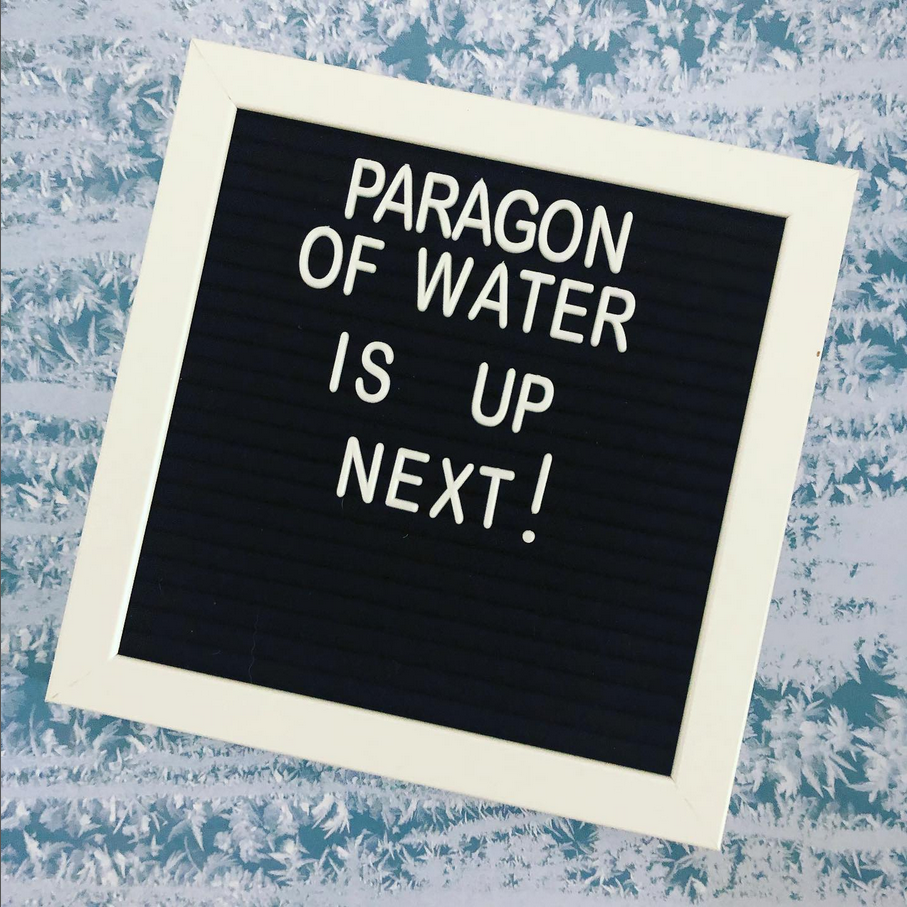
Last month, I decided to do Camp NaNoWriMo. Spoiler alert: I set a goal of 50,000 words, and ultimately, I hit it. I wrote only Monday through Friday and took a few days off, too. That means I averaged 3,000 words a day on each writing day. I aim to do the same thing this month, while I wrap up writing Paragon of Water. At a minimum of 3,000 words a day, it’ll take me about 16 days to finish the rest of this fantasy book.

There was a time in my life where I thought it was impossible to write that much. Now, it still feels like too little, but as we creep closer to summer break, I try to remind myself that it’s a perfectly reasonable amount of writing for someone in my current life situation… and that I’ll probably get less done across the summer months.
When you’re raising kids, finding the time to write can be one of life’s biggest challenges. One of the biggest things I’ve done to make it more achievable has been learning to work in bits and pieces. This has been a long process for me, and training myself to be able to work this way has been rough. But my books are getting done, five minutes at a time.
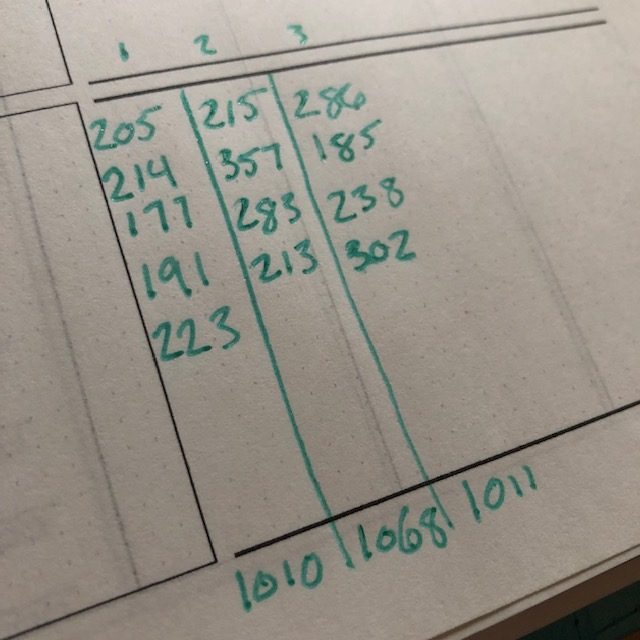
One of the ways I keep myself going with writing is using a day planner. At the bottom of each daily page for the days I intend to write, I put a section to track my writing, split into 3 columns. Right now, each represents a session, and most of those sessions happen in the morning, during school hours. But across the summer, they’ll represent morning, afternoon, and evening.
Each number on the grid represents five minutes where I sat down with my laptop, opened my book document, and set a timer. That’s it. Five minutes at a time, in between chores and the rest of everything life has to throw at me. When my time’s up, I write down how many words I wrote in that 5 minute period, then move on with my day.
If I can claim just 5 minutes for myself out of every hour through the day, I can consistently hit my 3k daily word goal. And if I can only get 5 minutes every other hour, that’s still 1,500 a day and nothing to sneeze at.
There are a few things I did to make this easier. One, I became a solid outliner. Not only do I have an overarching outline for each book, but lately, I do mini outlines for each chapter using index cards. I break each important part of a chapter down into bullet points on my cards, but I only make up two or three in advance, so I can change things as needed if I find something on my outline isn’t working well. Each bullet point on a card is followed by how many words I estimate will be necessary to achieve that piece of the story, so I know how many 5-minute sessions it’ll take. And then I carry my index card in my pocket or stuff it behind the case on my phone, so even if I can’t get to my laptop, I have my immediate outline handy so I can tap out some words in my phone’s notes app. I’m an iPhone/Mac user, so it’ll sync automatically and I can easily copy/paste my work to my book document later.
Having a whole hour to think over what happens next means when I sit down, the words tend to come more easily, and sometimes it gives me extra witty one-liners because I’ve had all day to think them up, so it seems to be working well. I wrote Paragon of Fire this way, too, and that’s the first book I’ve ever written that succeeded in making my husband laugh out loud.
All this means I have to spend a little time on the weekends figuring out what’ll go on my next few index cards, as well as checking my main outline document to make sure I’m heading where I need to go, but it’s made a big difference in how fast I can finish books.
Just five minutes at a time.





 It works out interestingly for me that Camp started on the day I began my next project, though! I cleared my calendar for April so I could focus on writing. Everything I have planned for YouTube is done, and aside from a final proofreading pass and the official ebook formatting, Paragon of Fire is ready for release at the end of the month.
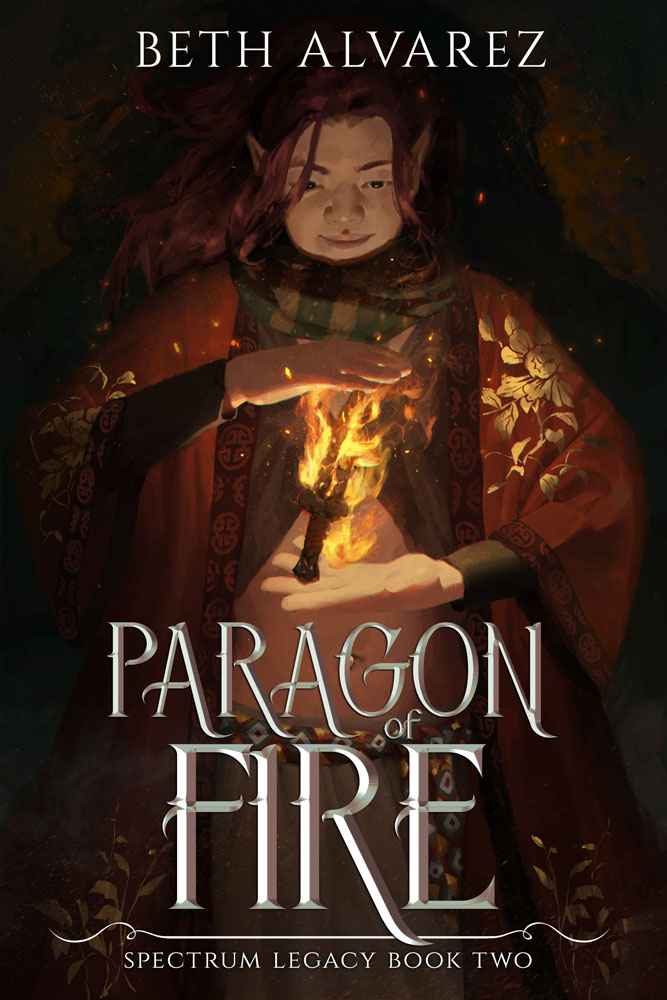

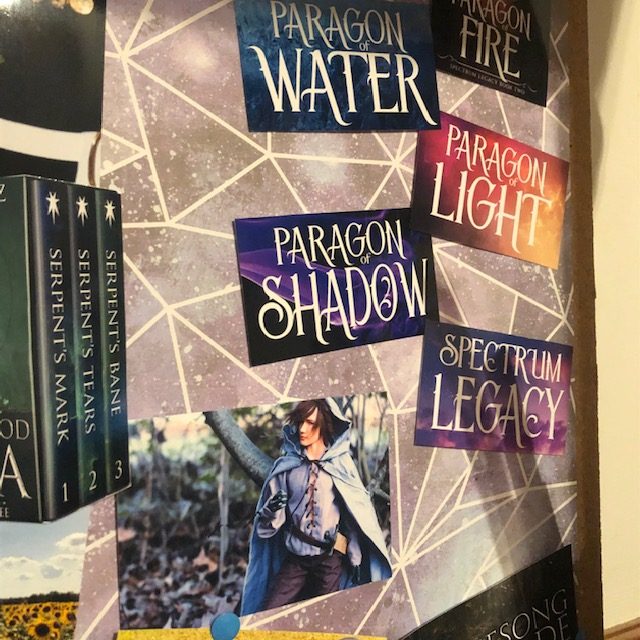
 The right half of the board is sprinkled with titles. I stuck that favorite photo of my doll of Rune on there with it, because I wasn’t really sure if he goes on the “things I love” side or “stories I want to write” side at this point. Then there’s a printed copy of Paragon of Fire’s cover in WIP state, and the titles of the next four books. There’s the first Snakesblood Saga digital box set right next to Rune, which is in the works, and at the bottom, the title of a series I can’t wait to start writing. I left space for the title of a standalone book, for when I have time to print it out in a pretty font and add it to the board.

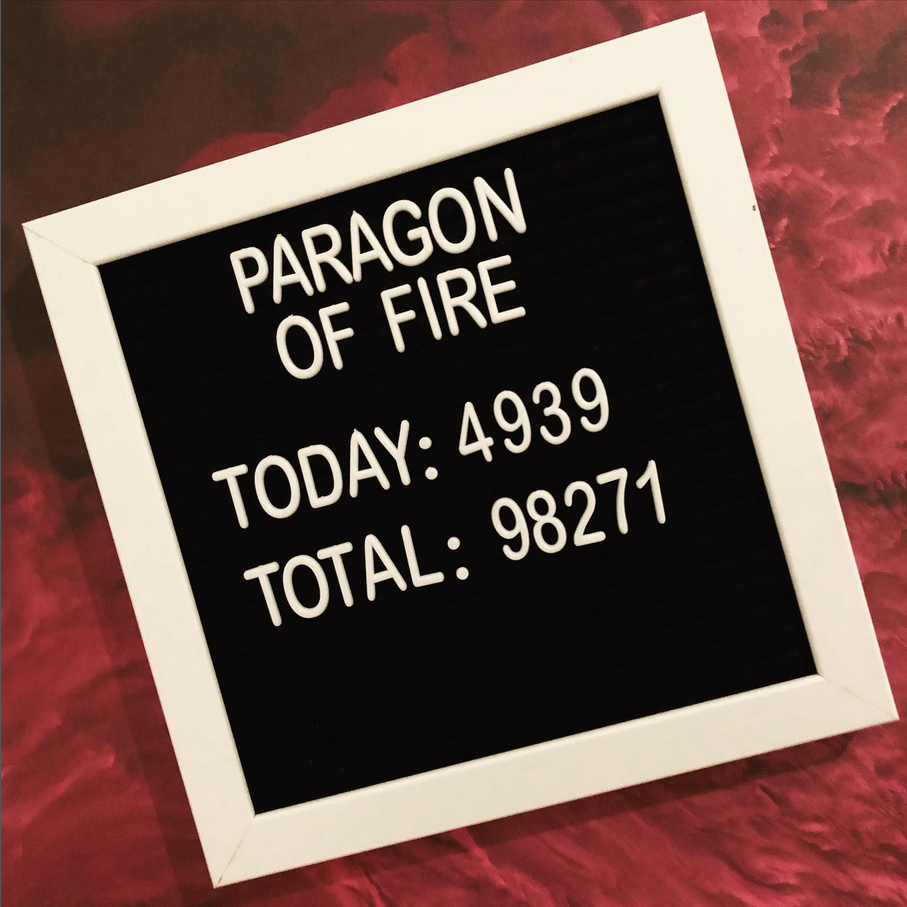
 When I sat down to figure out what the book would need to cover, I estimated it would be around 100,000 words long. That’s a bit shorter than Spectrum Blade, which is the first book in the series, but that’s not surprising given most of the world building happens in the first book. It never needs to be quite so deep after that. Paragon of Fire also focuses on one location, which has already been visited in book one, so everything here is just growth.