

Not a whole week, but this is the first Tuesday. Four days into NaNoWriMo, and my project is 31% complete.
Okay, so being completely honest and fair, the first day was a wild cheat. The first day, I reread and revised what I’d written for To Steal the Crown over the past few months. I added a few words, but honestly, I didn’t track how many. To keep everything clean and organized for this month’s unofficial participation in NaNo, I then scrapped the Pacemaker tracking I had established for this book and put all my already-written words down as work logged on the first day. Not factual, but convenient, so I went in with a big chunk on day one.

Since this project is going to be so short, it won’t take much daily work. That’s kind of a good thing, because I need time to get back into the swing of writing. I’ve been editing like crazy, but editing and writing are really different things. Even though I’ve been writing tons of new material for the books in the Snakesblood Saga, I still count that as editing, because it’s just smoothing out things that were already there.
Monday was a bit of a catch-up day, since I couldn’t meet my goal on Sunday. I did okay Saturday, but Sunday, I was just wiped out. I think I may revise my strategy and plan to do a little less on weekends. Or maybe I’ll leave the project alone—right now, the project on Pacemaker is set up to adapt my schedule to evenly space what still needs to be done across the days that remain. If I miss one day, or don’t quite hit my goal, it’s easier to make up a few words at a time than to try to catch up the next day alone.
But catching up is part of why I want to keep my workloads small. Right now, my goal averages 700 words a day for the month of November to see this novella completed. On a good day, that’s an hour or less. On bad days, like today, it takes a few hours in broken-up writing sessions. And on the worst days, even that seems insurmountable.
I suppose that’s one of my chief complaints about NaNoWriMo in an official capacity. 1,667 isn’t a huge number of words, and I can do that many most days that I’m able to sit down and write. I did 1,117 Monday and finished before 3, so I could have tried to squeeze in more after my daughter went to bed. But if I didn’t make it to that 1,667 goal, NaNo would mean I’d have to struggle to make up those extra 550 words the next day, or else I’d begin the slow backwards slide of falling behind.
Writing should be fun, not pressure-filled, and not stressful. As an indie, I set my own schedule and don’t have to worry about deadlines set in contractual stone. I can afford to set my workload smaller, and I should—even if I write 500 words a day, which is something I can hammer out in two 10-minute sprints if I have time to think between them, that’s still going to give me three average-sized books a year. Or two very large books, which is what I trend toward writing. But two books a year? That’s nothing to sneeze at, even if it’s below what I have the capacity to create at this point in time.
So, starting off small. If I feel so inspired, I’ll write bigger, longer chunks later on, but right now, I’m happy to clock out after 700. I’m still trying to produce one video a week, and that takes a lot of time. I want to have fun sometimes, too. I’ve been playing Skyrim again, and it’s refreshing to sit down in the evening and not have to work. Hopefully, I can keep this momentum going through the whole month.
Wish me the best—I’ll report back on that next week.


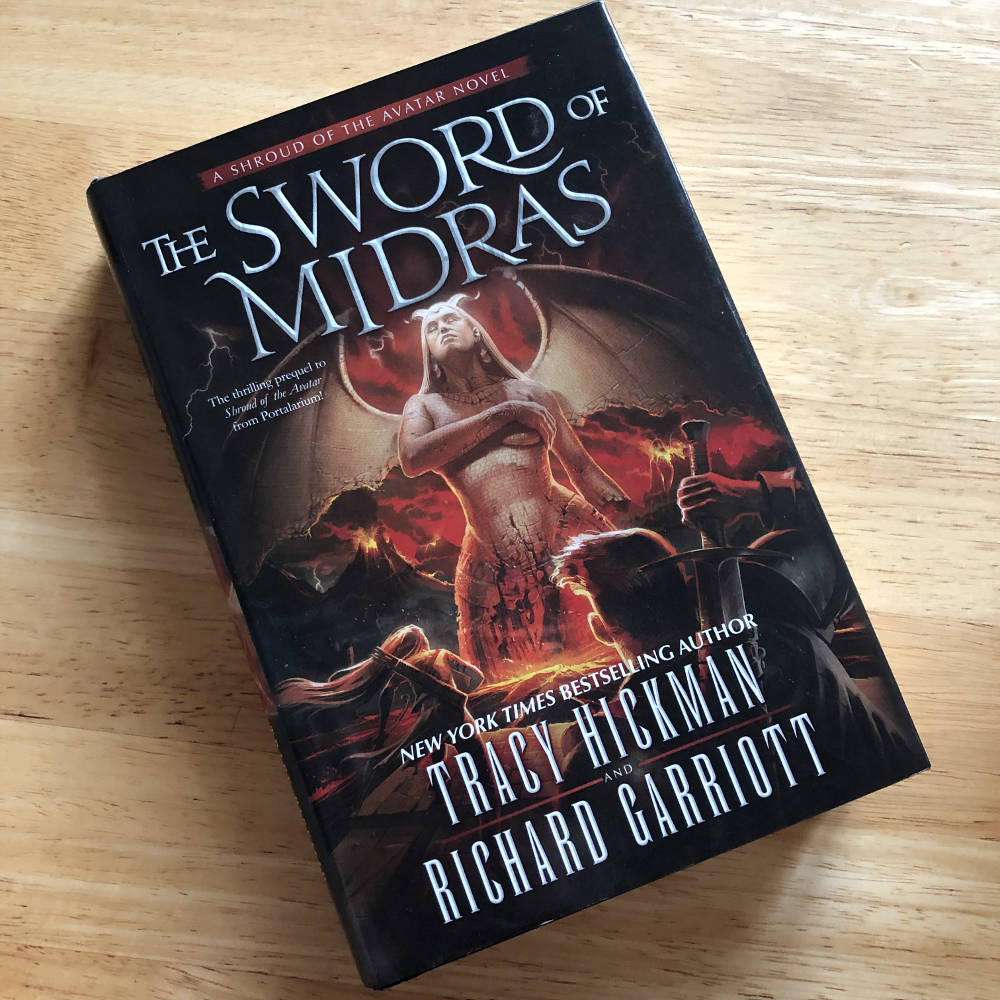
 When I came across The Sword of Midras by Tracy Hickman and Richard Garriott in a dollar store, I figured there were worse ways to spend a dollar than checking out a fairly recent book. I’m fond of Tracy Hickman’s work, too, so I figured I’d actually read it, too. You know, for research.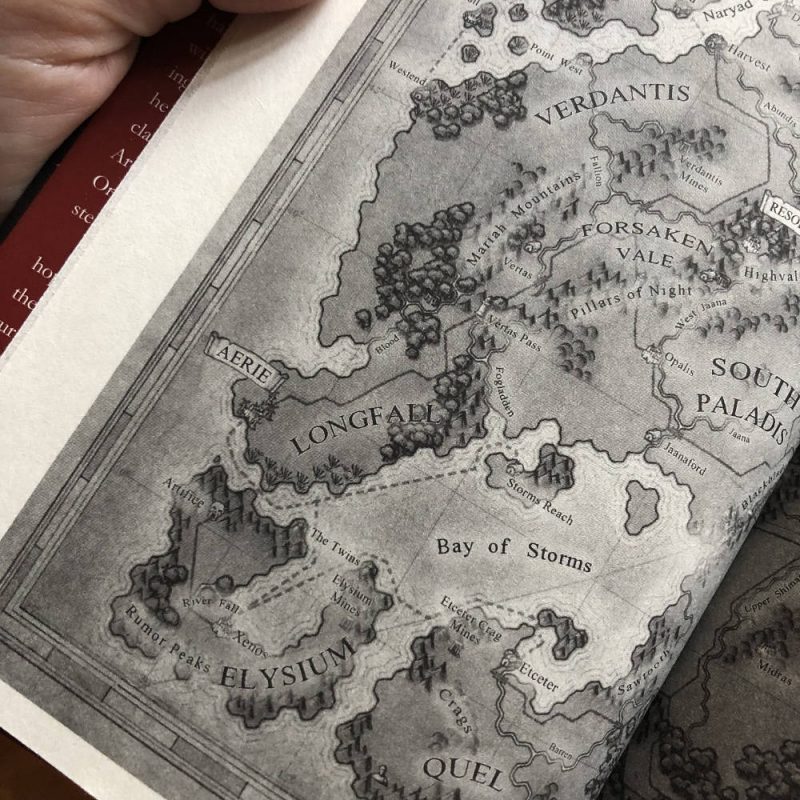
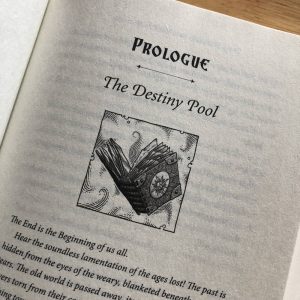 The book’s chapters are titled, which is less common outside of fantasy, but hey, I like chapter titles. You can look forward to titled chapters in some of my upcoming series. The book is also divided into sections, which I see less often these days, but each section reads like an episodic installment. The prologue is, curiously enough, formatted differently than the rest of the book. The prologue features the chapter number (in this case, just the word ‘prologue’) as a large header, a simple but attractive divider, the chapter title in italics, and then a header image.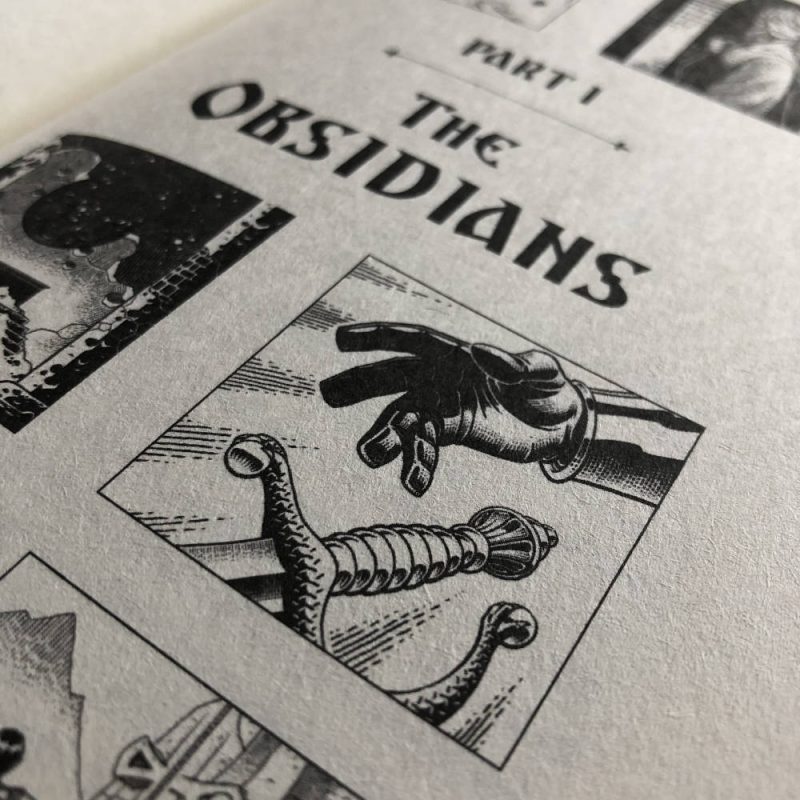
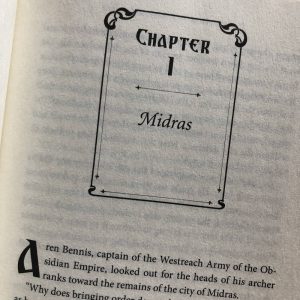 Otherwise, there isn’t much to note. The chapter header graphic remains the same through the rest of the book, with artwork only inserted at the beginning of each section. The chapters introduce drop caps, which is fine, but I was a little peeved that they didn’t take the time to set quotation marks into the margins when chapters began with dialogue. The Chicago Manual of Style says dropping the opening quotation mark is acceptable ahead of drop caps, but it’s strange to devote so much effort to the rest of the styling and then not take a few seconds to insert the quote-in-margin–especially since there are only 2 or 3 chapters that start with dialogue. Regardless, I prefer Oxford over Chicago, so fight me.


