Beth Alvarez - Author of Epic Fantasy
  • Books and Maps

    One of my favorite parts of books, particularly fantasy fiction, is maps. Not every book comes with a map, but my personal opinion is that every book set in a fictional world should include at least one.

    I was enamored with maps from an early age. My grandmother had a globe, the kind with texture to depict elevation. I spent a lot of time spinning it and feeling the mountains, fascinated by the way it felt and just how immense the world was. If there was a map in a book, I spent hours poring over it, memorizing every tiny detail. I wasn’t as interested in real geography as the imaginary sort, though access to things like Google Earth has changed that.

    When I began roleplaying online in my preteens, maps were a big draw for me. If a game had maps of the locale, I was all over it. I took time to draw maps when I could, though I was never very good at it. Most of the people I played with were just pleased to have a visual reference of where our characters were supposed to be.

    I did get better at it over the years, to the point where I plan to draw my own maps for my fantasy books. I’ve already started them, actually, though with my Photoshop skills as rusty as they are, it’ll be some time before they’re polished enough to really do anything with. And then there’s the matter of style. I’m always torn on how to draw the maps, whether I should go for color gradients to show elevation, or if I should go with a more traditional fantasy map like you see in things like The Chronicles of Narnia.

    Either direction I go, though, it’s now much easier to find resources to learn from than it was when I first started drawing my own worlds. I still have a few maps, drawn in colored pencil. They are absolutely atrocious and it would be a great embarrassment to show them to people now, so that means I’m probably going to scan them and put them on this blog at some point so we can all have a good laugh. And when I finish the maps for Ithilear, of course, I’ll share those, as well.

    Have you ever created maps for anything? What are your best suggestions for making them pop?

  • Friday Photo Break, vol. 1

    I’ve had a passing interest in hobby photography since I was a teenager. I never had very good equipment, but I’ve been told that I have a good eye for it, which can make a world of difference. Even a professional-grade camera can give poor results if you just don’t do a good job of capturing the subject. 
    Despite my interest in it, I’ve never really shown off my photography anywhere, other than a few artistic shots included in Facebook albums for other events, or a handful I uploaded to deviantART back when I used the site.
    I recently upgraded to a much nicer camera, which inspired me to go back and look at all my old photographs, and I can’t help but feel that some of them weren’t too bad. Since I never really shared them anywhere, though, I figured this was as good a place as any.
    Each Friday, I’ll make a point of sharing a photo at lunch time. Some of them might have stories to go with, others might not. Either way, here’s the first installment. Critique is welcome, of course, though there’s no need to go too in-depth since I don’t intend to do this professionally.
    Hopefully you still enjoy looking!

    When my brother married in 2011, he got married in one of my favorite places – The Missouri Botanical Garden in St. Louis. His wedding was in the fall, and I’d only been there in the spring before, meaning the place looked quite different from when I’d been there before.

    One of the plantings that caught my eye most was a large patch of elephant’s ear plants. There were colors of the plant I’d never seen before.
    My husband always calls the plants “dragons”, he told me about it long before we got married. He’d called them that since he was a kid and never knew them by any other name.

    It had rained that morning and the leaves were covered in droplets that floated on the surface. I took several pictures, but this one was my favorite.

  • Million Dollar Ideas

    I’m good at biting off more than I can chew.
    No, really, just ask my husband how many projects I have going at any one time, and how easily I get overwhelmed by everything I try to do. It’s not really any different with books.

    Ideas are an odd thing. They come at any time, usually at the most inopportune moments, so that you’re caught without a pen and paper and get left struggling to remember every tiny detail until you get home and can jot it down. Or until you can burst through the doors of a dollar store, grab a notebook and pen and start writing in it on your way to the checkout to pay for them. Not that I’d recommend doing such a thing, you tend to get dirty looks.

    I have a large collection of ideas that I keep in tidy documents on my computer. I also keep backups of them in my iPod and flash drive, as well as the more traditional, less-prone-to-corruption pen and paper version. You’d think that, as a writer, it would be great for me to have a vast repertoire of story ideas to pull from at any given time. You’d be thinking wrong.
    It’s horrible.

    The hardest part of having all these ideas is recognizing that not all of them have what it takes to become a good story. I’ve narrowed my selection of the current stories down to just 14, and then I have to pick and choose which of those, if any, are good enough to actually bring to fruition.

    I love my stories. I love each and every one of them. But from an author’s perspective, I realize that some of them just don’t have the potential they need to be a great story that someone will love reading, and those are the ones I have to weed out. I’d love to be able to write all my ideas, but I can’t. It just isn’t realistic, nor is it practical. There’s more of them than I’d ever be able to write – Unless, of course, I give up the revision process altogether, and I don’t think anyone wants that.

    Still, it is hard sometimes to see dozens of story ideas, saved in documents and scrawled on papers that are strewn about the house, and know that many of them will never see the light of day.
    But it happens, life goes on, and if I ever finish the first 14 that I think might have what it takes, they might someday get a second chance for a place on the “To be written” list. For now, they’re banished to obscurity. Much as I wish it were so, not every idea is a million dollar idea. Chances are, none of mine are, but at least I can focus on the best potential, while the cast-off pile of not-quites grows ever taller.

    How do you decide what’s worth keeping?

  • Happy Runeday

    This past Saturday, I had the good fortune of celebrating my Golden Birthday. It was quite a to-do, with my parents and most of my siblings making the long drive down to visit. It was definitely a haul, but they all felt it was worth the travel. After all, my family is always looking for a reason to celebrate.

    When you come from a large family, you don’t need to invite anyone over to have a party. There’s enough of you to make every day a spectacle, and we often did – My mother always found ways for us to celebrate, sometimes drawing ideas from a charming book she has called Every Day is a Holiday. Of course, sometimes we created a spectacle out of days other people might not think to celebrate. Second Christmas is usually some time in January, complete with an official Second Christmas tree, while my father usually leads the way in celebrating International Talk Like A Pirate Day… once going so far as talking like a pirate on a formal conference call.

    Combined with my family’s love of celebrating is their love of cake. With a lot of birthdays scattered throughout the year – Nine, for immediate family alone! – you’d think they’d have their fill of cake from birthdays alone. That’s simply not so – Many other holidays require cake. A green one for St. Patrick’s day, perhaps one shaped like a black cat for Halloween. Naturally, with a love of cake and a love of festivities, my family is always looking for something new to celebrate.

    And that’s why Runeday is a thing.

    I enjoy the work of fleshing out characters from my stories. Quite a few are given birthdays, usually chosen by fitting their personality traits to an astrological sign. Not that I put much stock in astrology, but why not? It’s something fun to do. Sometimes, I even base their age off which year of the Chinese zodiac suits them best (And you can read about my own experience with the Chinese zodiac here).

    One of the best-developed characters I have is Rune, the main character of what I’ve always figured will be my flagship series. Rune’s birthday is June 27th, and naturally, a birthday means cake.
    The first time we made a cake for Rune’s birthday, it was in jest. We couldn’t find another reason to make a cake, and you have to have an excuse for cake, you know? You can’t just have cake for no reason. Cake requires a party. So sometimes, on the 27th, I’d even wake up to discover my younger brothers and sisters had done a small amount of decorating. Sometimes they even started baking the cake without me. It was all in good fun, but I assumed that when I married and moved from home, the tradition of a cake on Rune’s birthday would end.

    I was wrong, as they have celebrated “Runeday” at least twice more since I left home.
    Sure, it’s silly to celebrate a fictional character’s birthday. Especially one not widely known, as I’ve not yet finished writing his stories. But who cares? If it’s another reason to celebrate, we might as well.
    Life’s too short to go without cake for long, after all.

  • The truth about loving your job

    “Choose a job you love, and you will never have to work a day in your life.”

    – Confucius

    I’ve always loved that quote. I spent a lot of time waiting and wishing for the chance to live it. After all, who likes work? I longed for a career I could be passionate about, one that would make me excited to get up and get to work every morning.
    Writing was that job I’ve always hungered for, my chance to never work a day. I’ve lived and breathed writing for so long, it’s hard to believe I can finally sit down and focus on doing it. But it was also a harsh wake-up call, because if nothing else, the whole experience has taught me that Confucius was wrong.

    Don’t get me wrong, I love what I do. I still live and breathe it, I’m still passionate about it, I still want to do it with every fiber of my being. But no matter how much I enjoy it, and no matter how much I want it, one fact will remain forever: Writing is work. And hard work, at that.  There are some days it’s grueling, some days it’s more like torture. There are some days where I can spend hours sitting in front of a document, struggling to hammer out just my daily minimum goal of 500 words. And there’s some days I don’t make it.

    The thing is, as soon as something is connected to being work, it changes everything. You can love your job, but it’s still going to be work. And if your hobby becomes your job, it, too, becomes work.
    There’s a whole different world of stress that comes from knowing that it’s no longer something you do for fun – Now you have to do it, you have to stick with it and be successful, or else how will you pay the bills?

    The real difficulty comes in keeping that knowledge from destroying your love for whatever it is you do. I’ll be honest. If my husband and I were in a position where we required a steady income from me, I couldn’t make this my day job. Not yet, at least. I am fortunate in being allowed the opportunity to pursue what’s really important to me, but there’s a very real reason they’re called starving artists. It’s difficult enough to succeed without the pressure of knowing you must.

    So while Confucius was certainly wise, it’s hard to say whether or not that quote comes from his own experience, or just wishful thinking. What do you think?

  • Everything Old is New Again – Or it can be

    Everything Old is New Again – Or it can be

    My husband and I are big video game nerds. Big enough nerds that we’ve got Final Fantasy-themed wedding rings, and had matching action figures on a cake at our wedding. Sometimes this nerdiness spills over into other things, influencing everything from the decor in our house to what kind of music we listen to. And sometimes, it introduces us to new things to enjoy, things we normally wouldn’t have known to look for.

    Recently, my husband has been playing The Witcher 2: Assassin of Kings. It’s a very entertaining game, and fun to watch, though it’s not one I’d play myself. The world is interesting and immersive and the characters are well-written. But what makes it especially interesting to me is that it’s based on a book.

    Video games have a long history of not getting along with books and movies. The crossovers never work, the games are always disappointing, and sometimes they’re downright terrible. This makes The Witcher an unusual exception, because the games are great. And yet, despite the fact that they’re well-written, feature interesting gameplay and good graphics, the games are not popular. I was curious as to why this was, so I took the time to look up the source material – A book titled The Last Wish by Andrzej Sapkowski.

    The Last Wish receives mixed reviews, depending on who you talk to. While its reviews on Amazon are favorable, a large part of the internet seems to agree that the book is simply awful. It’s hard to say why that is – It’s true that the book suffers some translation issues, due to it not being written in English, but they are easy enough to overlook. And one twist in the book is one I didn’t expect at all. Though The Last Wish is a collection of short stories featuring the same character, Geralt of Rivia, there’s an important distinction to be made about these stories: They’re fairy-tales.

    I didn’t catch on at first. Reading through the second of the short stories, there was certainly a moment where I had the fleeting thought of Huh, this seems familiar.  But it wasn’t until I reached the part about the queen with a magic mirror, sending a huntsman to kill her stepdaughter, that I made the connection. These are fairy-tales for grown-ups. Action packed and sometimes rather violent, they’re a fresh take on classic stories, reworking them until they’re something new altogether.

    And I like that.

    You’ll hear it over and over again through life, that there’s nothing new under the sun. But then, you’ll also hear the saying that everything old is new again. To me, the two sayings mesh nicely into the idea that no matter how old, clichéd or trite an idea or story might seem, there’s always a way to twist it into something new, exciting and unexpected.

    The Last Wish is a good example of that, and I’m glad that exposure to the game led me to pick up such a refreshing take on tales I thought I’d outgrown.

  • Time Management (From a Mom With No Time To Manage)

    Time Management (From a Mom With No Time To Manage)

    The new year rolled in a week ago, and to be honest, I almost didn’t notice. I rang in the new year sitting in the nursery, nestled in my mother’s rocking chair she so kindly bestowed upon me just before my daughter was born. They say that whatever you’re doing when the clock strikes midnight on New Year’s Eve is something you’ll spend all year doing, and it couldn’t be more accurate – I was feeding our newborn baby, and for the rest of this year, she’ll be taking up almost all of my time.

    The Pendulum from moonsea on Etsy
    Time flies – Moonsea on Etsy

    Mind you, that’s not a complaint. I’ve always wanted to be a mother and I’ve been over the moon since I found out she was on her way. It was, however, a difficult pregnancy. With complications early on that made me fear the baby wouldn’t make it, I was put on light duty right away. No lifting of anything, try to stay off my feet, take these extra pills. Then when I started having problems with low blood pressure, staying off my feet wasn’t a matter of trying – It was a choice of either sitting down or passing out. I went suddenly from being a normal,  healthy and active person to being someone who could only be up for a few minutes at a time,  and it forced me to take a good look at something I never had to worry about before: Time management.

    I get bored easily. I need to have something to do, something to keep my hands busy, or I get restless. And when I do something, I tend to get so engrossed in it that I lose track of everything else. If I clean house, for example, I won’t stop until the entire house is clean. Or, that’s the way I used to do it. I had to learn to do things in smaller, bite-sized pieces, with lots of space for rest in between. And now that the baby’s here, I still have to do things in smaller, bite-sized pieces, with lots of time for taking care of her in between.

    There’s a million places online to read about time management, but a lot of what works for me is the exact opposite of what I’ve read in the past. There’s as many ways to do things as there are people in the world, after all, and who knows. Maybe some of these will work for you, too.

    1. Keep a list – A very thorough one.
    Keeping a to-do list is a pretty obvious way to keep yourself on task, but generally speaking, if you’re filling one out, you’re going to try to put everything down as big jobs. Examples of this might be something like “Clean the kitchen”, which is pretty broad. And unless you have a sizable chunk of time to devote to doing it all at once, you won’t be seeing any progress on your list for a long time. Instead, try breaking larger duties down into smaller tasks. Instead of just noting that you need to clean the entire kitchen, try making note of specific tasks, like “Wipe down counter tops”, “Unload dishwasher” and “Clean stove” – Little jobs you’ll be able to accomplish one at a time by sparing only a few minutes here and there throughout the day. Remember to write down mundane things, too. “Eat lunch” may not seem like something you’d need to write down to remember, but if it’s going to take time out of your day, it’s best to keep track of it on your list. Seeing those little tasks scratched off is not only encouraging, but it helps build momentum as you work through your day.

    2. Don’t multitask.
    It can be so tempting, but don’t give in! Multitasking will only slow you down. Sure, you may think you can wash the dishes while you talk to your mom on the phone, but you won’t be giving either of those things the attention it deserves, and you’re likely just going to frustrate yourself when you’re attempting to juggle both things at once. Always take your tasks one at a time. Don’t try to munch a sandwich while you’re shooting off that business email, give yourself time to eat and time to work and you’ll find that you’re more rested after the meal, and more focused and relaxed when it comes time to write that formal reply.

    3. Do the small tasks first.
    Most people suggest tackling the big objects on your list first, but I disagree. Maybe it’s just me, but seeing that long list of things I’ve got to do feels like staring up at a mountain and knowing I have to climb it. Sure, you could run right in and blaze a trail up the side of that mountain, but sometimes it’s just easier to take care of smaller things, first. The other things on your list may seem trivial compared to that one big, important task, but if you try to tackle the big thing first, all the little stuff you haven’t done is going to nag at you the entire time you’re trying to work. And if you’re anything like me, that means you’ll be distracted, and just won’t be able to give that big job your all. So before climbing that mountain, take a moment to tie your hiking boots. Put on sunscreen. Make sure your iPod is charged. Then you can start your journey.

    4. Recognize what really needs done.
    The Pareto principle is the idea that 80% of your results will come from 20% of your work. This is always a good thing to apply to your to-do list. I still think it’s important to break everything down into tiny, bite-sized bits that can be done a little at a time, but it’s also important to look at those bite-sized bits and see which ones really need to be chewed. Does your car have to be washed this week? Do you really need to go grocery shopping, or is there still stuff in the pantry you should use up before you go? Realizing which tasks are important and which ones are time wasters is an important skill to master. Once you’ve written out your to-do list, complete with everything broken down into goals that will only take a few moments to complete, take some time to see which ones really need to be done. If it turns out they’re not as important as you thought, mark them off.

    5. Don’t worry about interruptions.
    Interruptions always come at the most inopportune times. They get in your way, they slow you down, and they make you want to tear your hair out. Don’t! There’s nothing you can do about some interruptions. If you’re in the middle of something and a neighbor stops by for a chat, don’t grit your teeth and try to find an excuse to send them on their way. Embrace the moment – It’s not a distraction, it’s a break. If something interrupts your work, take it as a welcome few minutes of respite instead of getting stressed over all the things you’re not getting done. Everything you have to do will wait, it will still be there whenever you have a chance to come back to it. So live in the moment, enjoy the unexpected break. Go with the natural flow of daily life and you’ll find yourself much more relaxed, and the tasks you complete will feel that much more rewarding.

    Have some unusual time management tips of your own? Go on, share them!

  • Book Review: A Circle of Iron (Eldernost: Book 1)

    Book Review: A Circle of Iron (Eldernost: Book 1)

    I don’t always like a star system for reviews. Every site and even every blogger uses a different method for what their number of stars are supposed to mean. Which is all right, I guess, but it can become confusing after a time. My biggest issue with starred ratings, though, comes from how they are handled on sites like Amazon and Goodreads. A user can simply drop a star and go, leaving no explanation of how their personal starring method works, no indicator of how they actually feel about the story. And so, when I review books here and there, don’t expect any stars. My opinion comes in text format.

    With that being said, I read a lot, so from time to time, you’ll be seeing little review entries like these. Now! First up…

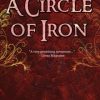
    Title: A Circle of Iron (Eldernost: Book 1)

    Author: Greg Benage

    Format read: Nook (via Smashwords)

    Price: Free

    Purchased from: http://www.barnesandnoble.com/w/a-circle-of-iron-greg-benage/1111647992?ean=2940033269020

    The story told in A Circle of Iron follows the exploits of Caleb Thorn, a protagonist I couldn’t really tell you too much about. While his history is summarized nicely, a summary is all you should expect. A very short book, it’s only 140 pages in my Simple Touch. The story is fast-moving but not very deep, in a number of ways. Much like with Thorn, we never really get a description of the characters we’re following. With the exception of the typically attractive lead female, the descriptors for others are short and vague (Big, old, fat), which is still a leg up over Thorn – I spent most of the book assuming from his attitude and behavior that he was young and brash, only to read the summary of his life near the end of the book and discover he was likely the opposite. Well, the opposite of young, anyway.

    The world Benage has put together is interesting, painting strong imagery of a large-scale fantasy landscape you unfortunately only get a peek at. Most of the action happens in the ruins of the city of Eldernost, now filled with scavengers and the vicious wights Thorn and his compatriots are tasked with hunting. And there is a lot of action, though stilted wording of a few incidents tend to slow the confrontations down, turning them into a drag instead of the fast-paced whirlwind of combat they could have been.

    Despite its shortcomings, A Circle of Iron is written fairly well, avoiding many of the pitfalls indie authors – Especially those who give work away for free – often succumb to. The wights are interesting and the world is great for piquing one’s curiosity, but the length of this novella prevent it from spreading its wings so the story can fly.

    Overall, good for a quick and easy read, but too light on the “epic” to be considered a real epic fantasy. Worth snagging for free, but I can’t say I’d have been content if I’d paid for it.

  • Five things writing taught me about Aztecs

    Five things writing taught me about Aztecs

    “But how can you have a good history without any Aztecs?”

    I’ll be honest, I don’t remember the rest of the conversation that led to that quote, a gem from my former coworker Emily. Emily and I always had the most ridiculous conversations (Such as discussing whether or not we would eat one another, were we made out of hamburgers) at work, which didn’t tend to hinder productivity.

    I always loved mythology, but what I read most was what was already popular and well known – Information on Greek, Roman and Celtic mythology is easy to find. It wasn’t until my husband and I were together that I became interested in Aztec mythology.

    My husband was born in the United States, but spent his childhood in Mexico. Aztec history was something he learned in school, as well as bits and pieces of the Nahuatl language. Despite his best efforts, he still can’t get me to pronounce any of the words correctly, though I come passably close with the name of our dog, Xochitl.

    Writing bits and pieces of Aztec lore into Death of the Sun was originally another joke, but as I started learning from my husband and reading about Aztecs during the writing of the book, I learned a lot of interesting things and it eventually took a shift for the serious. For example, here’s a few tidbits I learned.

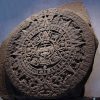
    The Aztec calendar stone is a mystery

    Despite being what is probably the most universally recognized symbol of the Aztecs, the calendar stone is often confused with the Mayan calendar. The purpose of the Aztec calendar stone is still debated by historians and archaeologists, though it is named because its surface bears a repeating pattern that mathematically indicates the number 365, which we recognize as the number of days in a modern year. The calendar stone is recognized to depict 5 “sun ages”, leading it to sometimes be called the Stone of the Five Eras. The Fifth Era had already ended by the time the stone would have been carved, though, making its purpose even more boggling! Also referred to as the sun stone, it was discovered in Mexico City in 1790, almost 270 years after the fall of the Aztec empire. The symbol is now widely embraced and used to represent Mexican culture, appearing in artwork and jewelry throughout the country.

    The lifespan of the sun is 52 years

    The Aztecs went through sun gods like nobody’s business. The five sun ages represented by the calendar stone were ruled by five different deities – Tezcatlipoca, Quetzalcoatl, Tlaloc, Chalchiuhtlicue, and Tonatiuh. Tonatiuh’s face is believed to be depicted in the center of the calendar stone, and he was also the first sun god to succeed in not destroying the world. Despite this noble success, Tonatiuh was later replaced by Huitzilopochtli, the warrior god who was worshipped alongside Tlaloc in Tenochtitlan. Huitzilopochtli needed help, however. The Aztecs believed the sun could not move on its own, and Huitzilopochtli was not strong enough to keep it going, leaving his followers afraid they’d be trapped in night for the rest of Huitzilopochtli’s 52-year rule as sun god. To solve this perceived problem, they chose to supplement his strength with  human sacrifice for the rest of his rule.

    Aztec gods had many jobs – And names

    Few gods served only one purpose to the Aztecs. For example, Huitzilopochtli and Tlaloc were both sun gods, but Tlaloc also served as the god of rain and water, while Huitzilopochtli was the god of war. Through the ages, many of the gods cycled through different roles, some even shifting from being recognized as major deities to minor ones, and vice versa. Along with many jobs, quite a few gods had numerous names, which can be easy to confuse with other gods entirely. Huitzilopochtli was also known as Xiuhpilli and Totec – Not to be confused with Xipe Totec, which was the name of the deity of life, death, and rebirth… and also another name for Tezcatlipoca, though Tezcatlipoca and Xipe Totec were not the same god. Confused yet?

    Tenochtitlan’s founding gave Mexico its flag

    While there’s much debate about where the Aztecs originated, there’s no questioning where they ended up. According to legend, the Aztecs wandered for ages after a great hardship, cause and effect unknown, forced them to leave their original home. The sun god Huitzilopochtli bid them search for a new home, and told the priests they would know where to settle when they saw the sign – A golden eagle perched atop a cactus, devouring a snake. It’s a symbol that should sound familiar, because to this day, it’s the coat of arms visible on Mexico’s flag. It’s no wonder that the symbol that led them to settle in Tenochtitlan has remained such a strong cultural emblem, since Tenochtitlan has since been swallowed by Mexico City, the third most populated city in the world.

    Photo courtesy of my cell phone

    Aztecs probably lived in North America

    Growing up in southern Illinois, this shouldn’t have surprised me, but it did. According to the Aztec creation story, the Aztecs emerged from the ground by a great body of water, a region known as Aztlán. The actual location of Aztlán is obviously unknown, but evidence of the travels of the Aztecs are scattered all across the United States. One such instance is near my childhood home, a site known as Cahokia Mounds. Artwork found at the mounds now decorates overpasses in the area, and it bears a striking resemblance to Aztec art, something my husband remarks on every time we go to visit my family.
    The story of the Cahokia mound builders meshes almost perfectly with that of the Aztecs, too – A great culture that simply disappeared one day, shortly before the time period in which the Aztec civilization began its rise in the heart of Mexico. While there are similar earthen mounds and pyramids throughout the United States, there’s a very large concentration of them along the Mississippi river, all the way up to the Great Lakes – a region that fits the traditional description of Aztlán quite well. Of course, we’ll never know if the connection is really there. After all, when the other regional natives were asked where the vast numbers of people living at the Cahokia mounds site went, the answer was the same from all of them: They simply didn’t know.

    Regardless, this taught me that what Emily said is very true. How can you have a good history without any Aztecs?

  • Christmas wishes

    Two years ago when I started my job, I had the privilege of meeting Miss Alice. Alice is the store’s event coordinator and a teacher for many classes on various types of crafting. She’s the mother hen type, always clucking and fussing over the people she works with, the regular customers, and especially the children that attend her summer craft classes.

    Though I’d only just started working there in October, when Christmas rolled around, Alice gave me a gift. Something simple, but something that has come to hold a great significance to me. She gave me a Christmas ornament she had decorated with drawn snowflakes and bright red letters that simply read “Wish List.”
    The instructions she gave me were simple and charming – That every year, I should write down what I wanted, what I wished for more than anything in the world, and then put them into the ornament and wait and see what the year would bring. It was silly, but cute, so I wrote down the things I wanted on pretty scraps of paper and put them in.

    Then I learned something amazing. As simple and small as that ornament was, it was filled with something that gets harder to find every year: Christmas magic.
    It didn’t become evident until the following Christmas. I’d almost forgotten about that little ornament and I’d certainly forgotten the wishes inside. 2011 was a very difficult year for my husband and I, leaving me far from being in the Christmas spirit when December rolled around. But I decorated anyway, and I found that ornament in the box when it came time to trim the tree. I sat down and pulled off the top, shaking the colorful paper slips out onto the table.

    Every wish had come true, even the big one, the wish for a car. But each of those wishes seemed shallow and empty compared to what I could have had. We’d suffered a great loss that year. Both of us had been ecstatic to learn we were expecting, but we didn’t get that happy ending. If you’ve never experienced the crushing loss of a child, then you are fortunate – Since mine had not even been afforded a chance to be born, the pain of the loss is often overlooked by those around us. But the twins were there, they were real, and they were everything I ever wanted. Having lost them before I ever got to take them in my arms was devastating, and after that great of a loss, I couldn’t find a way to be happy at Christmas, regardless of what silly and materialistic wishes had come true. They should have been born in November. How could I be happy at Christmastime?

    I threw each scrap of paper, each granted wish, away.  No matter how great, no matter how unlikely, I’d been told to write whatever I wished for. I tore a corner off a piece of plain white paper, and wrote my wish with tears in my eyes.
    I wished for a baby, and then I cried.

    2012 has been a better year. My health improved, I made great strides forward in a large number of projects, and again, I forgot about the ornament.
    I was eager to put up the tree this year. My husband and I put it up on the first of December, the first sights and smells of Christmas putting me into good spirits.
    I was surprised to see the ornament Alice had given me, its one scrap of paper still inside. I didn’t think much of it at first, putting it on the tree without looking inside. I went back to it later, sitting down and looking at it, realizing that once again, all my wishes had been granted. Our daughter, Evelyn, was born on the 15th of this month. Every time I look at her, I feel a little bit of a mist in my eyes, and a thankfulness that’s deeper than what I can ever express.

    This year, the ornament will be going back into the box without any wishes inside of it. After all, with the arrival of our baby girl, I have everything I ever wanted.
    What more is there to wish for?