Beth Alvarez - Author of Epic Fantasy
  • Vampires, werewolves, and the moon

    Vampires, werewolves, and the moon

    Like with bats, the vampire myth often seems to tie into lore surrounding another supernatural creature: the werewolf. The two creatures are often portrayed as enemies, if not rivals, which makes little sense in the historical context of both.

    The tie between vampire and werewolf goes back farther than the modern vampire myth–before the name vampire even came into use. But though the two share many pieces of lore, one connection that’s often overlooked in the modern vampire myth is the ties that bind them to the moon.

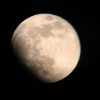
    The 2013 Supermoon, taken from my yard
    A photo of the 2013 Supermoon, taken from my backyard

    Though often forgotten, the moon has been related to vampires for as long as the stories have existed, and in a wide variety of cultures. In ancient China, it was believed that if a dead body was struck by lightning or exposed to moonlight, it could rise again as a jiangshi: a vampiric creature who slept in its coffin during the day.

    Unsurprisingly, a connection between vampires and the moon–as well as between vampires and werewolves–can be traced to the folklore of the Balkan peninsula. Here, the modern vampire’s predecessor was the vrykolakas. Though the vrykolakas is still known as a vampire in Greece, its name is derived from a Slavic compound word that can be translated to werewolf.

    Confusingly, the vrykolakas and werewolf are not the same creature, but in Greece, it is thought that a werewolf can become a vrykolakas after death–and a powerful one, at that.

    It is also common belief that some vrykolakas are also strigoi, yet another type of vampiric monster in Slavic myth, but not all strigoi are vrykolakas. All vrykolakas are undead, and strigoi mort are undead, but most strigoi maintain a closer relationship to the idea of werewolves in that they’re often shape-shifters, becoming monsters at night.

    The tie between werewolves and the moon is known to everyone, but long forgotten is the benefit of the moon for the vampire. Though folklore tells us the moon lends power to the undead in general, it’s a piece of information not often used.

    One of few points where the power of the moon has crossed into modern vampire myth is in John Polidori’s The Vampyre, published in 1819–nearly eighty years before Dracula. In The Vampyre, after his apparent death, the vampiric Lord Ruthven was revived by exposure to the healing power of moonlight. Though some have followed Polidori’s cue and emphasised the additional strength of vampires beneath the full moon, it’s a piece of folklore so diminished by the ages that in another hundred years, it will likely be forgotten.

    Blessed as the undead may be by the moon, it seems the werewolves get to keep that one.
  • Why vampires turn into bats

    There are few animals as closely associated with vampires as bats. The two seem to go hand-in-hand, but in spite of what seems like a clear-cut connection, vampire bats are named after their mythological counterparts–rather than the other way around.

    In fact, vampire stories were common throughout Europe long before these creatures were known, appearing in written texts as early as the 11th century, more than 400 years before European colonists set out for the vampire bat’s habitat. Out of more than 1,200 bat subspecies, only 3 are true vampire bats. Native to the Americas, vampire bats commonly feed on the blood of livestock rather than humans. So how do vampires and bats fit together?

    Vampires and Creatures of the Night

    Feeding on blood seems to have little bearing on whether animals are associated with vampires. Aside from the well-known American bats, there’s also the vampire finch and any number of blood-sucking insects. Though one might associate leeches with vampires, the two creatures don’t cross paths; taking the form of a leech would simply be too on-the-nose.

    Instead, the common denominator tying vampires to animal forms is far more obvious: if it’s creepy-crawly or commonly associated with night, it may be a vampire. Owls, rats, spiders and snakes are obvious choices, but they aren’t alone. Other animal forms favored by vampires include dogs, cats, foxes, wolves, big cats, and moths. There are a variety of stranger forms for a theriomorphic vampire to take, of course: vampires have also been connected to pigs, birds, butterflies, and even frogs.

    The singular form isn’t the only option, either. Throughout legend, it’s also noted that vampires can assume the form of clouds of dust or mist, or that of a swarm of flies. Slavic vampires aren’t even restricted to taking living forms, resulting in stories of vampire plants and even vampire farm implements filling Western society.

    So why bats?

    Despite being home to blood-drinking vampire bats, South America is not particularly steeped in vampire mythology. The region does, however, provide one clear connection to the modern vampire. As with many aspects of the modern vampire myth, the connection is drawn in Bram Stoker’s Dracula–offered by the character Quincey Morris.

    With scientific knowledge of vampire bats growing in the 1800s, Stoker used this opportunity to nestle them into literature as something new and largely unknown. In the book, Morris provided an account of vampire bats, stemming from his adventures that led him through South America. This connection–along with Dracula’s ability to assume the form of a bat–created a bond between the two creatures that persists into virtually all modern vampire stories.

    In this respect, the vampire myth became self-feeding. Vampire bats were named for the fictional monster, which then became influenced by the bats.

    Ironically, prior to this connection, bats held a different role in folklore. In Romania–the heart of modern vampire myth–it was once believed that carrying the remains of a dried bat could protect you from the supernatural. Including vampires.

  • Tea review: Tazo Green Ginger bagged tea

    Tea review: Tazo Green Ginger bagged tea

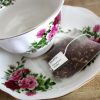
    Unlike the previous Tazo tea I sampled, this one came in a filter bag, though unlike the Refresh Mint–which was also in a filter bag–it had an attractive little tag declaring the flavor.

    Tazo green ginger tea

    Before brewing, Tazo Green Ginger tea has a bit of a citrus fragrance, and a hint of sweetness. Though the bag advertised a taste of pear, there’s no fruit in the ingredients; just green tea, ginger, and lemongrass. Needless to say, there was no pear to be tasted. Not even an impression of it caused by the blending of other flavors.

    There was, however, a sharp tea flavor. I found it went bitter very fast, but the bite went well with the strong flavor of ginger. Like mint or cinnamon, ginger is one of those things that easily overpowers anything it’s added to. It definitely rules the flavor in this cup of tea, but it’s not so strong that you can’t detect the tangy taste of the lemongrass.

    Adding sugar helped bring out the flavor of the lemongrass and mute the ginger, but didn’t do much otherwise. The ginger is pleasant for fall, but overall I found this blend a little lacking in the flavor department.

    Have a tea recommendation for me? Leave it in the comments below! I’m always looking for new teas to try.

  • The vampire ground fruit of the Balkans

    The vampire ground fruit of the Balkans

    Europe is a rich resource for vampire stories, and nowhere is tied as closely to vampire myths as the Balkan peninsula. Romania, in particular, is so steeped in vampiric lore that it’s become an inextricable part of their history, and the belief in vampires plays an important part in their cultural development. It makes sense they’d have some particularly unique vampire stories.

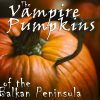
    One of those is the tale of vampiric watermelons and pumpkins.Vampire pumpkins

    How a pumpkin or watermelon becomes a vampire depends on the region you’re visiting. The transformation may occur when the ground fruit is kept for ten days, or if it’s kept past Christmas. It may only occur after a pumpkin has been stored ripe and dry for three years.

    Some claim the fruit grow to unusual sizes when they change, while others claim the only way to tell it’s become a vampire is finding blood spots in the rind. Red discoloration on the rind of a watermelon is common when the fruit is old, and similar scars can be found on pumpkins in any supermarket. Naturally, we should dispose of these ground fruits immediately, lest they attack our families.

    The vampire pumpkins are known to be documented in one source; a book by Tatomir P. Vukanović, a Serbian historian which delves into the complex history of vampire lore in the region.

    According to his book, The Vampire, these vampiric ground fruit come to life shortly after their change, rolling around in attempt to injure people and livestock. Unlike other vampires, disposal of the vampire ground fruit is a simple matter.

    The vampire pumpkin or watermelon should be immersed in boiling water and the water poured off, after which it should be scrubbed with a broom and thrown away. With the vampire fruit disposed of, the broom used for cleansing should be burned.

    While Vukanović’s book doesn’t mention what happens if the fruit is not properly disposed of, cultural context makes it safe to assume that anyone who consumes the flesh of a vampire watermelon or pumpkin would become a vampire themselves. Naturally, this means you might want to check your pumpkins for signs of vampirism this fall.

    Pumpkin pie, anyone?

    Save

    Save

  • The Second Annual Mid-South Renaissance Faire

    The Second Annual Mid-South Renaissance Faire

    It was a sweltering day, not unusual for late August in the Mid-South. The sun was brutal even at nine in the morning, driving us to slather on extra sunscreen before we got in the car.

    I’ve always heard my friends raving about the wonderful experience of visiting a Renaissance Faire. I’d always wanted to attend, but until last year, visiting one meant travel, and that was hard to do with a little one. When I heard about the first faire, I was thrilled, so you can imagine my disappointment when my very first faire experience was mired in mud and doused with torrential rain that drove every scheduled entertainment event off the open stages and into the tents for shelter.

    It wasn’t exactly fun.

    This year, the weather promised to be clear, if hot. Most of August was over 100 degrees, so we expected a scorcher but planned to attend anyway.

    The faire was bigger the second year, but a lack of coordination on our part meant we still missed most of the programming we were interested in. But there were lots of vendors, and me and the little one left with flower crowns, while the king of our castle returned home with a bow.

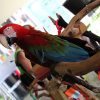
    It’s always hit and miss in the first few years of an event. Our local convention scene has been steadily growing and while the faire was put together better this year and had many more vendors, it still felt like entertainment was lacking; the shopping was the best part, though we enjoyed the music in in a pirate-themed hideaway, even if the parrots weren’t the best singers.

    Renn faire parrot

    We attended the joust, which was much more enjoyable this year, since it wasn’t raining. Though it’s not a proper joust and is more like a show of horseback finesse, it was interesting to see.

    03

    04

    Though the fragrance of turkey legs was tantalizing, we cut out early due to the heat. None of us tolerate it well, so a cold glass of lemonade back home started calling my name at lunch time. We headed home, but not before little bit had a chance to say hello to the fine jousting steeds.

    Evelyn and the horse

    Next year I hope to see more vendors and have a bigger budget; there was a lot of jewelry I loved, including bronze pendants forged on the spot using medieval methods. But I’d also like to see more programming, more stages, and more seating for people to actually watch events.

    It was still a fun experience, and I left happily inspired to get back to work on my fantasy stories, which I expect to pick up again in October, now that Midnight Cowboy is finished and moving to queries.

    But first, a small break… and perhaps a glass of lemonade.

  • Project wrap-up: Midnight Cowboy

    In early June, I’d written myself into a corner in the novel I’d been working on since the beginning of the year. I knew right away that I’d failed with my outline. I didn’t have anywhere to go without making some major changes to where the story was headed. It could be saved, of course; stories are rarely so far gone they can’t be salvaged. But I needed time off to figure out where it needed to go to get back on track.

    I try to make a point of writing frequently. Every day, if I can. I have a hard time building momentum, so keeping it once I’m in the groove is vital for my productivity as a writer. So how to keep my momentum while working on a plot overhaul, which might take weeks to work out? The answer was simple enough.

    Just work on a different story.

    I don’t like jumping between projects. I was a chronic project-hopper for many years, and until I made myself quit jumping back and forth, I never finished anything. I had some reservations about changing gears, but I did it anyway, and learned a few things in the process.

    A book planner was a good idea.

    In early August, I shared a bit about setting up my writing planner. This is something I think I’ll maintain for all my writing projects from here on out. The character profile sheets I set up were an incredible help. No more losing the names of minor characters or forgetting the color of someone’s eyes. Having the outline handy and space for notes was wonderful, but my favorite part ended up being the calendar.

    Keeping track of a book’s timeline can be difficult, which was why I printed calendar pages to put in my planner with the outline. As I wrote important events in the story, I wrote them down on the calendar. This helped me keep everything straight, and refer back to it in a realistic manner. I’m looking forward to implementing this in future projects, and I’m glad I experimented with it now.

    I fall into patterns, then overuse certain phrases.

    They came and went in spells. The only consistent issue through the whole book was my use of the word turned, because apparently everything got turned. Heads turned, people turned, they turned again, they turned pancakes, they turned left, they turned something over. I’ll have to be mindful of this word affinity in the next book. I spent a lot of time weeding that word in editing.

    I also went through phases of everybody crossing their arms all the time. Then everyone was wearing tasty Chapstick, I guess, because they kept licking their lips. People also frowned an awful lot, then they all shook their heads. It’s impossible to catch all cases of repetition, but finding the actions and words I get stuck using will help me keep them from reaching the paper next time.

    I write much faster than I used to.

    From start to finish, it took me ten weeks to write Midnight Cowboy, as opposed to the year it took me to write Death of the Sun–which was a slightly shorter book. I never thought I’d be able to write an entire novel that fast. Even better is that the overall quality of my writing has improved, so I’m not just writing more words faster, I’m writing better words faster.

    Of course, it’s also worth  note that I’m only counting the weeks I actually wrote. I lost one and a half weeks out of July, and half of one in August, due to travel and other obligations. Fortunately, this didn’t seem to hinder my progress once I was back to it. Counting those weeks means it took just shy of 3 months to finish the book–which still isn’t too bad.

    My highest word count was 2,846 words on the second day of the project. My lowest word count was 356 words, which happened approximately two weeks in. That’s still a good portion of a page, and better than I’d been averaging on my days writing my other project. After two and a half editing passes, the manuscript is just over 80,000 words.

    Overall, I’m happy with the project.

    As always, I learned a lot about writing, learned more about myself as a writer, and I feel good about the book I have at the end of it.

    I’ll have more to say about it in the future, I’m sure, but for now, I’m working on finishing a query letter to go with it.

    What’s the latest lesson you’ve learned from writing?

  • How branding dates your book

    Over the past few weeks, I’ve taken a lot of time out to read books. It’s been great, but in all of them I’ve picked up, I’ve noticed a recurring issue. Name-dropping brands and franchises in your book lends it a certain real-world appeal, but you encounter an immediate problem: It dates your work.

    Now, if you’re setting your novel in a specific time frame, the use of brand names can help create immersion. Children of the 90s never called them in-line skates; everyone had Roller Blades. And while they first emerged in the 1800s, a zipper was called a ‘clasp locker’ or ‘separatable fastener’ until 1923. Using the proper terminology creates realism in your fiction.

    But it can destroy it, too.

    One of the books I read was published in 2008 and was designed as a “near future” kind of fiction. Everyone was still using radios and gasoline, but we had self-driving cars and tablets instead of desktop PCs. It was all pretty plausible, but one mistake broke the illusion.

    The main character referred to a Borders bookstore.

    Now, you might not think this a major issue, but in the context of the book, she could have easily just referred to the place as a “franchise bookstore” or “major bookseller” instead. It was–ironically–the only time in the entire book that the author referred to a franchise or brand, but it was enough to make the context crumple. Instead remaining of a vague “near future” that we haven’t quite reached even now, almost a decade later, the book became dated when Borders folded and closed all stores in 2011, not even 3 full years after this novel’s release.

    It’s still plausible as an alternate universe, of course, a world where bookstores don’t fail and find themselves forced to close, but it’s a shame it has to come to that when dropping one word would have preserved the realism for years to come.

    As technology permeates our lives, it’s something I see crop up more and more often, too. References to Netflix, iPods, iPads and eBay will only have as much lasting length as those brands, but they litter modern books alongside names of soft drinks and coffee shops.

    Omitting the brands in favor of a generic lends your writing longevity, shifting it from an obvious era to an ambiguous “some time in ___ century” window. It might be more difficult or require more vigilance in editing, but it’s worth it, in the end.

    Now, if you’ll excuse me, that book reminded me I have an old Borders card I need to throw away.

  • Tea review: Tazo Cinnamon Chalet bagged tea

    Tea review: Tazo Cinnamon Chalet bagged tea

    Exploring more bagged tea options, this blend was what ended up next on my list. I decided to try it on an unseasonably pleasant day, figuring the cinnamon would make it too warming to enjoy in the high summer temperatures we’ve had.

    Tazo's Cinnamon Chalet tea sachet

    Tazo’s Cinnamon Chalet is a rooibos blend, something I’m incredibly grateful for, since something came up right in the middle of brewing my tea and I didn’t get back to it until well after the five minute maximum recommended brewing time. Fortunately, rooibos holds up well to over-steeping, and without tannin, my cup of tea wasn’t bitter–just incredibly orange.

    The fragrance of this blend is overpowered by cinnamon, making it hard to pick up any hint of the other ingredients. Despite the advertised mix of rooibos with apple, cranberry, cinnamon, cardamom, ginger and clove, most of these flavors fall by the wayside. Cinnamon is the most pronounced, followed by a strong flavor of sweet apple. Cranberry provides a pleasant tartness that helps offset the cinnamon, but I didn’t find it quite enough to balance the flavors to my liking.

    The cardamom was a subtle tone beneath the cinnamon, but mostly invisible. I didn’t notice the taste of ginger or clove at all, nor did I detect them in the aroma.

    Since cinnamon isn’t high on my list of preferred spices, I cut my cup with a bit of milk and found the flavor much improved and better balanced. The sweetness of the apple was a little more pronounced, while the cinnamon settled to more of a warming taste than the biting flavor it bore when I tried this tea straight. This would be a pleasant drink to serve in cooler fall days, especially if served with coffee cake.

  • Are you sure your book is finished?

    It’s been a long-standing source of frustration for me as a reader: reading a book that doesn’t give me any sense of closure.
    In some cases, it’s small oversights, forgotten characters, plot threads that weren’t tied up to my satisfaction. And sometimes it’s something else entirely.

    Books need more than just an ending. They need resolution, something that makes you feel like the story accomplished something. Cliffhanger endings aren’t uncommon in books meant to be a series, but even those frustrate me for various reasons. Middle books in a trilogy are especially guilty of this, giving rise to a rule I’ve established for myself. Even in a series, every book needs an ending. Enough threads dangling that you want to see what happens next, but enough of an ending that if I died in a fiery plane crash on my way to a major book signing (it could happen!) I’ll have left my readers with enough of a resolution that they’re satisfied.

    No one teetering on the verge of death. No societies about to collapse. And these are things now common in books. The YA genre is particularly guilty of it; The Hunger Games committed this foul, which annoyed me to no end.
    But the problem of starting things and not finishing them is especially prevalent in romance novels.

    I don’t enjoy most romance because a lot of books put out by mainstream romance publishers don’t get the time and attention they need to make the story solid. I’ve heard this justified on the basis that in a romance, the story is the relationship, nothing else. But there’s no excuse for the relationship not to unfold so that the happy resolution comes with the resolution of the rest of the plot. Sometimes, there can’t even be a happy resolution without seeing the plot through to the end.

    I joked about a handful of romance novels facing this problem on Facebook, sharing a laugh with some friends over what I called the “doesn’t matter, had sex” effect–a book’s plot coming to a screeching halt as soon as the characters make a commitment to one another. The joke downplays the seriousness of the problem, though: if you have a cliffhanger like this, where there’s obviously never going to be a follow-up to finish the tale, you don’t have a very good book.

    Case in point is one romance I read at the end of July. The overarching plot was the hero and heroine working together to try to catch a drug lord. Not only was the smuggling operation running through the heroine’s private property, they found out who the drug lord was and he attempted to have the heroine kidnapped and murdered.

    What happened next? Good question–the main characters ended up in bed and that was the end of the book. Never mind that their lives and livelihoods are still at risk. The plot was dropped like a hot potato and it was implied nothing mattered except they were together. I don’t know about you, but if someone had tried to kidnap and murder my husband, I wouldn’t be distracted by picking flowers for my wedding.

    If you can’t rework a story to resolve the plot and still get your happily-ever-after ending, you probably need to put it back in the oven for a while, because your story is half baked. In many cases, especially for casual reads, a book is only as good as its ending.

    Has an unfinished book ever left you unsatisfied?

  • Free printable inserts for your Recollections planner

    Free printable inserts for your Recollections planner

    As great as planners are, they can be cost prohibitive–especially when many sizes are proprietary, meaning brands can’t be mixed.

    Last week, I mentioned buying a Recollections brand planner from my local Michaels to organize my writing, and I have to say I love the planner. Recollections is a Michaels store brand, meaning the empty planners are cheaper right out the gate than some alternatives. They’re sturdy, most have nice rings and good snaps, and since they use a standard six ring arrangement, they can be used with Filofax inserts.

    The only problem there is that the Recollections planner is wider, meaning Filofax inserts look weirdly narrow, waste precious space, and are more expensive than the Recollections brand inserts, which I found limiting in selection. So what are you to do?

    Make your own inserts, of course.

    Recollections planners take a sheet that’s 4 x 6.75 inches. Many print shops can cut a standard sheet of computer paper to this size for you, though I cut my own at home. An 8.5 x 11 sheet of paper will yield 3 pieces for this planner, if cut properly; two sheets aligned vertically and one sheet aligned horizontally.

    Once you have the right size of paper, you can print these PDF files at home, saving yourself a bundle in the process. So here are the templates I’ve created, with images to show what they look like. Links to the PDFs will be at the bottom of the post. Most templates include front and back versions of the pages to align margins correctly, because my printer, um… doesn’t. To print front and back, just print x number of copies of page 1, flip them over, and repeat with page 2.

    The To-Do list

    Recollections to do template

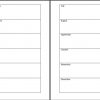
    Month on two pages

    Recollections month templateDays are unmarked because some people prefer to start the week with Monday instead of Sunday, or want the notes column on the left, so this offers built-in versatility.

    Year on two pages

    Recollections year on two pages

    Numbered lined pages

    Recollections numbered lined page

    Front is 1-29, back is 30-58. I wanted 30 on each page, but it didn’t fit. Oh well.

    Lined note pages

    Recollections lined paper

    Graph paper

    Recollections graph paper

    Quarter inch square graph paper.

    Basic character reference sheet

    Recollections character template

    This one’s for writers. On this one I decided to keep it to the bare minimum. The “notes” section leaves plenty of room for special commentary. I omitted a space for character gender because if you really need to write it down, you likely have bigger problems.

    Basic setting reference sheet

    Recollections setting template

    Another one for writers. Pretty self-explanatory; can be used for made-up regions or real ones. Again, the notes section leaves plenty of space for any forms missing.

    That’s all for right now, but I’m sure I’ll make more in the future.

    PDFs to download

    Happy planning!