Beth Alvarez - Author of Epic Fantasy
  • Sewing a t-shirt for Iplehouse EID (pattern included)

    Here we are again! While I was cleaning my hard drive, I found this older pattern and decided to post it here. While I shared a lot of my old patterns on Den of Angels back when they were new, not everyone has access to that forum or knows how to get it, so it’s important to keep stuff like this available elsewhere too.

    EDIT 8/27/2016: I’ve updated this pattern so it fits even better than before, is easier to print, and includes a pattern piece for the collar. Also, stabilizer should no longer be necessary unless your sewing machine is bad about eating stretch fabric. Otherwise, the rest of this post should stay the same!

    Things you will need:
    This pattern, made from scratch by me. As stated last time, it’s for PERSONAL USE ONLY, thank you! Please do not redistribute this pattern. Alteration does not make it okay to redistribute, either. If you see anyone redistributing this pattern or a derivative of it, or trying to sell my pattern or doll clothing made from it, please notify me.
    – A printer and paper
    – Fabric
    – Scissors
    – Thread
    – Pins
    – Hand needles or a sewing machine

    Things that will make your life easier:
    – A twin needle
    – An iron and ironing board
    – Tearaway stabilizer of any sort. You can use actual stabilizer, interfacing, or just regular paper.

    Step 1.
    Print the pattern and prepare your fabric pieces.
    The pattern can be printed on normal printer paper at 300 DPI for an accurately sized pattern that includes seam margins, but you MUST turn off page margins on your printer to get the pieces to print at actual size!
    Please note that the pattern does not include a piece for the collar, but it isn’t really necessary. The collar is just a long, straight strip of fabric folded in half and ironed to lay flat. I typically cut a strip about 10 inches long and trim the excess, just to be sure I have plenty of length in case I mess up and have to trim the piece before restarting. Since I discovered I had no knits, I’m recycling an old t-shirt just to have photos for this tutorial. It was a factory second with a crooked cross on it, but I wore that thing until it came apart.

    Step 2.
    Sew one shoulder seam. It doesn’t matter which one. My sewing machine is notoriously awful about eating knit fabrics, so I use paper beneath the fabric to prevent it from stretching out of shape or being eaten by my machine. People with better machines probably won’t need to take this precaution. Though using paper means there will be bits of paper left in the seams, this is easy to fix by washing the shirt after you’re done.

    If you are sewing with knits, you don’t need to finish the edges, but I still finish some edges with a zig-zag stitch because I like the way it looks and it can make it easier to control how seams lay where they meet other seams or hems. In this tutorial, I finish the shoulder seams and the side seams to make them lay better. 

    Step 3.
    Sew the collar to the neckline and trim away excess fabric.

    If you want, you can top stitch the collar down to help it lay nicely. I typically do this because I like how it looks, but it isn’t necessary!

    Step 4.
    Sew the other shoulder seam, which now includes the collar.

    The collar is under my thumb, if you can’t tell!

    Step 5.
    Sew the sleeves into the arm holes.

    Step 6.
    Hem the sleeves by folding between 1/4 and 1/2 of an inch of fabric to the inside. I usually shoot for a half inch because it’s easier to manipulate, and the excess can be trimmed away on the inside.

    I use my twin needle for this because I like the way it looks on a finished shirt and it adds a little stretch, but there’s nothing wrong with using a regular needle and normal straight stitch. If you don’t know how to sew with a twin needle, don’t be afraid! It’s really easy to use. I may do a mini tutorial on using one in the future.

    Step 7.
    Sew both side seams from bottom of the shirt to the opening of the sleeve.

    As I mentioned earlier, I finish these seams with a zig-zagged edge. Not only does it help it lay nicely when you’re hemming the bottom in the next step, it makes the sleeve opening look neater, too. See the paper bits left in the hem on the sleeve from using a stabilizer? Those will vanish in the washing machine, no need to pull them out.

    Step 8.
    Hem the bottom of the shirt by turning the bottom edge up 1/4 to 1/2 of an inch. I usually do 1/4 on the bottom hem because it’s a larger piece of fabric than the sleeves, so it doesn’t need as much room for margin of error.

    Step 9. (Optional)
    Turn your shirt right-side out and iron to make all your new hems lay flat. This isn’t a necessary step, but it looks better if you do it. I haven’t ironed this shirt because I only had an hour to sew and my time was up. Please excuse the lint, I figured there was no point in cleaning it with a lint roller when I’m about to throw it in the washer anyway!

    The shirt is now finished!


    Happy sewing!

    Save

  • A breath of spring

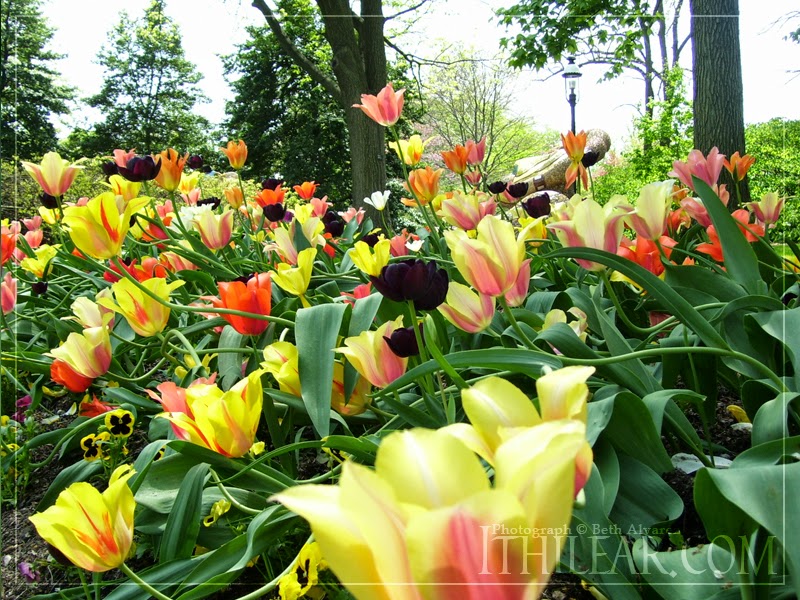
    So here we are, in the first week of spring. Real spring, according to the calendar, though weather across the country may disagree.
    Here in Tennessee, spring arrived uncharacteristically late. Two weeks ago there was ice and snow everywhere. Over the weekend before St. Patrick’s Day, spring magically arrived overnight, with flowers poking up in the front garden and trees putting on new buds. I’ve never been a fan of winter, so I was really ready for spring to arrive.

    It feels like I’ve been waiting for spring for a long time. Just like there are seasons in the world around us, there are seasons in life, and it seems as if I’ve been trapped in winter for ages. There’s a breath of spring now and then, a hint of something green and glorious yet to come, but I never reach it. I’m here, buried beneath a blanket of snow, hibernating, waiting to grow.

    This winter has been a long winter, and when you share your personal space with a very clingy, very demanding, very short person 24/7, nothing sounds better than a big open field of flowers where you both can have some space. But life with a toddler at home is a season, like any other. It’s a winter, waiting for growth. It will pass. Just like when you’re in the middle of winter, you know spring will come. Winter will pass.

    Trying to reach goals often feels like waiting for winter to end. There’s hard work and positive thinking to keep you moving, but eventually everyone hits a point where all you can do is wait.
    So you wait.
    Wait for a call, an email, a letter.
    Waiting for a break.

    Lives roll on like a cycle of seasons. Sometimes autumn isn’t full of pumpkin spice and bright colors. Sometimes your winters are dark and cold and lonely. Sometimes these seasons are painfully long. But neither is a season of death or gloom, just a period of rest, a period for self-improvement and patience. A time for development. For learning. For work. Spring comes when efforts reach fruition and begin to grow.

    I’m still waiting for my spring. Waiting for my ship to come in. But looking out at the new growth that heralds the early phases of spring, I know I’ll get there eventually, and all the work I’ve rolled up into a bulb will push stalks through the earth and blossom.

    Eventually.

  • Persimmon Tree Tea’s Berries and Cream Rooibos tea

    When I first decided to order “real” tea, I was really interested in trying rooibos. I’m not new to the idea of “tea” blends not containing any tea, since that’s what most herbal brews are, but I couldn’t imagine what this might taste like. It’s interesting, because the flavor is so much like tea, but without the astringency you get from the tannin. It also has an interesting “warm” flavor to it, something like spices that I can’t put a finger on.

    The berries and cream blend from Persimmon Tree Tea is a mixture of rooibos, berries and white chocolate. Unfortunately, the chocolate doesn’t add much aside from a little sweetness. White chocolate has a really subtle flavor, and in this tea it’s lost beneath the other flavors. The berries add a little more sweetness and create a pleasant contrast to the spiced taste of the rooibos.

    It doesn’t need any sugar, tasting sweet enough on its own, even as a strong brew. And since rooibos is naturally caffeine free, it’s a good treat to warm up with before bed without worrying about disrupting sleep.

    While it’s a tasty blend, it doesn’t offer much in the way of nuanced flavors. It’s an okay dessert tea, but I think the rooibos would make a better chai.

  • Weekly blogging

    If there’s one thing my husband is probably tired of hearing from me, it’s this: “What should I blog about?”
    It certainly isn’t his responsibility to think of things for me to write about, but I always end up turning to him for ideas because I can’t think of things. I don’t know why that is. The decision to write something for my blog every week was my idea, and while I still think it’s important, I always end up drawing a blank when I sit down to actually write. But I still think it’s important, and one reason is because of the self-discovery that comes from it.

    Blogging every week has helped me become more centered on the things I’m interested in. Though adventures from daily life work their way in here–and that’s fine–I keep most personal matters away from the blogosphere. Friends who read my blog aren’t here for personal details, and strangers probably aren’t interested. So this space is reserved for interests and stories about adventures only. Not all my friends are interested in my hobbies, so they can pick and choose which links to my blog they follow, depending on if I’m talking about something they’re curious about.

    Most of my blog entries in the last year were about writing and books, crafts, tea, and my ball-jointed dolls. These are the things I’m probably going to be focusing on this year. Writing is a really broad category, after all, and there’s thousands of blogs that write about it. There are fewer writers who also blog about their arts and crafts projects, and fewer still who blog about things like my dolls. It’s a small niche, but it’s comfortable, and it gives me someplace to talk about these things without it being buried as just another Facebook status update that’s long enough to be truncated.

    Another thing I’ve learned from blogging every week is that blogging is hard. Writing something every week means picking my husband’s brain for topics or ideas, but if I didn’t blog weekly, I might not blog at all.  It’s easy to let passing thoughts slip away without a post coming from them, even if it’s something I’m excited about or an opinion I feel should be shared. It’s tough to make yourself sit and write, though it doesn’t need to be long. While I’ve often thought my blog posts are too short, reading articles about it written by people much more successful than me has taught me that the ideal blog post is something that can be read in 3 to 5 minutes. I’m a faster reader than many, so what I can read in 3 to 5 minutes might not be the same as what others read. Still, it’s something I’m going to try to be more mindful of.

    Keeping my blog more focused in 2015? Maybe not gonna happen. But blogging every week? I can probably do that for another year.

  • Doll eyes: Ersa Flora / FantasEYES comparison and review

    If eyes freak you out, you might want to look away, because this post is going to have a lot of pictures of them. Doll eyes, blank and staring. It’s only when I have to write something along those lines that I realize my hobbies are a little unusual. But let’s move on, shall we?

    I recently received an order of some custom eyes for my favorite doll, because he’s my favorite and I’m always looking to improve him. It’s always a challenge to find eyes I like for him, since the selection of purples is slim, the selection of cat or slitted pupil eyes is slimmer, and the selection of purple slitted pupil eyes in 12mm is basically nonexistent.

    Enter Ersa Flora.

    While I was mostly happy with the eyes I already had, I wanted to make the change to urethane resin because I prefer the milky look of the whites in photographs. I was excited when I read that the brand now offers eyes in a resin base with a glass dome, so I ordered two pairs – One red and one purple, both in a custom design. What I received surprised me in a lot of ways.

    The top two pairs are what I ordered, and the bottom three were freebies! The bottom left have a beautiful aurora borealis sort of finish, pinky-greenish iridescence that’s amazing in person. The center are metallic red with a cat pupil. They have an almost holographic quality to them, which makes them dazzling in the light. Bottom right is natural blue, which are definitely my favorite out of the 3 pairs, and those found their way into one of my other dolls right away.

    There are a few differences between the resin eyes and the acrylics. The acrylic are a hollow back, which makes it easier to get the eye putty to stick. The resin are a flat back, which I find easier to position. There’s a little difference in color, too. The acrylics are a bright, clear white, while the resin have more a milky, slightly translucent quality to them that I absolutely love. Additionally, the resin eyes have a slightly larger base. This is great for me, because it reduces gapping when the eyes aren’t in a static, forward position. This is similar to other types of urethane eyes, such as the brown pair from MakoEyes below.

    The above photo also offers the opportunity to show that the acrylic base is very similar in color to the bright white of the MakoEyes urethane. While urethane eyes are typically preferable because of the depth in the eye, it’s interesting to note that the Ersa Flora acrylic eyes mimic this depth by having the pupil (in normal eyes, not cat eyes) set above the backing.

    Both the resin and acrylic eyes feature a low dome, which makes them fit much better in dolls with small eyes, like my Iplehouse boys.

    Another benefit is the smooth detail. In the above photo, you can see the Ersa Flora acrylic blue eyes compared to Dollmore acrylic brown eyes. While the brown eyes are larger, which should allow for better detail, they actually have worse. The eye shows a lot of spotty pixelation, which can be very noticeable in photos if not in person. Here’s another interesting comparison:

    From left to right:
    Ersa Flora acrylic 12mm
    Dollmore acrylic 14mm
    Glib acrylic 16mm
    Unknown maker glass 14mm
    Ersa Flora urethane resin 12mm
    MakoEyes urethane resin 16mm

    It’s a pretty wide range of quality, if not a wide range of types, but the one thing that probably makes the Ersa Flora eyes stand out as noteworthy is the level of customization.
    There are a few companies who offer customization options. With MakoEyes, they allow very minor customization options, such as omitting glitter from the irises of eyes that normally have glitter. Glass eye makers like Captured In Glass and more expensive urethane brands like Vings allow more robust options like custom color blends. These are great, but the problem I kept running into is that there are size limitations on customization, and the smallest customizable sizes were 14mm, which is too big for the doll I was trying to fit.

    Ersa Flora doesn’t have size restrictions on customization; if you can design it, it can be shrunk.  The red and purple urethane resin eyes were designed by me in Photoshop, sent in and made exactly as I imagined. They feature delicate texture and a lot of shine, plus they glow in the dark.

    While the red are very vivid and glow brightly after only a few moments in light, the purple are so subdued that they require a lot of effort to see results. While that’s really my only complaint, I do understand that purple and blue glow pigments and powders are typically the weakest, so there’s not really a lot to be done about it. It may be a result of changing materials, too. I have an older pair of glow eyes from around 4 years ago that are more vivid, but they have a higher dome than the new type, which can make them hard to position and cause fitting issues in some dolls.

    The new eyes do light up better after being exposed to UV light for long periods of time, which may be of concern to those who are worried about their dolls yellowing in heavy light exposure. It isn’t an issue for me, since the doll I wanted them for has been damaged, modified, repaired and airbrushed so heavily that there’s little concern for discoloration. For people worried about light exposure but still interested in glow effects for eyes, I recommend red and green, as those two colors charge and glow brightly with little light exposure.

    As a final closing note, I feel it’s worth mention that Ersa Flora is a very small company, managed by one person. Support of the company is support of an independent artisan, which is something I always endorse. Due to a high volume of sales and every single pair being handmade, wait times are an average of several weeks at minimum. I placed my order at the beginning of November and received the eyes at the beginning of January. Long waits are nothing new to most ball-jointed doll collectors, though, so it’s just something worth note.

    All in all, this order has helped keep Ersa Flora as one of my favorite options for eyes, and as far as quality for the money, you simply aren’t going to find something better.

    Save

  • Book review: Song for the Basilisk by Patricia A. McKillip

    I wholly believe that reading good literature is one of the best ways to improve your writing. My childhood library didn’t stock Ms. McKillip’s books. If they had, I might have grown to be a better writer much earlier in my life.

    I enjoyed reading other authors that were popular at the same time. I spent a lot of time reading Anne McCaffrey, Mercedes Lackey, Margaret Weis and Tracy Hickman, but there’s a poetry to McKillip’s work that can be difficult to find.

    Remembering how much I liked the books of hers I read when I first got married and we lived two blocks from a library, I decided to look her books up on Amazon when I found myself short of reading material. I didn’t spend much time picking, instead taking a blind gamble and buying the first book on the list I hadn’t read. It ended up being a great choice.

    Song for the Basilisk is an unusual fantasy story in that magic is but a small undercurrent, brought to life by music. The main character, Caladrius, is not the typical fantasy hero either: He’s a musician in his 40s who  never became a full-fledged bard, despite spending almost his entire life in their school.

    He wants nothing more out of life; staying on the rocky island of Luly with the bards as a teacher is enough. But if he had what pleased him, there wouldn’t be much story, and so we find him driven from his home in Luly by dreams of fire that seem to chase him no matter what he does. Unwilling to remember his life before the bards, before the fire that haunts him, he finds himself reluctantly leaving everything behind to rediscover his name. It’s in this search that we’re introduced to the Basilisk–a prince so called because of the monster on his family’s banners, and because of his eyes in a peculiar shade of reptilian green.

    One of the unusual traits of this book is that we begin the story knowing what Caladrius himself does not; the beginning hides nothing, but instead shows the struggle in which he tries to forget who he was. It’s less about unraveling secrets and more about coming to know the lead character in all his stages of life, learning to sympathize with him and watching him grow.

    Some may find the lack of suspense off-putting, but for those looking for a tale of character growth, this book has a lot to offer.

  • Support from strangers

    Everybody knows that you are your own worst critic.
    I’ve often struggled with finding respect for my own work, no matter what it is. Aside from writing, I make a lot of crafts, I do a lot of sewing, and I dabble in art. I get compliments on all of these things, and while I deeply appreciate the kind words people share, it’s difficult for me to accept. I don’t protest, I thank people for their notice, but inside there’s always that small voice that says it could be better.

    It can be difficult to keep a positive inner voice. People who struggle with self esteem often struggle to accept praise. A friend of mine wrote a lovely article about improving your inner voice not long ago. Her advice is sound and reflects a lot of practices I’ve worked into my own life this past year, but like anything else, it’s a change that takes time.

    It’s also easy to feel like nothing is changing. Like a new mindset doesn’t make a difference. It’s easy to let this discourage you, but don’t! This, too, is normal. And it will pass. Sometimes we just need a small reminder that not everyone is as hard on you as you are.

    You see, strangers don’t doubt you. There’s none of the niggling doubt we face from ourselves. If you tell a stranger you’re going to do something, they believe you. You create your own face value, the most important part is to reflect it inwardly, as well. Friends and family can be an excellent support, but some of the most supportive things I’ve heard have come from people I don’t even know.

    As an example, an occasion arose where a friend and I were discussing one of my work-in-progress books on Facebook. One of her friends, someone I’d never interacted with before, joined the conversation and asked what we were talking about. She told him I’d written a book. He asked for a link to it on Amazon. I said it wasn’t published. He said “Send me a link when it is.”

    When it is.

    In three little words, a complete stranger voiced more confidence in me than some people I’ve known for years. I don’t begrudge my friends for this, mind you; I appreciate all their wishes for luck in finding representation. But the simple difference made by choice of words is astounding. When it is. Because even though I made it clear it isn’t yet represented, a stranger believes it will be. Without knowing me or my project. It may seem trivial, but it was a great inspirational boost.

    Now all that’s left is making it happen, right?

  • Serpent’s Wake

    The first draft of the second book in the upcoming epic fantasy series is now complete!

    While still seeking representation for the first book, work on the series will continue during the search. Every writer will give different advice, but personal experience shows that completing a series before publication is sometimes beneficial.

    The initial draft will be revised over the next several months, while I begin compiling additional information about the fantasy world it’s set within.

  • Persimmon Tree Tea’s Assam Gold

    Yum.
    Yum, yum, yum.

    I’m still working my way through samples from Persimmon Tree, but until now, I’d only found two that I felt were must-haves for my tea shelf. I knew from the first taste that Assam Gold would be the third.

    Unlike most of the black teas I got from PTT, this one can stand on its own. No cream or sugar needed.  It smells heavenly while brewing without having the sharp, astringent aroma I usually associate with black tea. It’s fragrant and mellow, making a rich golden-colored brew. The flavor starts strong, like a classic black tea but without any bite. It’s warm and soothing, with a mild middle note and an almost sweet aftertaste.

    While most teas have me sampling them straight for a few sips and then reaching for my rock sugar, I finished this whole cup unsweetened. It was cool by the time I finished. Once cold, that initially strong first taste softens, as does the sweetness. Still not bad, but definitely best served warm.
    Delicious!

  • Forward momentum

    Sunday night, I posted this fantastic cell phone shot of my laptop’s screen on Facebook:

    And if you couldn’t tell just by looking at it, it’s a pretty big thing. It means I just finished the first draft of the second book in my epic fantasy series.

    When I set out to write the fantasy book in my head, I didn’t plan for it to turn into a series. It was meant to be one book, but it rapidly grew into something much bigger and more interesting than just one book. But deciding to turn it into a series and actually making that happen is stranger still.

    Writing books gets easier as you do it. Or at least, that’s how it seems to me. The first few tries didn’t go well. But this time, it felt like I was finally starting to figure things out. I’d say it took a year to write the second book, but that isn’t exactly true. I started the second book right after I finished the first, but then put the second on hold while I edited the first book a time or two. Or five. Six? I can’t remember any more, but I spent a lot of time editing. I picked the second book up again after I was done. Though the work was spread out over a year, it took about six months to write.

    So what comes next? Well, not the third book. Not for a while, in any case. I’m only just beginning the search for representation for the first in the series, and it may take a while to find just the right fit. Fantasy epics can be difficult to sell, but it’ll get out there eventually. Representation for the first book takes priority right now. In between sending queries, I’ll be spending the month of February making the first major edits and adjustments to the first draft of book 2. Then I plan to take a little time off.

    I’ve been writing consistently for over a year now and have been making great strides toward reaching my major life goals. But writing for hours every night doesn’t leave much time for anything else, and I miss my other hobbies. I’ll be revisiting some of them before I get back to writing, but I have a lot of plans for when I get back to it. And while it won’t be an installment in the fantasy series, I hope to write another book before the end of summer.

    Blaine and Angie miss me, I think. Maybe it’s time to pay them a visit with that sequel everyone keeps asking about.