Beth Alvarez - Author of Epic Fantasy
  • Of Blood and Rain now available in paperback

    Of Blood and Rain now available in paperback

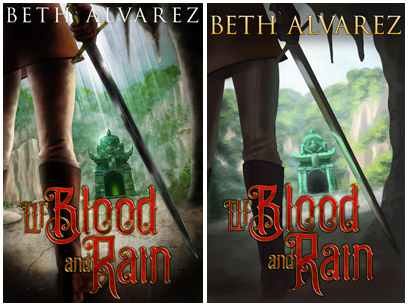
    Bet you didn’t see that one coming, huh? My fantasy novella, Of Blood and Rain, is now available in print! Not only that, but it’s rocking an updated cover, too, and is also now available in Kindle Unlimited.

    The cover’s been recolored for a darker, bolder, less cartoony look. Check it out. The new one’s on the right:

    Of Blood and Rain covers, side by side

    The line art for the cover illustration was done by the wonderfully talented Jose Alvarez.

    Ready to read? Grab yourself an eBook or print copy on Amazon. Or, keep your eyes peeled–the print version will be available through other retailers, such as Barnes and Noble, in just a few days.

  • Decision paralysis

    Decision paralysis

    There’s a place for jokes about how I stereotypically have difficulty deciding where we should go to eat. But truthfully, I’m not good at big decisions–no matter what they are. Some things are easier than others, with a more clear-cut deal breaker. I mean, Cricut or Silhouette? Wasn’t a hard choice when Cricut requires an internet connection. Shortly after getting my Silhouette Cameo, we were treated to a week without a stable internet connection, which emphasized that I’d made the right decision.

    But in others, the pros and cons aren’t so clear-cut. That’s probably why I’m still stuck deliberating over which is the best route forward with my fantasy books. If all it comes down to is pros and cons, the choice should be obvious, and it’s definitely helped me rule out the option of working with one of the 5 major publishing houses. They’d have to give me the star treatment in my contract. Let’s be realistic. That’s not going to happen. So why am I still hung up?

    Most of the time, we’re torn between decisions because we’re worried about the decision we make ending up not being the right one. We spend so much time dwelling on it, rehashing the issues over and over again, that we end up paralyzed with indecision and can’t make a choice at all. This is decision paralysis–also known as analysis paralysis. Unfortunately, I’m a chronic sufferer of this particular issue.

    Most cases of decision paralysis come from two problems: overabundance of choice, or false dichotomy. In this particular case, that’s not the issue. There are a few choices for publishing my books, but not an overwhelming number. I can take an indie route, I can pursue publication with an independent press, I can pursue an agent and aim for publication with a major publisher, I can pursue an agent and aim for a mid-sized traditional publisher, I can pitch my book to small traditional publishers myself, or I can choose to give up on publishing the books at all.

    Okay, that last one isn’t really an option. I mean, it is, but who’s really going to make that decision? It’s one I’ve already ruled out–along with a few others. I don’t want a deal with a major publisher. I don’t want to work with a small, independent press that can’t offer me anything I can’t do by myself. Really, my options do come down to two choices: pursue a smaller traditional publisher, or do it myself and accept the title of indie author for better or for worse. Both of these have their virtues, as well as their faults, as I outlined before in my post about the pros and cons of traditional versus indie publication. Because of this, I’m not stuck because I don’t know which is the right choice–they’re both right. And at the same time, they’re both very, very wrong.

    At the end of the day, what I want is the path that ensures two things, and sometimes it feels like those two things stand opposite each other in the world of publishing. One, I want the path that gives my books the absolute best chance for success. Wide distribution options for both eBooks and paperbacks, as well as a presence in libraries, means this desire tilts more toward traditional publishing. Two, I want to make a living from my writing, and this is tilted firmly toward the indie side of things. Lots of writers preach writing for passion instead of money, and that’s great, but passion isn’t going to feed my family or pay for my health insurance so the carpal tunnel issues I develop from all this writing can be taken care of. I’ve spent 15 years of my life working on these books, and creatives deserve to be paid.

    So I have two desires for my work, and they pull it in two different directions. Both are vital to success. But how do you decide which is worth more? What do you do when both decisions are right, both decisions are wrong, and both decisions could spell utter disaster and failure for your life’s work? What would you do?

  • Illustrating character sheets

    I’m always looking for fun ways to keep track of my stories and the characters within them. One of my favorite ways to keep track of characters is to give them a character sheet in my book planner. But page after page of text can be kind of boring, even if it means everything is neatly organized. So, I figured… I’m an artistic person, why not do something about it?

    So new character sheets came into development. They still have the pertinent info written out in text, but now there’s a space for a picture of the characters themselves. While I’ve done character portraits in the past, I decided to try something new, matching the bright colors and cute themes I have going in my planners.

    I’d attempted to draw chibi (which is slang for short or, sometimes, little in Japanese) versions of my characters before. It never ended well–I couldn’t ever make things look the way they did in my head. But I figured the chunky, big-headed and big-eyed look would be perfect for my character sheets, even if they weren’t a terribly mature choice. The characters would be under three inches tall on their bio sheets, so a more realistic style would have left them with indiscernible features. There was no harm in trying, so I gave it a shot.


    Even though their story isn’t written yet, I started with Laele and Arrios. Instead of struggling to make my characters as tiny and fat as the ones I liked, I decided to make them a bit bigger. The change in style seemed to work well for me, and they were a lot of fun. As I worked on them in my sketchbook, I decided it would be fun to draw their inventory, too–so I started adding items. Some of Laele’s inventory took cues from her Ragnarok Online incarnation; that bottle wasn’t supposed to look so much like Starsand. For Arrios, I added things I thought he might use as an adventurer–a water skin, treasure map, travel journal, and treasure he’d found along the way.

    Though I liked the result, I felt the traditional ink outlines were too heavy and grainy for what I ultimately wanted, so I decided the further installments would be digitally inked and perfected that way. Naturally, I tackled drawing Rune and Firal next, complete with inventory items of things they possess in their stories. While I’ve only finished Rune, I think he turned out super:


    I’m looking forward to tackling Firal’s coloring next, but it may be a little while before I get to it. I’ve got multiple paperbacks to proof and revise, a story to finish editing, a story to re-publish, and a story that needs to be written from the ground up. But it’s been an enjoyable little exercise, and it’s nice to draw again after letting my artistic skills rust for so long.

    Plus, just for fun, I recorded the coloring of Rune’s sheet so I could share it. Why not check it out?

  • Goodbye Teavana: Looking for tea alternatives

    I never saw another customer in Teavana.

    The employees often stood out front, usually wringing their hands and looking uncomfortable while people walked by. They didn’t really want to serve samples. They didn’t want to stand outside and harass people into trying them. They couldn’t tell me what ingredients were in the teas–problematic, when you have allergies. Most couldn’t even tell me which were decaf. So when I heard that all Teavana stores were supposed to close, I wasn’t surprised.

    I was, however, a little disappointed. There was something excellent about visiting the store and picking out my own tea, blending those I liked, and looking at all the new teapots and tea-making gadgets. I found a couple teas I really liked. I found a couple duds, too. But mostly, my visits brought stress.

    See, Starbucks was quick to blame the demise of the American shopping mall for the underperformance of Teavana stores. But here’s the thing: If a store is worth visiting, people will visit. Many mall stores fail to make themselves appealing enough to pull in customers. Some continue to adapt with strong branding and advertising, making themselves continually relevant, or filling a niche that make it the best place to find what you’re looking for. Teavana did an excellent job of the latter, so why was the store always empty?

    Probably because they just didn’t understand their clientele.

    I mean, when you think of the average tea drinker, who do you envision? A sweet grandmother and a bookish introvert probably come to mind right away. I fall into the latter category (though I hope to be both someday!) and let me tell you–as much as I liked Teavana, I hated going there.

    The staff were unhelpful. They were overly aggressive, making me feel uncomfortable and bullied. I won’t forget the time I went in and asked for two ounces of a particular tea. So imagine my discomfort when the sales lady dumped a heaping scoop into the bag on the scale, filling it with almost three times what I’d requested, then looked me straight and the eye and said “Is that okay?”

    It was absolutely not, and she knew it. She also knew most people like me would crumple instead of being angry, collapse under pressure and just pay for it in hopes of avoiding a confrontation. And unfortunately, it was like that every time I visited, and more than once, I had to fall back on my husband–a prior Marine–to insist that no, removing two teaspoons of tea from the bag did not make it what I asked for.

    Needless to say, I avoided the place when I was alone. I didn’t want to deal with the aggression or the inevitable challenge at the register to get what I’d asked for without being badgered into getting anything else. So, no–decreased mall traffic probably had very little with the store’s demise.

    While I regret not being able to smell teas before I purchase, which means I’ll probably experiment less, there are a number of companies I’ve grown familiar with and a handful I’m looking forward to trying. I want to drink more tea in 2018, so while I’ll be kicking back with some extreme discount Teavana white chocolate peppermint this afternoon, I’ll be settling on places to try tea from this year, and here are a few contenders:

    1. Plum Deluxe (who I got tea from before!)
    2. Desert Sage Natural (A small, independent company with a LOT of blends)
    3. David’s Tea
    4. Adagio Teas (Whose fandom blends give me so many ideas)
    5. Republic of Tea
    6. Mahalo Tea
    7. Tea Forte (Because I loved the black cherry blend)
    8. Holy Mountain Trading Company

    Have a favorite tea supplier? Who would you add to my list? And, most importantly… who has the best Earl Grey?

  • Goals for the new year: 2018 edition

    I know I’ve mentioned before that I’m not really a fan of resolutions. In 2015 and 2016, I posted a list of goals for the year. I skipped 2017 because I was kind of tired of blogging, but that meant I didn’t have anywhere to talk about which things I accomplished. I did have goals, I just didn’t share them. This year, I’m sharing them, if only for the purpose of having a digital checklist to mark off in 2019. Because I’m all about the lists. So, in no particular order, here they are: My goals for 2018–and there are a lot.

    Revise and finish querying Serpent’s Mark.
    One of the things that happened last year was the decision to split the first book in my yet-unpublished epic fantasy series into two volumes. There were a lot of reasons for it, but the biggest was that in my first round of queries, agents felt it was far too long for an unknown author. So the book was split, and I queried again. I got farther, sent out some partial manuscripts, but none of them bore fruit. All I can take away from the responses that I got is that it’s just not gripping enough yet, which means revision. Again. It gets a little frustrating–I’m ready for this book to be out. So, hopefully, the eighth draft will be the last one. I’ve got fresh readers lined up for the first installment, so I’ll edit, get reader feedback, and then send out a batch of queries… even though as I detailed over the past two weeks, I’m no longer sure if traditional publishing is the best choice for such a large, already-written series. But I already have a big list of agents to query, so I might as well see it through to the end. I don’t have to sign an unfavorable contract. I have control over the series’ fate.

    Publish Her Midnight Hunter.
    The third book in my new vampire series will wrap up the core story I had at the beginning. I’ve found paranormal stuff doesn’t always lend itself well to multiple books; the ideas I have are typically larger than a single book can tell (as evidenced by the need to split Serpent’s Mark and Serpent’s Tears into two separate titles) but the convention in paranormal is to continue a series with new characters instead of using the same ones. But I don’t really want to follow rules. My stories are what they are and I’m looking forward to completing the core series. I’m 10,000 words into the first draft and hope to have the book out at the end of March.

    Make a plan for the Keeper’s Kin series.
    Closely related to the previous goal, I need to decide what comes next. If there’s enough interest in the books, I have plans for 3 or 4 other books in the universe that follow the lives of other characters. Depending on reader feedback, they may be best put on the back burner while I work on other projects.

    Write and publish Emberheart.
    Speaking of other projects, this one has been on the back burner for too long. This year, I want to write it and get it out–and hey, it’s a perfect title to release as an indie book that can introduce people to my fantasy writing. It’s a portal fantasy. Traditional publishing hates portal fantasies, even though most readers I’ve talked to love them.

    Earn $1,000 as an author.
    This sounds like a really small milestone. It’s not. Plenty of surveys have been done on what authors earn; the numbers are smaller than most people realize. According to a large survey Digital Book World put forward in 2014, a majority–more than fifty percent!–of traditionally published authors make $1,000 per year or less. Earning $1k would put me in their league. Crossing the threshold into more than $1,000 would make me a minority performer and a “successful” author. I feel like it’s a fairly reasonable goal for someone with the number of books I’ll have out in 2018.

    Attend a book/writing convention or conference.
    This is one of my 5-year goals and while I didn’t plan on doing it until 2020, there’s no reason I can’t tackle it sooner! While I’d love to make a summer trip to attend the Realm Makers Conference in July, I’m not sure I can afford it just yet and I don’t know how long registration is open. It may close before I can scrape together the funds to travel. But PennedCon is in September and is also in St. Louis. Since it’s geared toward a mix of readers and writers, the cost is lower, so I’d have more time to save up for the trip up from Tennessee and wouldn’t have to put together quite as much.

    Read a book a month.
    This is a low goal for someone who used to be able to read a book a day, but these days, I have to balance my reading against so much that demands time. A book a month should be a reasonable target to hit.

    Downsize craft supplies.
    The first thing on the list that doesn’t relate to books! My creativity hoard has been too big for my craft space for a long time. This year, I need to downsize until everything fits comfortably and isn’t teetering on the verge of a mess every time I make something. A good part of this will be paring back on my fabric supply.

    Learn to do my makeup.
    I’m probably around a third of the way through my life. I should probably figure out how to apply eyeliner at some point. My parents blessed me with a Sephora gift card, so I’ll be starting there.

    Create more content for YouTube.
    I’ve been holding steady at one update a week for my YouTube channel, but I’ve spent less time working on the dolls that are supposed to represent the characters from my books. I want to get back to that, so I’m wrapping up a few projects and making plans for smaller updates so I can shoot for an extra video at least every other month.

    Remember to exercise.
    I slacked off in 2017 and boy, did I regret it. It’s hard to get back on the health bandwagon after you’re off, but it’s not like I need to be working out every day. Some interesting recent studies I’ve seen indicate there’s nothing wrong with being a weekend warrior, so adding some Saturday morning yoga may go a long way.

    Make stickers.
    Stickers? Stickers! I love stickers, man. I use a ton of stickers in my planner, but I have a hard time finding ones I like. So I had a crazy idea. Why not make my own? I’ve got a pack of sticker paper waiting on my desk, so I’m going to make use of it. The goal is to draw a sticker sheet for each of my favorite characters to write and then print them out to use in my planner. This lets me get awesome stickers I know I love, gives me plenty of stickers to use in my planner without spending a fortune at Michaels, and should get me drawing again, too. Win all around!

    Draw a cover for Serpent’s Mark.
    Whether or not I do this one may depend on how far I get with the very first goal. If I end up signing with an agent, I probably don’t need to draw a book cover. But I have a vision of a cover I think would work for the series and I’d like to take a stab at drawing it, implementing some of the stuff I’ve studied recently. And that way, if I do ultimately decide that traditional publishing isn’t going to work for me, I’ll have an illustration to fall back on for cover art.

    And that’s it. Tall order, huh? Do you think I can make it?

  • Real questions to ask when deciding between traditional or self-publishing

    Last week, I shared some of my complex feelings on discovering traditional publishing probably wasn’t the best path to publication for me to follow. This week, I’ll be sharing part of why.

    When I started researching traditional vs. self-publishing from a new angle, I created a spreadsheet where I could break down some of the points of consideration that came up while I was studying the current market.

    The importance of each item is up to you. What is important to me might be no big deal to you. Also, this information may change in coming years. It’s based on my findings in 2017. By the end of this year, it may be out of date and inaccurate, but hopefully it’ll offer a good starting point for your own studies in the future. Furthermore, ruling a path the winner of some subjects are made based on generalizations. A skilled agent may be able to open other possibilities, but don’t count on it. Let’s get started, shall we?

    1. Is it a prestigious form of publication?

    We might as well start with what’s probably the biggest hang-up for most authors. This is one of my biggest hurdles to overcome. Let’s be real: self-published authors are generally viewed with disdain. We’ve all heard the phrase “Anyone can self-publish” and whether or not it’s true doesn’t matter. If you can’t impress an agent, the assumption is you self-published because you failed. If you get a traditional publishing contract, even with a small press, it means you weren’t the one who decided your work was good enough. That automatically makes it more valid, right? Except that isn’t true. Some of the biggest blockbuster titles of the past five to ten years have started as self-published books, and no one would ever imply they were less because they were first self-published. Good books are good books. The assumption that every book on the shelf at Barnes and Noble is a good book because it landed an agent is clearly false. But prestige is important to a lot of people, so decide up front what this means to you. If the prestige and respect of being signed with a traditional publishing house matters most, there’s no point in having you read further.
    Winner: Traditional publishing.

    2. Will your books be readily available in bookstores?

    If you’ve kept reading to point 2, consider this carefully: Having your book immediately available in traditional bookstores is an issue of vanity. The vast majority of books are sold online–even those that are traditionally published. But traditional publishing with a major publishing house is the only route to your book automatically showing up at B&N or your favorite niche bookshop. We’ll discuss this a little more in the coming points, but this is the only other point where traditional publishing has a clear lead.
    Winner: Traditional publishing.

    3. Can additional bookstore presence be negotiated?

    For both traditional and self-publishing, the answer is a resounding yes. If your book is available in paperback, there’s a chance for you to get it into stores on your own legwork–regardless of the path you’ve taken into publishing. Lots of independent bookstores will fail to keep your book in stock, even if you’re traditionally published. You need to go to them to get it on the shelves. Even Barnes and Noble has forms you can fill out to request your self-published books be stocked. Even if they decline at a corporate level, a good relationship with management of your local store can still get your book on shelves. There’s one little catch: if you’re self-published, bookstores may turn you away if your paperback is printed through CreateSpace. Amazon is the rival of other booksellers, and they don’t offer returns for unsold paperbacks. Consider other distribution venues, such as Ingram Spark, to aid your chances in getting your book stocked.
    Winner: Tie.

    4. How long are books typically stocked on shelves?

    While there is some variance, as independent bookstores set their own time frame, most books are stocked for 3 months. Doesn’t matter who your publisher is or even who you are–if your book isn’t selling, it won’t stick around. After 3 months, unsold books are typically returned to the vendor.
    Winner: Tie.

    5. Is the length of a print run limited?

    If your book is traditionally published, the 3 months your book is first on the shelves is sometimes your only shot at proving yourself. If a print run does not sell out, you don’t get another run. Your book may remain available in digital editions, but it won’t be reprinted. This is the first place independent publishing has a clear advantage. If you’re independent and have paperbacks, you’ve either sponsored your own print run or offer your book through print-on-demand. Your book will stay in print as long as you want it to.
    Winner: Indie.

    6. Can your book be added to public libraries?

    Absolutely. Befriending local librarians can get it there, but a better way to get your book stocked is having readers request it. Traditional publishing will only get you into the library system if there’s obvious demand for your work. If you’re new or even a mid-list author, you may have to petition libraries yourself.
    Winner: Tie.

    7. Will you have access to professional editors, artists, etc.?

    The good news is, everyone has access to these resources. The difference is cost. When you’re indie, you’re responsible for your costs up front. When you’re traditionally published, you make it up to your publisher later. More on this later, though.
    Winner: Tie.

    8. Can you expect to work with one editor, artist, etc. long-term?

    This is one people often fail to consider. When you’re traditionally published, you get to work with your publisher’s editors… but who knows how long they’ll stick around. That editor you click with this week might not be there next week. Same with everyone who touches your book, aside from you and your agent. Publishers are like any other business; they see employees come and go all the time, and it’s outside your control. However, if you publish independently, you’re the boss. If you find an editor who really gets your vision for your book, you can hire them over and over again, providing they have openings in their schedule.
    Winner: Indie.

    9. Is there any cost up front?

    For indie publishing, yes. No question about it. For traditional publishing… it’s not quite so clear cut, and I’ll expand on the reason for that under the next point. Generally speaking, you don’t pay to have your book traditionally published. You get paid, not the other way around. If any publisher expects money prior to publication, it’s a scam and you should run the other way. But there are expenses associated with publishing–especially indie publishing–that means opening your wallet. If you’re indie, you’ll need a cover, formatting, money to order proofs, the list goes on. Regardless of whether you’re indie or trad, you’ll need to spend money on a professional-looking website, a marketing budget, and most importantly, editing.
    Winner: Traditional publishing.

    10. Do I always have to pay for editing?

    For indie publishing: Yes. Skipping editing should never even cross your mind. For traditional publishing: Also yes. Don’t believe me? Go look up some agents and check out their submission guidelines. See how many of them state they expect a manuscript that is complete and edited. That means professional editing, not you reading it a second time to clean up any obvious mistakes. I was a little hazy on it, so I took the time to actually ask an agent. Agents absolutely expect you to have spent money on professional editing before you even get to the querying process. Sorry, guys. You can’t escape the editor.
    Winner: Tie.

    11. What should I expect to spend on producing my book?

    This is one field where your mileage may vary. Sometimes widely. The good news for those of you pursuing traditional publishing is that you can get away with editing and spending a bit on marketing. Based on quotes I was given for a 95,000-word fantasy novel, you can expect to pay between $900 and $1,250 for extensive editing. Then you’ll want to put away a few hundred for advertising opportunities. $1,500 is a reasonable estimate. If you’re looking at self-publishing, you’re going to be looking at a much higher total. Assuming you can do nothing yourself, you’ll need an editor, a professionally made cover, professional formatting, graphics for advertising, and your ad budget. $2,500 is a realistic budget for producing and promoting a high-quality book on your own. The good news is you can mitigate these costs depending on who you know and whether or not you have skills to do things on your own. As an example, I have a background in art and graphic design, so I do my own book covers and formatting. This also means I can trade covers and formatting for high-quality editing, as it’s not uncommon for editors to be authors, too. My expense for producing Her Midnight Cowboy was especially low–only $30, not counting advertising/marketing funds.
    Winner: Varies by your skill set, but usually traditional publishing.

    12. What are the average royalty rates?

    For traditional publishing, commonly between 8 and 15% of the wholesale price. That’s right–the wholesale price, not the cover price. The cover price is the markup bookstores place on a book. They have to make money, too! It’s not uncommon for a traditionally published author to make a dollar or less off a $30 hardcover book. For digital editions, many traditional publishers give their authors 50% royalties. But keep in mind that’s 50% of what’s left after vendors take their fee, and your agent gets an average of 15% of all your earnings, too. Indie authors get a much better deal. Lots of publishing platforms take a small cut of 10 to 15%. If you publish directly through Amazon, you can expect to receive between 35 and 70% of your eBook’s list price. Paperback profit margins depend on you and what distributor you’re using, but it’s not uncommon to make a dollar or two off every sale.
    Winner: Indie.

    13. Does it pay an advance?

    Indie publishing? Never. Small press? Rarely. Traditional publishing? Usually. But there are two important things to know about advances ahead of time. For one, it’s exactly what it sounds like–an advance loan against future earnings. Sometimes, contracts stipulate it has to be earned back within a certain window of time. And if your book doesn’t earn out its advance, you’re often expected to pay back the difference. This comes out of your earnings, which means that 8 to 15% you’re getting off each sale? Those pennies are going to be absorbed to cover your advance. It could be years before you see another dime. The other important thing to consider is that advances are getting smaller all the time; for mid-list authors, sometimes it’s only enough to cover the bills for a single month. The advance certainly isn’t what it used to be, and you shouldn’t count on it. For new authors, there’s no guarantee you’ll get an advance at all.
    Winner: Traditional publishing by default.

    14. Are there any hidden costs?

    With indie publishing, no. All your expenses are up front. With traditional publishing, you have to remember that all that free stuff you got, edits and book covers and the like? Yeah, you’re paying for that long-term. You aren’t earning 8 to 15% just until your advance is earned out. That’s the range perpetually. Sometimes you’ll go from earning 10% to 15% after your advance is earned out, but after that, that’s your income in perpetuity. If you have an exceptionally successful book, you end up paying more for these services in the long run than if you’d paid for them out of pocket up front!
    Winner: Indie.

    15. Who is responsible for the brunt of the advertising?

    This one’s a sad truth: You. Unless you’re an established author or the lucky winner the publisher has chosen to back, you’re probably going to be responsible for the vast majority of your own advertising. The biggest leg up you get from traditional publishing is having an immediate bookstore presence, but you’re still going to be the one doing the pushing, no matter how you publish. On one hand, traditional publishers are more likely to give you more backup once you’ve picked up steam on your own. But on the other, you’re doing all the leg work anyway–if you’re indie, you get to keep more of the profits. Don’t want to market? Tough luck. No matter what you do, you’re going to have to learn how to do it.
    Winner: Tie.

    16. Can you re-publish through another company or venue later?

    If you’re traditionally published… probably not. Rights reversions are hard to get, especially from larger publishers. And even if you get it, nobody wants to pick up another publisher’s leftovers. You might be able to regain the rights to your book and republish by yourself, but it’s tough going. But if you’re indie, absolutely! You’re in control. In fact, good quality indie work gets picked up by traditional publishers all the time–and when they’re the ones who approach you, you’ve got more leverage, which means you can have your choice of agent or literary lawyer and will have a lot more clout in your publishing contract.
    Winner: Indie.

    17. Can you escape a bad publishing setup?

    This is sort of related to the previous point. If your publisher tanks or they’ve presented your book poorly, you’re probably stuck. You can’t just weasel out of a contract after you’ve signed it; you’ll be in for the long haul. With enough time, effort, and money for legal expenses, you might be able to get out in a few years. But if you’re indie and you don’t like a platform, all you have to do is pull your book and try it somewhere else. You can change venues within a matter of days.
    Winner: Indie.

    18. Do you get to title your own book?

    With traditional publishing, probably not. Does that surprise you? It surprised me too, but I heard it from a lot of agents. They aren’t too worried about the title you’ve given your book as a working title, because it’ll change–sometimes regardless of your opinion. Plenty of authors hate the title their books were assigned. You might get a little input, but don’t get attached. According to multiple agents I’ve heard speak on the matter, only around one book in twenty actually gets published with the name the author chose. This seems exceptionally low to me, but if the agents are saying it, I have to accept that’s the case. But if you’re indie, no one is stopping you. You’re the boss. Just keep in mind that using a name that’s too similar to an existing book might get you in trouble.
    Winner: Indie.

    19. Do you have any influence on the book’s cover?

    With traditional publishing, you may be given a little input, but you’re not in control. More often than not, you’ll be handed a cover they choose for you. With indie, it’s all up to you. You can hire any artist you want–even one that charges ten thousand dollars for a custom oil painting. You can also make your own cover, if you really want to, but you probably shouldn’t.
    Winner: Indie.

    20. Can the title, cover, etc. ever be changed?

    With traditional publishing… not likely. Old romance novels sometimes get re-printed with new titles and covers, but the vast majority of books only ever see one print run. But if you’re indie, you can do whatever you want. Think of a better title two weeks after publishing? Change it. No one’s stopping you. Want to update your cover to match current genre expectations? Hire whatever artist you want. You can even stick special seasonal covers on your books if you really want to. The sky’s the limit.
    Winner: Indie.

    21. Do you have any control over formatting and presentation?

    Like with covers, traditional publishers may tolerate a few suggestions from you, but at the end of the day, you need to sit down and accept that they’re the professionals. As an indie, you have your choice of formatters at your fingertips. If you don’t like the result, you can hire a new one–or learn to format books yourself.
    Winner: Indie

    22. Are there restrictions on how frequently you can publish?

    Traditional publishing is notoriously slow. If your book gets signed tomorrow, it’ll be around two years before it hits shelves. In addition to a slow process, it’s not uncommon for traditional publishers to throttle the speed of releases. They give various reasons for this, but I think speed at which publishers function is the main influencing factor. One book a year is considered a rapid pace for traditional publishing. Indie authors could publish a backlist of eighty-three books in the span of a week if they really wanted to. I don’t know why you would, but hey, why not?
    Winner: Indie

    23. Will you be expected to surrender property rights?

    There was a time where all you signed over was print and maybe some of your sub rights. But according to many agents, modern publishers have become more aggressive and will push for full rights in boilerplate contracts–which is what you get if you’re not already a big seller. So unfortunately, this is probably now pretty much a given with traditional publishing. A particularly skilled agent or a big-name author can probably get this changed pretty easily. For new authors, there’s definitely no guarantee. If you’re indie, you never have to sign away anything–your rights are yours in perpetuity.
    Winner: Indie

    24. Can you sell some rights (Film, audio, etc.) and retain others?

    Indie, yes. With traditional publishing… it depends. Previously, it was normal for publishers to pick and choose from things like foreign rights, audiobooks, eBooks and print, but authors had a little more say in what they were signing. Most modern publishers will not accept books for print-only runs; they want every venue for distribution open to them. Unfortunately, this leads to a lot of authors being underpaid, too. Audiobooks and eBooks both are more popular than they were ten years ago, yet their increasing value has not seemed to have much impact on what authors are offered as far as advances or royalties.
    Winner: Indie

    25. Can publication require a non-compete clause?

    With indie publishing, basically never. But for traditional publishing, this is becoming a more common clause in contracts. Not only can you be barred from working with other publishing houses for a specified amount of time, you can be barred from competing with yourself–which means you can’t self-publish anything while you’re in contract, either, even if it’s a completely different series.
    Winner: Indie

    26. Can poor sales kill a series or contract?

    This happens in traditional publishing all the time. Maybe you signed a two-book deal and the first book didn’t sell according to expectations. They might be stuck publishing a second book, but then they’ll drop you without signing a third. I have also heard of cases where poor sales of a first book–or issues within the publisher, which have nothing to do with an author–led to termination of a contract before the second book in a two-book deal could be published! So yes, it’s totally possible. Worst of all, few if any publishers are willing to pick up a series partway through. You may be freed up to pursue indie publishing for the rest of your series, but only if your contract allows it. If you’re indie from the start, nothing stop your series but you. Even if you never sell a single copy of book two, nothing is stopping you from publishing book three.
    Winner: Indie

    27. Can issues like piracy, etc. prematurely end your series?

    People used to swear this wasn’t an issue, but bestselling author Maggie Stiefvater’s dramatic struggle against this issue earlier this year says otherwise. Her publisher did everything in their power to try to kill her series, despite incredible sales. With indie, again, nothing ends a series but you.
    Winner: Indie

    28. Can a book flop damage your career?

    There’s nothing worse for an author than failure to earn out an advance. This is a black mark on your record, one other publishers won’t ignore. Worst of all, it may not be your fault. Errors are often introduced in editing stages, or maybe a book wasn’t properly advertised. Either way, a failed traditionally published series can be a death knell for getting anything else traditionally published in the future. By contrast, a tanked indie book could set you back in both time and money, but nothing will ever stop you from continuing to publish.
    Winner: Indie

    In conclusion

    If you’ve made it this far, I hope you’ve found something valuable in this post that took me two hours to type. It’s a lot of questions, but these are the things that seemed important to me as I was beginning my research into different paths. At the end of the day, I feel like there’s a clear winner: For me, it may well end up being indie publishing. But that’s the conclusion my research has brought me, and you may draw something different. However, there’s one factor that makes all the difference in my decision.
    I have to retain my property rights.
    Sure, a skilled agent could ensure I keep them even though I’m a nobody, but how do I know I’ll get an agent who can? How do I know, with absolute, 100% certainty, that signing with an agent will ensure all six of my completed fantasy books see publication? How do I know the publisher will want all six? What about the next three using the same characters that I have yet to finish? How do I know they’ll keep the naming convention I have for the whole series? I don’t–and after spending more than fifteen years developing these stories, characters, and their world, I don’t know if I’m willing to risk it. If my books are good, they’re good, and they’ll be successful no matter how I get them into readers’ hands.

    But is indie publishing right for you?

    Only you can decide.

  • Learning to quit

    Learning to quit

    How the changing landscape of publishing means abandoning dreams

    It was the first time that jagged mountain let me down.

    I was a more avid reader in my youth. My childhood librarian led me up and down the aisles and piled fantasy books meant for adult readers in my arms. I took them all home and devoured them; the library’s selection was limited, but I still found my way through Valdemar, traveled through all seven Gates with Haplo, and I still complain about Rhapsody every time fantasy fiction comes up. I grew up with Pern’s dragons and spent several weeks reading Marion Zimmer Bradley’s Avalon, which only took so long because the book was particularly difficult for my young arms to support. I enjoyed Eddings and took regular trips back to Narnia and Middle Earth, which began my love of books. But it had been a while since I read anything new, and I was curious to see the tight prose that today’s standards expected.

    At first, I was angry. Then, after I returned the book to my library and picked up something else, I was just disappointed. I’d expected better. I’d expected something similar to the deep, quality stories I’d grown up with. Instead, I found myself sitting and wondering at all the plot holes and unforgivable grammatical errors. Traditional publishing was supposed to be a mark of quality, a sign your work was substantial enough to deserve it. What did it mean if that was no longer true?

    I don’t know when the deterioration began. I read less after we moved farther into the country; we were too far away from good libraries and eBooks weren’t really a thing. The fantasy section at the local library was maybe ten books, and I’d already read them. Inter-library loans took months to arrive. Then I began working and started college and free time came at a premium. It seemed better–wiser, even–to spend it developing my own writing. It wasn’t until recently that I felt the call again. You have the time. You have the libraries. You need to read. Not only did I need to revitalize my love for reading, I needed to see what was out there in the genre today so I could determine how to pitch my own completed novels to agents.

    I’d never considered any other path. When I was young, there wasn’t one. You submitted books to agents. You got signed. You found a publisher. That was it. The only other option was vanity press, which left you with a garage full of books and no way to market or distribute them. It wasn’t a real option at all. I’d known before I could read on my own that writing was my calling, and my vision was set in stone. Write a book. Query agents. For more than two decades, that traditional order drove my life.

    Then came these books, problematic and poorly written. Frustrated and desperate for something else to read, I delved into Amazon instead and grabbed the first free eBook I found. It happened to be a boxed set–the first three books of Lindsay Buroker’s Dragon Blood series. Suddenly, the vision I’d held for my fantasy books since their inception was challenged. I’d spent years reading scathing reports on the low quality of self-published books. It was one thing to independently publish quirky vampire stories; they were niche fiction that traditional publishers wouldn’t touch after the extreme genre fatigue that followed Twilight. But a broad genre like fantasy? Independent publishing wasn’t a viable option. Writer friends whose opinions I valued still said the same thing whenever it came up. One statement in particular has haunted me for years. “Self-publishing is career suicide.”

    Except, suddenly, it wasn’t.

    I’d researched writing, publishing, agents, the whole shebang for years. But this time I dove back in with new, more focused points of study. What are the real benefits traditional publishing still offers? What benefits does it provide that independent publishing can’t? I made lists of research points and dove in. I listened to podcasts and agent interviews. I read words from publishers and statements from successful authors on every side of the issue. I asked questions. Lots of questions. And then I sat back, looking at my color-coded conclusion spreadsheet, and had to digest everything I’d learned over the course of a year of intensive research. I saw a lot of things that surprised me.

    Worst of all, the answer of which was the better choice was clear in the number of red and green boxes that fell into relatively tidy columns. After more than twenty years of believing sending dozens of queries and waiting for an agent was the only way to do this, the marks in favor of traditional publishing were like a slap in the face.

    There were only two that independent publishing couldn’t offer, and both of them were matters of vanity.

    Will your book be readily available in bookstores?
    Is it a prestigious form of publication?

    And if I’m being honest with myself, neither should matter. The important factors fell farther down the list. How long are print runs? Will I, as a new author, be expected to surrender my rights? Can poor sales damage my long-term career? Literally every other line was a point in favor of pursuing independent publication of my work. For Pete’s sake, dozens of agents warned not to get attached to your working title, because the publisher would choose the final title for your book. Do I really want to sign a contract that means I may not even get to title my own book?

    Yet even with the answer right there, color-coded and accompanied with pages of detailed notes, it’s not an easy pill to swallow. The clear, black-and-white vision I’ve held for more than eighty percent of my life has been challenged, and it’s not comfortable in the least.

    Logically, I know it shouldn’t make a difference. If I have a good story and I produce quality writing, I will be successful either way. No matter how my books are published, getting them in front of readers is my responsibility. There are a lot of different paths to success, and it’s becoming overwhelmingly evident that it’s better to approach traditional publishing houses from a point of leverage. Most publishers want you to, in fact; they expect authors to have established readerships before pursuing publication, and how can you build that if you don’t already have work published?

    I’ll be sharing my assembled list of pros and cons in the near future, but I still need time to stew. I know I need to change my viewpoint, but after this many years, it’s hard to do. I’ve found the path. I know where it should lead. I’ve been sending queries to agents for a while. I’ve gotten partial requests, so I know it has to be good enough. But if I want to seriously consider independent publishing, I have to learn to quit the dream I’ve carried since I was a child. I might send out a few more of the queries on my list of agents, but I don’t know. Until I sort out the cognitive dissonance between what I believed and what I’ve learned, I’m still just lost in the woods.

    Overton old growth forest

  • Tea review: Tea Forte Black Cherry Noir

    Tea review: Tea Forte Black Cherry Noir

    It’s been a long time since I did a tea review. A whole year, in fact! I haven’t had much new tea to drink in the past year. After receiving a lot of freebies, I decided I should use up what I had on hand before I experimented with anything new. I made good headway. I’d just started considering getting a few new teas to try when a lovely friend sent me a box of treats along with a book to enjoy–just in time for my recovery from oral surgery.

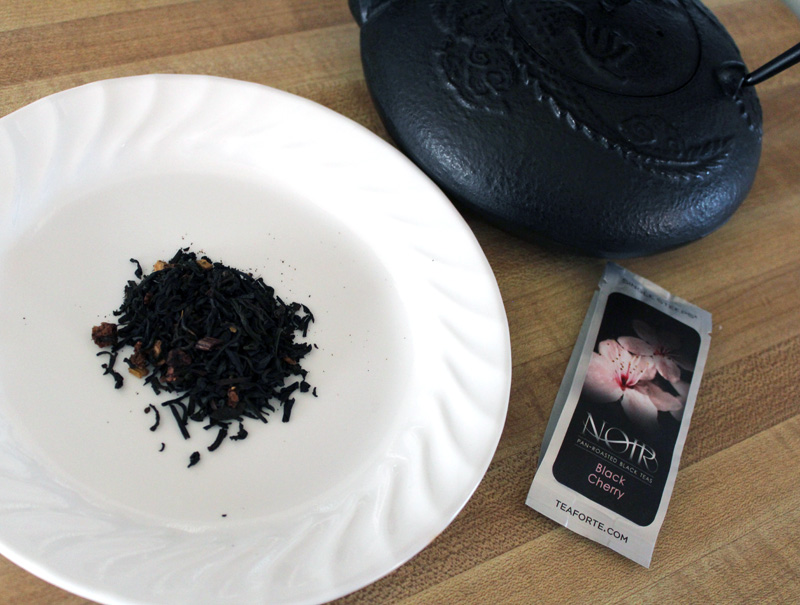
    One of the teas sent along was Tea Forte’s Black Cherry Noir in a single-steep packet, perfect for a quick afternoon pot of tea. Not only did it sound delicious, the packaging was incredibly aesthetically pleasing. Seriously, I wish my house could look like this packaging. Or maybe it kind of does? The desk where I spend most of my day is a sleek black and silver, and I’ve got pink accents and cherry blossoms all over the place. Either way, it looked good.

    The first thing that struck me when I opened the package was how intense the fragrance was. It was a really sharp and almost bitter scent, which made me second-guess my choice. I went ahead and brewed it anyway, opting for the heat and brewing time I use for all my other black teas. Then it was time for a taste.

    Tea Forte Black Cherry Noir

    Thankfully, it wasn’t bitter at all! I wasn’t sure what to expect from the flavor, since this was one of the few instances I was going into a tea blind. The packaging didn’t say anything other than the name of the flavor, so I had no clue what was in it. More than anything, the first sip was pleasantly tart with a very smooth black tea taste. I had hoped for something sweeter, though, so I added some rock sugar and a bit of milk to see if that gave me what I wanted. That ended up being perfect for my mood, bringing out some notes of vanilla and some sweeter berry tastes, though there was a hint of sharpness that I couldn’t quite place.

    After I looked up the blend on Tea Forte’s site, I determined it was the licorice root I was tasting. Interesting, because if I’d read the ingredients prior, my extreme dislike of licorice probably would have kept me from sampling this tea  at all! The fruit flavors come from strawberry, raspberry, and cherry, and there is just a touch of vanilla, so my guess there was right.

    Overall, a very tasty blend with a really rich black base. I’d recommend it straight as a breakfast tea, or with sugar and milk or cream for a sweet dessert tea treat. Despite my distaste for licorice, I’ll be adding a canister of this one to my shopping list. Win one for failing to read the ingredients, huh?

  • Her Midnight Wedding, book 2 of the Keeper’s Kin series, is now available!

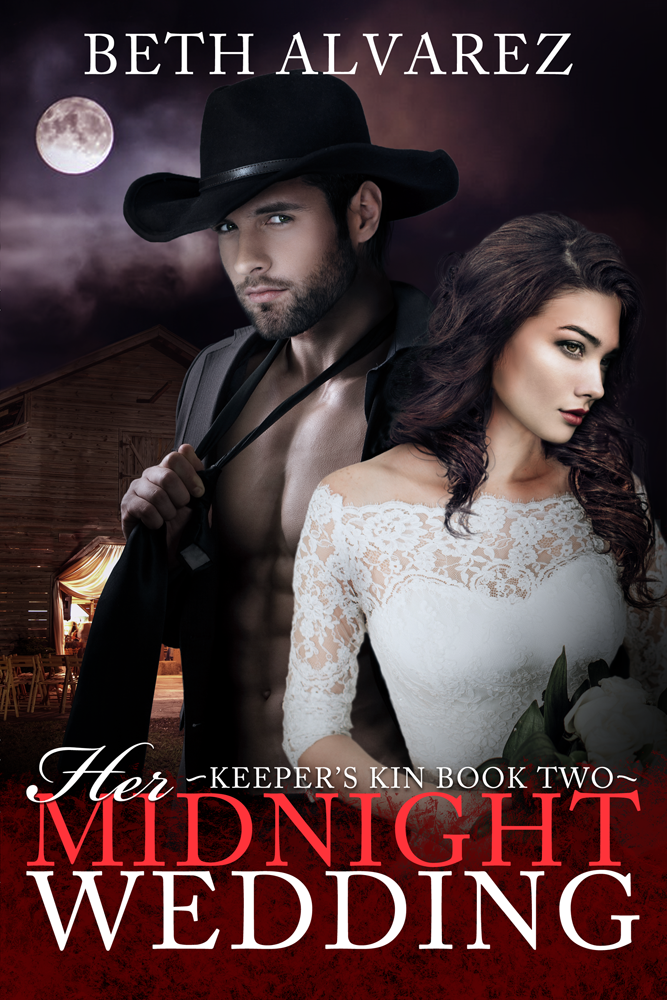
    Her Midnight Wedding, book 2 of the Keeper’s Kin series, is now available!

    Her Midnight Wedding by Beth AlvarezIt’s been a long road. The past few weeks were full of surprises, not all of them good, but the second book of the Keeper’s Kin series, Her Midnight Wedding, is finally available on Amazon!

    Click here to grab your copy now.

    Just like the other books in the series, they’re available in Kindle Unlimited–so if you’re a subscriber, you can read for free!

    The paperback edition will be available in January. With everything else going on, I couldn’t swing getting it together before then, and I don’t want it to be anything else but polished and beautiful, just like the previous books in the series.

    While there will be a few stories for other characters (especially other Keepers!) in the future, Kade and Felicity’s adventure (which veered off the paranormal romance course and wound up in urban fantasy) will be over in the spring, when the last book in their trilogy, Her Midnight Hunter, will be out. Until then, enjoy getting tangled up in the story!

  • His Name Was

    His Name Was

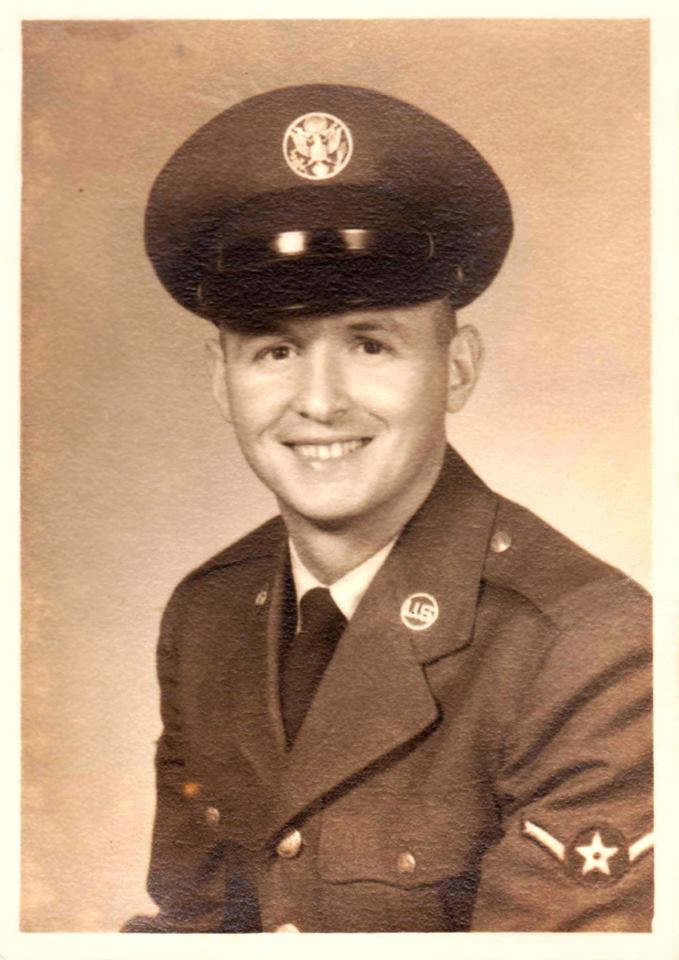
    His name was Mystery. From his work to his personal life to his feelings, he kept himself shrouded in secret and surprise. Some mystery was to be expected; he worked as a government contractor through most of our lives and couldn’t share his work. But he rarely let anyone know his plans, either, and you wouldn’t know he meant to travel until you woke up and he was gone.

    His name was Stubborn. He lived his life as he desired, refusing to bend, refusing to meet societal norms—but I couldn’t say he danced to his own drum, because I never saw him dance. Instead, it was a steady march, head held high as he made things happen his own way.

    His name was Adventure. From world travels to seemingly spur-of-the-moment cross-country trips. We used to see his race car on his trailer, hitched to the same truck he always drove, and never wonder if he’d come back from each expedition. He always did, with new stories and often with tokens from his travels. We’ll never know all the places he visited, but that was part of his Mystery, and I think he liked it that way. At the very end, his truck had carried him more than half a million miles. It’s a wonder it still runs. Although…

    His name was Skill. He never met a mechanical object he couldn’t repair. His garage was always littered with projects that might frighten anyone else. From lawn mowers to fighter jets, he could fix it all. But he was Stubborn, and sometimes his repairs were unconventional. When he rewired our Power Wheel to run off a car battery, we were gifted the fastest Power Wheel anyone had ever seen. And when the additional power caused it to tear holes through the plastic tires, he was ready and willing to fix those, too.

    His name was Intelligence. He had to be smart, to do what he did, but he also solved unique puzzles and excelled at thinking outside the box. Yet his was a kind of intelligence that never intimidated. He knew how to speak to anyone, to teach and share, to help children understand the complex work at his fingertips.

    His name was Patience. Adults might contest it, as he didn’t have much to spare for adults who ought to know better. But children loved him and gravitated to him, everywhere he went. As an adult, I realize it hindered his work to have small people underfoot, but he never complained. When a small hand marred the finish of his freshly detailed show car, or landed in wet paint and forced him to strip and redo entire projects, there was never a reprimand to be heard. “Be careful, now,” was all you’d get as he ushered you away and then repaired your mistakes.

    His name was Quiet. Through a good portion of my life, he shared a home with my great-grandmother. When he wasn’t working or traveling, he was often in the garage. You always knew when he was in the house; his was an unimposing presence, instilling a sense of calm peace. He had strength and a fiery temper that could come to the surface when necessary or provoked. But most of his life was quiet, surrounded only by the whirring engines he loved.

    His name was Kindness. He was good to everyone he met, but never allowed anyone to take advantage of it. Though he held strong opinions, he didn’t let them sway the way he treated people. He offered respect and appreciation, and did not let the difficulties in his life color the way he behaved toward new people.

    His name was Honesty. Sometimes truth hurts, but if you deserved it, he wasn’t one to spare feelings. It struck a unique balance with him as Kindness, but it worked harmoniously. Sometimes the kinder thing was truth, and he gave it freely, like many other things. He never offered sugared words or anything meant just to make you feel better. What he said was how it was, whether or not you liked it.

    His name was Generosity. I’ve seldom met someone with such a giving spirit as his. He gave often and freely to those he loved. He gave the best gifts and always seemed to know what a kid might want. Had my mom known he intended to give us a trampoline, she might have protested. So he left her out of the decision-making and just showed up with it in the bed of his truck. But aside from things, what he offered most was the gift of his time and skill. He gave his time as if he’d never run out, even if it meant putting his own projects aside.

    His name was Charity. It’s one thing to be generous with a person you love, but his charitable spirit led him to give to many people, especially those in need. If he saw a need in his neighborhood, he often filled it without request, simply because it was the right thing to do. He regularly purchased and delivered groceries to struggling families nearby. Even my mother didn’t know about that, only learning about it when me and my siblings discussed seeing him do it—and in some cases, helping with delivery. When one neighbor lost her leg, he even provided her with a handicap-friendly vehicle, and later, a motorized wheelchair. As with everything else, he never asked anything in return.

    His name was Independence. He traveled alone. Unless absolutely necessary, he fixed things alone. Aside from his cat, he lived alone, and never expressed loneliness at all. He enjoyed his independence, and he remained that way until the last of his days. If he could not live alone, follow his own passions and pursue his own dreams, he figured his life was over. Though mostly paralyzed, he refused life support, determined to hold himself with dignity and independence to the very end. At the end of all things, it was quiet, peaceful, and just the way he wanted his brilliant flame to flicker out.

    His name was Gerald, really, but no one knew him that way.

    In loving memory of Uncle Jerry.
    June 26, 1939 – November 23, 2017.
    You are terribly missed.

    Jerry Bandy, June 26, 1939 - November 23, 2017